A Guide to Monitor Online Reputation for Your Business

To really get a handle on your online reputation, you need to be actively keeping tabs on what people are saying about you across the web. This means tracking online reviews, social media mentions, and what pops up in search results to get a clear picture of public perception. It’s a process of setting up the right alerts and using the right tools to catch customer feedback as it happens, letting you respond quickly to protect and even boost your brand's image.
Why You Can't Afford to Ignore the Online Chatter
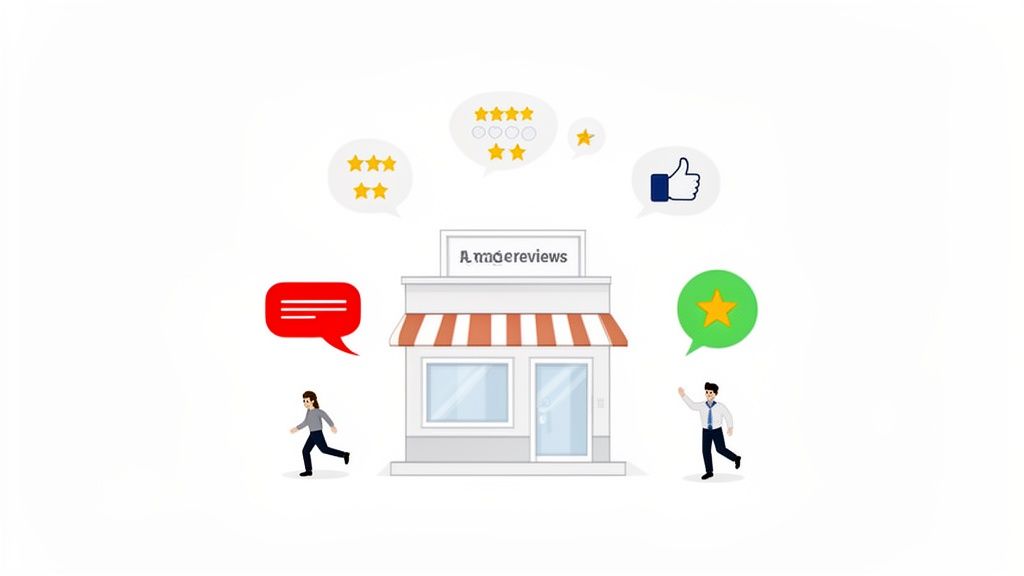
Let's get one thing straight: your online reputation is much more than a vanity metric. In today's market, it's a hard-hitting asset that directly impacts your bottom line. Every single comment, review, and star rating shapes the story that potential customers read before they decide to walk through your door or click 'buy'. This isn't just some abstract theory; it's the daily reality for local businesses everywhere.
The Real-World Impact of What People Say Online
Think about a local café for a moment. A single, unanswered negative review complaining about "cold coffee and slow service" can easily put off dozens of potential customers scanning Google Maps for their morning brew.
But flip that scenario. A thoughtful, public reply that owns the feedback and offers a genuine solution? That can turn an unhappy visitor into a vocal supporter. More importantly, it shows everyone else watching that you actually care. This digital word-of-mouth is powerful, influencing everything from foot traffic to your ability to hire the best people.
The numbers don't lie. UK consumer behaviour is driven by reviews. A whopping 93% of people say online reviews influence their buying decisions. And while 75% trust a business more when they see positive feedback, just one negative review can scare away 60% of potential customers. The stakes are just as high for recruitment—nearly 69% of job seekers say they’d turn down an offer from a company with a poor reputation. You can dig deeper into these online review statistics and what they mean for your business.
Monitoring your online reputation isn't a passive, once-a-month task anymore. It's a core business function, just as vital as managing your finances or marketing your services. It’s all about taking control of your brand's story before someone else writes it for you.
Shifting from Defence to Offence
When you start proactively monitoring your online reputation, you switch from just doing damage control to using it as a powerful business intelligence tool. All that feedback you're collecting isn't just noise; it’s a direct line to your customers' real-world wants and needs. It tells you exactly what you’re getting right and, crucially, where you have room to improve.
This constant listening also bolsters your other marketing efforts. For example, keeping your business's name, address, and phone number consistent across the web is a huge part of reputation management. These details are the building blocks of your online presence, and you can learn more about them in our guide on what local citations are and why they're so important. By staying on top of the conversation, you're not just protecting your brand—you're unearthing valuable insights that can fuel real growth.
Setting Up Your Digital Listening Post
To really get a grip on your online reputation, you first need to build a system that tunes into the right conversations without drowning you in noise. This isn't about chasing down every single mention of your business online; it's about being strategic. You need to pick the channels where your customers actually hang out and then set up an efficient way to get notified. This framework is what allows you to catch crucial feedback the moment it drops, so you can act fast.
Think of it as your digital listening post. It needs to cover a mix of platforms—from the big-name review sites to those niche online communities where your specific audience gathers. A local plumber, for example, absolutely has to watch their Google Business Profile and Checkatrade. But they should also keep an eye on local Facebook community groups where homeowners are constantly asking for recommendations.
Choosing Your Key Monitoring Channels
First things first, you need to map out your digital footprint. Where do people find you, review you, and talk about you? A solid monitoring plan needs to cover a mix of owned, earned, and social channels.
This table breaks down the essential channels most local businesses should be watching, what you're looking for on each, and how often you should be checking in.
Essential Channels to Monitor for Your Local Business
| Channel | What to Look For | Monitoring Frequency |
|---|---|---|
| Google Business Profile | New reviews (positive & negative), questions in the Q&A section, photo tags. | Daily |
| Industry-Specific Review Sites | Reviews, ratings, competitor comparisons. (e.g., Trustpilot, Checkatrade, TripAdvisor) | Daily to Weekly |
| Social Media Platforms | Direct messages, comments, mentions, tags, shares, community group discussions. | Daily |
| Local Directories & Citations | Accuracy of business info (NAP), new reviews on sites like Yelp, Yell. | Weekly to Monthly |
| Niche Forums & Blogs | Unfiltered discussions, recommendations, industry-specific feedback (e.g., Reddit). | Weekly |
Beyond these core platforms, you need to do a bit of digging. Are there local bloggers who review businesses in your sector? What about specific subreddits or forums dedicated to your industry? These are often overlooked goldmines of honest, unfiltered customer feedback.
Automating Your Alerts
Let's be realistic: manually checking dozens of sites every day just isn't going to happen. The goal is to build an automated system that brings the important mentions straight to you or your team. This is where smart alerts come into play.
A brilliant (and free) place to start is Google Alerts. You can set up alerts for your business name, key services, and even the names of your main competitors. It’s a simple way to get an email whenever new indexed content mentioning those keywords appears online.
However, for a truly robust setup, you'll want to look at dedicated reputation management software. Tools like the LocalHQ Review Manager pull feedback from multiple platforms into one central dashboard, which is a massive time-saver. This approach turns monitoring from a chaotic chore into a streamlined, manageable process.
The shift towards these tools is undeniable. The UK's enterprise internet reputation management market is set to expand significantly, with reputation monitoring alone making up 43.2% of this growing sector. This trend really shows how vital real-time tools have become for getting ahead of PR issues and truly understanding what customers are thinking. You can dig into these UK market reputation trends if you want to see the numbers for yourself.
Building your listening post isn't a one-and-done job. Make a point to revisit your channel list every quarter. New platforms pop up, and customer habits change. A system that was perfect last year might be missing key conversations today.
By carefully choosing your channels and setting up an automated alert process, you're creating a solid foundation. This kind of proactive listening is the first real step in turning customer feedback from a potential crisis into your most valuable asset for growth.
Crafting Your Response and Escalation Plan
Listening is only half the battle. Once you've got your ear to the ground, you need a solid plan for what to do with what you hear. Simply collecting mentions without a clear course of action is like having a fire alarm but no evacuation route—it makes a lot of noise but doesn't solve the problem.
What you need is a structured workflow. This way, your team isn't left scrambling when a tricky situation pops up. Whether it's a glowing compliment or a serious complaint, they'll have the confidence and consistency to handle it professionally. You're not improvising under pressure; you're executing a pre-agreed strategy that reflects your brand’s voice and values.
This visual guide shows the foundational process of setting up your monitoring system—the essential first step before you can even think about responding.
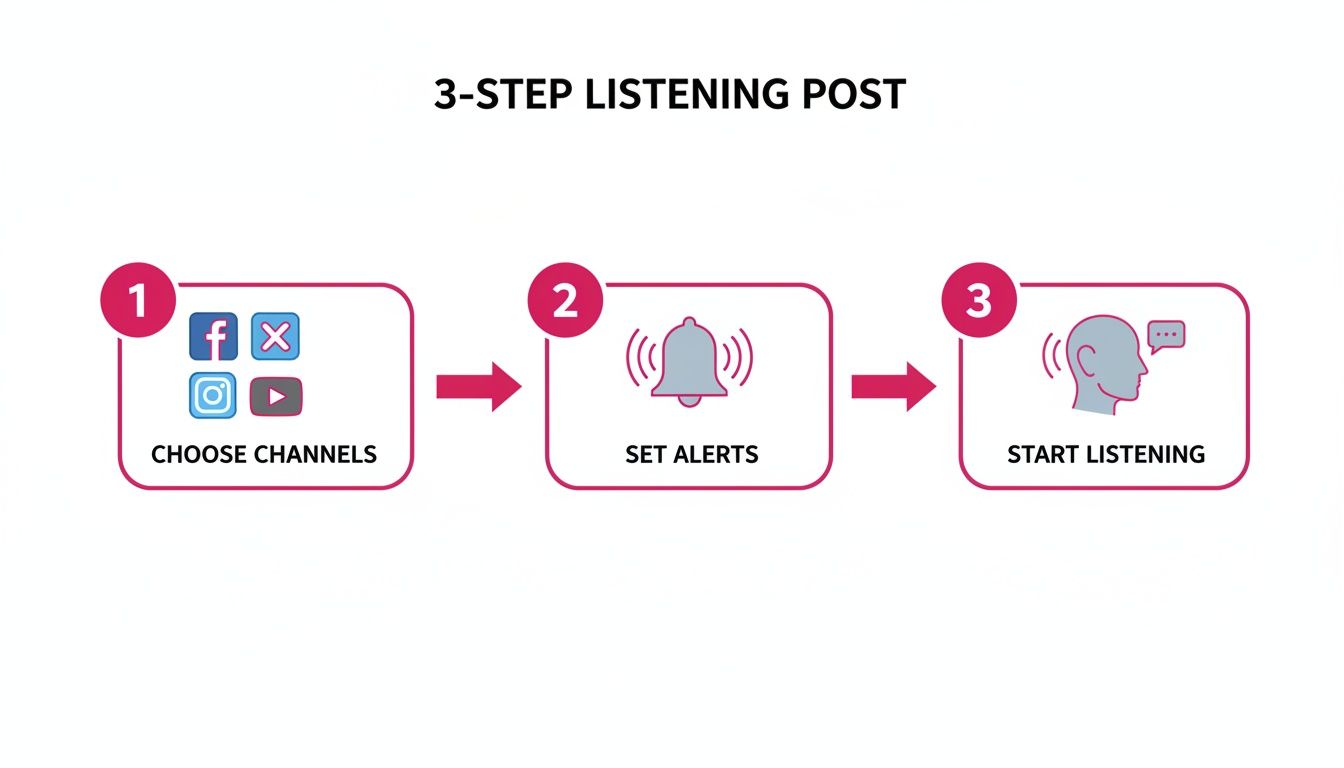
As you can see, the path from choosing channels to active listening is what makes a strategic response plan possible in the first place.
Defining Tiers and Triggers
Let's be realistic: not all feedback is created equal. A quick shout-out about your friendly staff doesn't carry the same urgency as a customer reporting a potential food safety issue at your café. This is where a tiered system comes in. It’s the best way to prioritise what needs attention now and what can wait.
Your plan needs to clearly define what triggers different levels of severity and who owns the response for each.
- Tier 1 (Low Priority): Think general positive comments, simple questions, or neutral brand mentions. These are perfect for front-line staff or social media managers to handle, often with pre-approved replies.
- Tier 2 (Medium Priority): This is where you'll see negative reviews about service hiccups, billing queries, or product flaws. These need a more personal touch, usually from a team lead or manager, and you should aim to respond within a specific timeframe, like 12 hours.
- Tier 3 (High Priority/Crisis): These are the big ones. We're talking about serious allegations—safety concerns, legal threats, discrimination claims, or anything with the potential to go viral. These mentions should trigger an immediate escalation to senior management or a dedicated crisis team. No exceptions.
Every business should have its own set of "red flag" keywords that trigger an instant alert. For a local builder, this might be "property damage" or "billing dispute." For a restaurant, it could be "food poisoning" or "allergy."
Creating Adaptable Response Templates
While every response to a serious issue needs a personal touch, you don't have to start from scratch every single time. Building a library of adaptable templates is a huge time-saver and ensures your brand’s tone stays consistent. This is particularly useful for platforms where you get a lot of reviews, something our guide on Google Business Profile management dives into.
Start by creating templates for the most common scenarios you face:
- Acknowledging a Positive Review: Thank the customer by name and mention something specific from their feedback.
- Addressing a Negative Review: Always start with a genuine apology. Show empathy, and then immediately offer a way to take the conversation offline, like a direct phone number or email address.
- Handling a Neutral Review: Thank them for taking the time to leave feedback and politely ask what you could have done differently to earn a higher rating.
Think of these templates as a foundation, not a script. Your team needs to be trained to weave in specific details from the customer's comment. This simple customisation shows you've actually read and understood their feedback, and it can be the difference that turns a critic into a loyal customer.
Measuring the Metrics That Actually Matter
Once you’ve got your listening posts set up, the real work begins. It’s no longer just about catching every mention; it’s about figuring out what it all means. To genuinely get a grip on your online reputation, you need to turn that raw feedback into intelligence you can actually use. This is where you move past a simple thumbs-up or thumbs-down and start tracking specific Key Performance Indicators (KPIs) that tell you the real story of how people see your brand.
Keeping an eye on the right data stops you from drowning in noise. It’s how you draw a straight line from your reputation work to real-world results, like more calls from your Google Business Profile or more people walking through your doors. It’s about making smart decisions based on evidence, not just gut feelings.
Core Reputation KPIs You Can't Ignore
To get a clear picture, you need to focus on a handful of metrics that pack a punch. This is where a central dashboard becomes your best friend, especially if you're juggling multiple locations. It lets you spot trends in a heartbeat and see how you're stacking up. In fact, a dedicated reputation analytics dashboard can make this whole process a lot less painful.
So, what should you be measuring? Here are the essentials:
- Average Star Rating: This is your big, headline number. Keep tabs on it across all the important sites like Google and Trustpilot. If it starts to dip, consider it an early warning that something might be off with your operations.
- Review Velocity: Think of this as the pulse of your reputation. It’s all about how often new reviews are coming in. A steady stream of recent feedback is a huge trust signal for potential customers and search engines alike.
- Response Time: How fast are you getting back to people? A quick response, particularly to negative comments, sends a powerful message that you’re listening and you care.
- Sentiment Analysis: This is where you dig deeper than the star rating. Sentiment analysis looks at the actual words and tone of the reviews. Are people generally happy, frustrated, or just neutral? This helps you understand the why behind your scores.
What the Numbers Are Really Telling You
These KPIs aren't just abstract figures; they're direct feedback on how your business is running. Imagine you’re managing a chain of retail shops. A quick look at your dashboard might show that one branch is constantly being praised for its amazing staff, while another is getting regular complaints about empty shelves. That’s not just reputation data—it's gold-dust operational insight you can act on immediately.
We're seeing this play out across the market. Between 2023 and 2024, Google review volumes in the UK and Europe jumped by 7.1%. And while average ratings crept up slightly, the most telling statistic was a massive 17.7% increase in how often businesses responded. It’s clear proof that the most successful businesses are the ones actively engaging with their customers.
To help you get started, here’s a breakdown of the key metrics, how to measure them, and what they can reveal about your business.
Key Reputation KPIs and Their Business Impact
| KPI | How to Measure | What It Tells You |
|---|---|---|
| Average Star Rating | (Total score of all ratings) / (Total number of ratings) on a specific platform. | Provides a high-level snapshot of overall customer satisfaction and is often the first impression a potential customer has. |
| Review Velocity | The number of new reviews received over a specific period (e.g., weekly, monthly). | Indicates brand relevance and customer engagement. A steady flow builds trust and improves local SEO. |
| Response Rate | (Number of reviews responded to / Total number of reviews) x 100. | Shows your commitment to customer service. A high response rate can turn negative experiences around and build loyalty. |
| Response Time | The average time taken to reply to a review from the moment it's posted. | Measures your team's efficiency and attentiveness. Fast responses show you value customer feedback. |
| Sentiment Score | Percentage of reviews categorised as positive, negative, or neutral using text analysis tools. | Goes beyond stars to reveal the emotional tone of customer feedback, highlighting specific strengths and weaknesses. |
By tracking these KPIs, you create a powerful system for improvement. You can pinpoint a recurring problem mentioned in reviews, make a change to fix it, and then watch your sentiment scores and star ratings to see if your solution actually worked.
This transforms reputation management from a reactive, defensive chore into a proactive strategy for making your business better, day in and day out.
Turning Customer Feedback into Business Growth
Here’s where all the monitoring work pays off. The real magic happens when you close the loop—turning all that passive listening into concrete action that actually improves your business. It’s about moving beyond just putting out fires and starting to use the collective voice of your customers to make smarter decisions.
This is the shift from a reactive mindset to a proactive strategy. Every review, social media comment, and forum post is a direct line to your customers' honest thoughts. When you stop looking at them one by one and start analysing the patterns, you’ll uncover a goldmine of opportunities for real growth.
Identifying Actionable Themes in Feedback
First things first, you need to zoom out. A single complaint about slow service might just be a one-off bad day. But if "slow service" pops up in five different reviews in a month? You’ve got a systemic problem on your hands.
Your job is to spot these recurring keywords and sentiments. Look at what people are saying about different parts of your business. Are multiple customers at your garage mentioning "confusing invoices"? Does your restaurant constantly get praise for its pies but complaints about how long it takes to get a drink? These aren't just criticisms; they're a free to-do list for making things better.
Think of customer feedback as the most affordable and honest consultancy you could ever hire. It pinpoints weaknesses with surgical precision and tells you exactly what your market values most about your service.
This isn’t about guesswork, though. You need to categorise what you’re hearing to see the real trends. A simple tagging system can make all the difference. Try grouping feedback into a few key areas:
- Product or Service Quality: Are there specific dishes, services, or products that get consistent love or hate?
- Customer Service: How do people talk about your team? Are they "friendly" and "helpful" or "rude" and "dismissive"?
- Operational Efficiency: What are the common grumbles? Think wait times, booking hassles, or delivery delays.
- Pricing and Value: Do customers feel they’re getting their money’s worth?
Translating Insights into Tangible Improvements
Once you’ve nailed down a recurring theme, it’s time to build a plan. This is how reputation management directly drives operational excellence. The feedback tells you what is wrong; your team needs to figure out how to fix it.
Let's say several reviews for your shop mention the aisles are always cluttered. The fix is pretty straightforward: reorganise the layout and retrain staff on keeping things tidy. If your plumbing business keeps getting feedback about vague arrival times, the solution could be as simple as setting up an automated SMS notification system.
Getting your team on board is absolutely essential. Don't just walk in and say, "customers are unhappy." Show them the data. Pull direct quotes from reviews or create a simple chart to make your point. When the team sees the feedback straight from the customer's mouth, they become part of the solution instead of feeling like they're being blamed.
By systematically turning these insights into action, you create a powerful cycle of improvement. You fix problems based on real feedback, which leads to better customer experiences. Better experiences lead to more positive reviews, which brings in new customers and solidifies your reputation as a business that genuinely listens.
Got Questions About Your Online Reputation?
As you get started with keeping an eye on your online reputation, a few practical questions are bound to come up. Let's tackle some of the most common ones I hear from business owners, so you can move forward with confidence.
How Quickly Should I Respond to a Negative Review?
The short answer? As fast as you possibly can. A quick response shows everyone you’re listening and that you genuinely care about customer feedback. I always advise businesses to aim for a reply within 24 hours.
Why the rush? A speedy, thoughtful reply can defuse a tense situation before it spirals. More importantly, it sends a powerful signal to every other potential customer reading those reviews that you take service seriously. A slow response, on the other hand, can look like you just don't care, which often does more damage than the original bad review.
Should I Respond to Every Single Positive Review?
While it’s not as time-sensitive as dealing with criticism, replying to your happy customers is a fantastic way to build loyalty. You don't have to write an essay for every five-star rating, but a quick, personalised thank you can transform a satisfied customer into a passionate advocate for your brand.
A simple acknowledgement goes a long way. It validates their great experience and quietly encourages others to leave their own feedback. My top tip? Pay special attention to reviews that shout out a specific team member or mention a unique detail about their visit. A personalised reply to those has a much bigger impact.
What’s the Difference Between Reputation Monitoring and Management?
This is a great question and the distinction is crucial. I like to break it down like this:
- Reputation Monitoring is all about listening. It’s the process of setting up your systems—your tools and alerts—to catch every mention, review, and conversation happening about your business online. Think of it as gathering intelligence.
- Reputation Management is all about doing. This is where you take action based on what you’ve heard. It involves replying to reviews, proactively generating positive content, resolving customer issues, and strategically shaping how the public sees your brand.
You really can't manage what you don't monitor. Solid monitoring is the bedrock of any good reputation strategy.
Can I Just Delete Bad Reviews?
If only it were that simple! On major platforms like Google, Yelp, or Trustpilot, you can't just hit a delete button on a review you don't like. Your only real option is to report it for removal, and it has to clearly violate the platform’s rules—things like hate speech, obvious spam, or a fake review from a competitor.
Instead of trying to erase negative feedback, channel that energy into two things: responding to it professionally and drowning it out with a steady stream of new, positive reviews from your genuinely happy customers.
Ready to take control of your digital presence? LocalHQ offers an all-in-one platform to monitor reviews, optimise your profiles, and turn customer feedback into a powerful growth engine. Start building a better online reputation today at https://localhq.io.