10 Localo Alternative Platforms for Local SEO in 2026
Managing a handful of Google Business Profiles is already fiddly. Managing dozens across towns, service areas and brand teams is where cracks show up fast. Reviews sit unanswered, opening hours drift out of date, location managers publish off-brand posts, and rank tracking tells you almost nothing about what's happening street by street.
That's where the search for a serious Localo alternative starts. Some teams need tighter review workflows. Others need stronger agency reporting, better listings control, or a platform that's easier to scale from one site to many. This guide gets straight to the point with ten credible options, including feature depth, pricing shape, trade-offs, migration fit, and who each platform suits best. If you're also comparing broader software options for local service firms, Pipeline On alternatives for contractors is a useful adjacent read.
1. LocalHQ

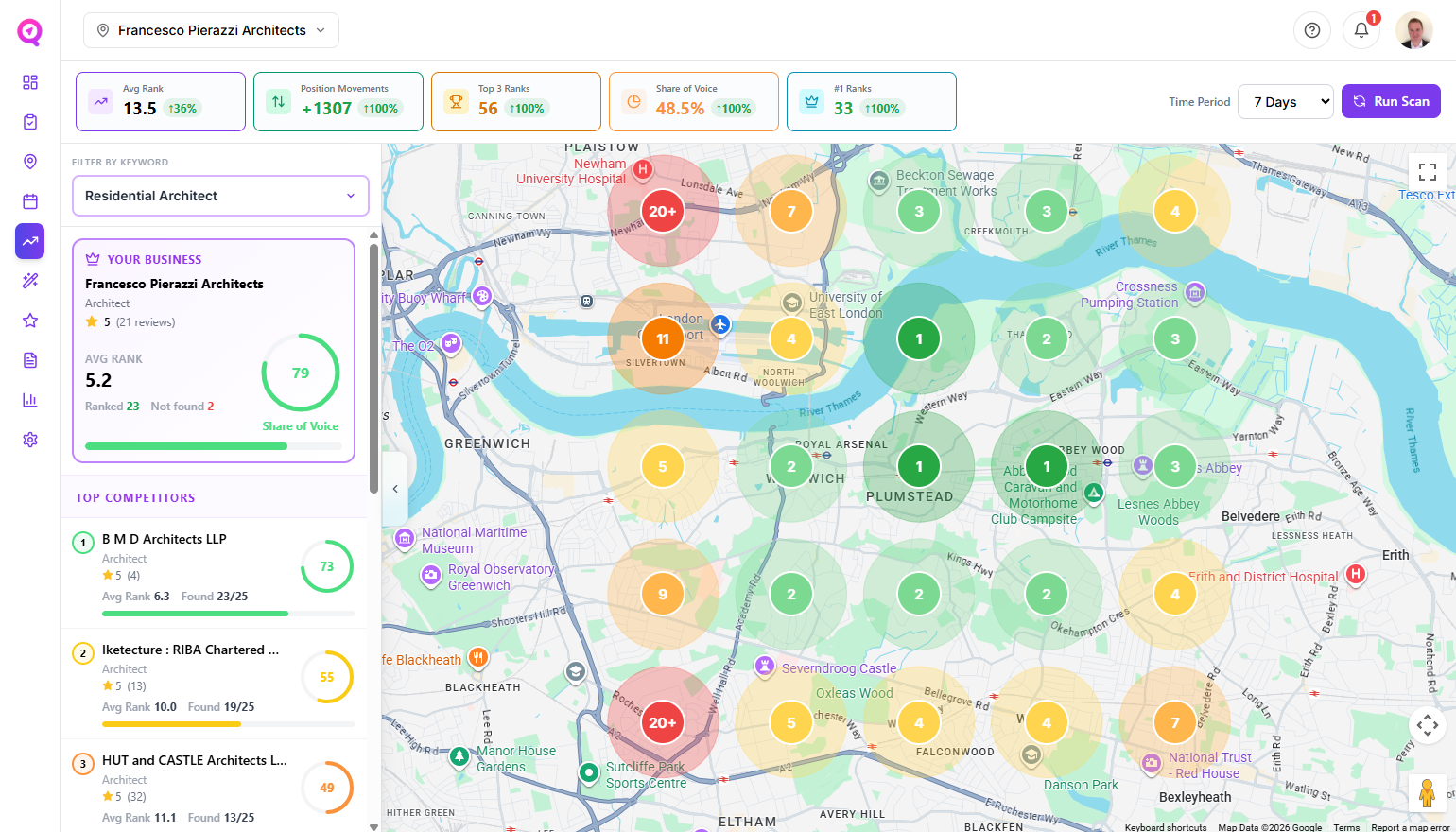
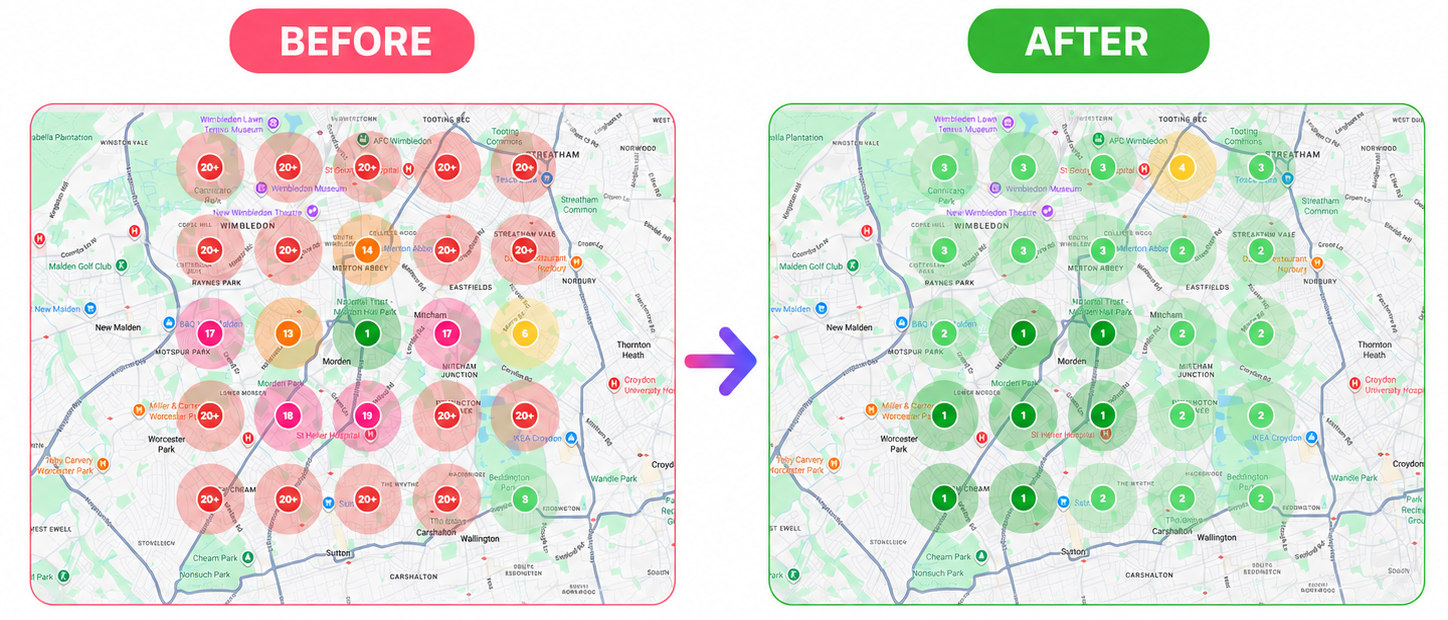
A common failure point appears after the fifth or tenth location. The team can still log into each Google Business Profile, but review response times slip, posting becomes inconsistent, and reporting turns into a manual exercise. LocalHQ is built for that stage of growth. It combines GBP management, review handling, geo-grid tracking and reporting in one local-first system, which makes it a practical Localo alternative for SMBs, agencies and franchise groups that need operational control more than broad SEO tooling.
Its product scope is narrower than an all-in-one SEO suite, and that is a useful distinction. Teams buying LocalHQ are usually trying to fix recurring local search tasks: updating core profile data, scheduling posts and media, monitoring visibility by area, and replying to reviews without creating new approval bottlenecks. For firms comparing options by use case rather than feature volume, that focus matters. It reduces tool overlap and shortens the path from insight to action.
Why LocalHQ stands out
The strongest differentiator is workflow design. LocalHQ does not stop at surfacing rankings or profile issues. Its AI Optimisation Wizard compares a profile against nearby competitors and turns that comparison into specific recommendations on categories, keywords and content updates. That closes a gap many local platforms leave open. They identify problems, but the team still has to decide what to change first.
The reporting layer also maps well to agency and multi-location use. White-label reporting is built in, so agencies can give clients location-level outputs without rebuilding the data elsewhere. For franchises, the same setup helps central teams monitor consistency while preserving visibility into how each branch performs across calls, impressions and direction requests.
One operational advantage is easy to miss. Citation management sits inside the same system, which cuts down on handoffs between listings work, GBP updates and reporting. That matters most for lean teams where one marketer or account manager handles several local channels at once. Firms assessing local seo software for lawyers will recognise this pattern, especially when each office needs its own visibility tracking and review workflow.
Practical rule: If your team still exports local data into spreadsheets just to explain what changed by location, the platform is only solving part of the problem.
Pricing, fit and migration notes
LocalHQ keeps pricing straightforward. Single Listing starts at £29 per month. Multiple, for 2 to 9 listings, is £49 per month. Agency, for 10 to 29 listings, is £119 per month. Enterprise pricing is custom for larger location counts. There is also a 7-day free trial.
That structure makes migration relatively easy to test in stages:
- Single-location businesses: Replace manual GBP work first, then measure whether review response speed and profile completeness improve.
- Agencies: Migrate a small client group, confirm reporting and approval workflows, then expand account by account.
- Franchises and multi-site brands: Standardise posting, review replies and profile edits centrally while keeping local visibility data separate by branch.
The trade-off is clear. LocalHQ is strongest in local presence management and GBP operations. Teams that also need technical site audits, backlink analysis and national keyword research will likely pair it with another platform rather than use it as their only SEO system.
2. BrightLocal

BrightLocal is the most evidence-backed Localo alternative for UK teams. It serves over 100,000 businesses across the United Kingdom and manages more than 500,000 Google Business Profiles globally, according to this BrightLocal market summary. If your business footprint is British and your reporting needs are local-first, that scale matters.
BrightLocal is especially strong where Localo users often hit limits. Its geo-grid rank tracking is designed to visualise local search visibility across UK postcode areas and cities, and the same source notes that it tracks UK-specific keywords at a 100-metre resolution. That's unusually useful for firms with city-centre competition, legal offices, clinics and home service brands. Teams evaluating local seo software for lawyers will recognise how important postcode-level movement can be in practice.
Where BrightLocal wins
The agency case is compelling. A 2024 UK agency survey cited in the same source found that 78% of UK agencies used BrightLocal for multi-location client management and local SEO reporting. It also offers white-label reporting, which helps agencies package local performance into client-ready outputs rather than operational exports.
Another advantage is citations. BrightLocal's citation management tool has partnerships with more than 150 UK-specific directories, including Yell, Thomson Local and 192.com, in the same source. That gives it a distinctly British listings footprint that many globally focused platforms don't match cleanly.
BrightLocal is the only local SEO tool proven to offer genuine UK Local Pack tracking capabilities, according to this UK SEO tools review.
BrightLocal suits agencies, consultants and multi-location SMBs that want a balanced platform. It's less compelling if you want wider site SEO and competitor research in the same product. In that case, Semrush Local often enters the conversation.
3. Semrush Local
Semrush Local makes the most sense when local SEO is only one part of your stack. If you already rely on Semrush for keyword research, competitor analysis or site auditing, adding local features inside the same platform reduces tool sprawl and keeps workflows tighter.
Its local toolkit covers GBP management, AI-generated posts, automated replies, listing distribution and a Map Rank Tracker with configurable grids. For teams running both local and non-local campaigns, that shared environment is particularly appealing. You aren't forcing staff to jump between unrelated systems for reporting and research.
Best fit for hybrid local and broader SEO teams
Semrush Local is a practical Localo alternative for businesses that need local operations plus broader search intelligence. A regional healthcare group, for example, might manage location listings in Semrush Local while the central marketing team tracks category keywords and competitor domains in the core Semrush platform.
The trade-off is usage design. Rank tracking works through credits, which can feel restrictive for heavy map-grid users. If your main need is granular local visibility and repeated grid scans across many branches, a specialist local platform may feel more natural.
A sensible migration path is to move listings and GBP workflows first, then decide whether map tracking volume fits your usage. If your team already pays for Semrush, this can be one of the easiest transitions because procurement friction is lower and user adoption is faster.
4. Moz Local

Moz Local is the cleanest option on this list for businesses that want straightforward listings management without a lot of operational complexity. It focuses on business data distribution, duplicate monitoring, review monitoring and core reporting across supported markets including the UK.
That makes it a sensible Localo alternative for smaller operators that don't need advanced local grids every day. Setup is usually easier to understand than bigger enterprise suites, and the platform is designed around keeping local business data consistent rather than surrounding that task with too many extras.
When simple beats feature-rich
Moz Local is often the right answer for businesses with one to fifty locations that care more about consistency than experimentation. If your main issue is inaccurate business details across directories, not a complex agency reporting pipeline, simplicity is a strength.
For brands focused on driving local search visibility, Moz Local can act as a stabiliser. It helps keep core location data clean, ties in review monitoring, and gives smaller teams a manageable workflow.
A limitation is depth. It isn't the strongest choice for advanced geo-grid analysis, large franchise governance or broad reputation automation. If your migration goal is “clean up listings and monitor reviews without adding a steep learning curve”, Moz Local fits well. If your goal is “run local operations for a large estate from one central command layer”, Yext, Uberall or SOCi will usually be stronger candidates.
5. Yext

Yext is built for scale, governance and speed of updates. Its value isn't just listings management. It's the combination of direct publisher connections, review workflows, duplicate suppression and role-based control that matters when lots of stakeholders touch local presence.
Yext differentiates itself from lighter Localo alternatives. If a national brand needs near-instant updates pushed across major platforms, supported by approval workflows and compliance guardrails, Yext is designed for that operating model.
Enterprise control over local presence
Yext's direct sync model is attractive to brands that can't tolerate long delays between internal changes and public listings updates. It also supports review management across a broad set of platforms and includes local pages, which matters if your local SEO strategy extends beyond GBP into structured location landing pages.
That said, complexity is part of the package. Small businesses can end up paying for control layers they don't need. Teams migrating from Localo should only consider Yext if the core pain point is operational governance across many locations, not just rank tracking or basic GBP improvement.
For large brands, the decisive question isn't “does this tool have the feature?” It's “can this feature be controlled safely across every location?”
Yext suits franchises, regulated service brands and enterprise retail networks. For most single-site businesses, it's more platform than they need.
6. Uberall

Uberall sits between specialist local SEO tooling and broader multi-location marketing orchestration. It combines listings, reviews, local social posting, analytics and collaboration features, with a strong footprint across the UK and Europe.
For businesses operating across multiple regions, that European coverage can matter more than flashy feature claims. The platform is built for distributed local marketing rather than just one-off profile improvement tasks.
Why multi-location teams pick Uberall
One useful distinction is profile protection. Uberall is designed to help prevent unwanted overwrites to listing data, which is a common headache for brands with many managers, agencies or market-level partners. It also includes AI-assisted review responses and posting support across Google and Apple surfaces.
That makes it a practical Localo alternative for brands that need shared workflows, not just dashboards. Local marketing teams looking for strategies to grow local presence often need permissions, collaboration and data consistency as much as rank insights.
The downside is accessibility for smaller firms. Pricing is quote-based, and the feature set usually needs onboarding. If you're an independent business with a handful of locations, the platform can feel heavier than necessary. If you're coordinating multiple branches across regions with central brand oversight, that extra structure becomes an advantage.
7. Synup

Synup is an agency-friendly Localo alternative with a strong white-label angle. It combines listings management, review management and branding options in a package that's easier to position for resellers, consultants and smaller agencies than some enterprise systems.
Its appeal is operational clarity. Transparent plan tiers, client-account allowances and branding options make it easier for agencies to map software cost against client portfolios.
A practical option for consultants and resellers
Synup works well when your business model depends on presenting local SEO as your service, not someone else's platform. White-label dashboards support that positioning, while API access gives more advanced agencies room to build their own workflows.
For agencies focused on local rank tracking for UK businesses, Synup is best viewed as a service-delivery platform first and a specialist map diagnostics tool second. It covers the essentials, but teams needing very granular competitive geo-grid analysis may prefer specialist tracking platforms.
Migration tends to be straightforward for agencies moving clients from manual reporting or lightweight tools. The main caution is feature depth. If your clients expect broad publisher reach, advanced analytics and extensive social tooling under one roof, you may outgrow it. For lean agencies and consultants, though, it's a commercially sensible middle ground.
8. Birdeye

Birdeye is the reputation-led choice on this list. If Localo feels too focused on audits and rankings for your needs, Birdeye shifts the centre of gravity towards reviews, messaging, surveys and broader customer interaction.
That matters because review operations are no longer a side task. In the UK market, Google Business Profile optimisation accounts for 32% of local pack signals for service providers and franchises, compared with 19% for on-page SEO and 16% for reviews, while 97% of UK consumers read reviews for local businesses, according to this local SEO data round-up. In practice, that makes automated review response and generation workflows far more valuable than many teams assume.
Where Birdeye is strongest
Birdeye's suite goes beyond review monitoring. It covers reviews, listings, social, messaging and analytics in one environment, which can reduce the need for separate reputation and communications tools. Healthcare, home services and retail brands often prefer this model because review handling is tied closely to lead flow and trust.
A second reason to consider it is milestone management. UK GBPs that crossed the 50-review threshold in 2025 saw a 31% year-on-year increase in lead volume in 2026, compared with dataset-wide local lead growth of 12.4%, according to these UK local SEO statistics. That doesn't make Birdeye the only route to stronger review acquisition, but it does explain why reputation-led platforms deserve a place in any serious Localo alternative shortlist.
If your migration priority is reviews first, Birdeye is one of the most logical moves. Just confirm contract terms carefully, as pricing is configured through sales rather than published plainly.
9. SOCi

SOCi is designed for organisations with very large location counts. It combines listings, reviews, local social, paid social, chatbots, local pages and AI workflows inside one enterprise platform. That breadth is exactly why smaller firms should be cautious and larger brands should pay attention.
For franchise systems and major multi-location businesses, the challenge isn't feature access. It's enforcing standards without slowing down local marketing. SOCi is built around that tension.
Built for franchise governance
Its GeoRank capability brings map-pack visibility into a larger operating system that also includes collaboration and governance features. That means central teams can monitor local performance without giving up oversight of content, reputation and paid activity.
SOCi makes sense when a brand wants to replace several separate vendors with one consolidated local marketing stack. It makes less sense when the immediate problem is that Localo no longer covers enough GBP workflow depth.
The migration question here is internal readiness. A platform like SOCi works best when central marketing, local operators and reporting stakeholders agree on process. Without that, enterprise capability can turn into enterprise friction.
10. Whitespark

Whitespark remains one of the strongest practitioner tools for local SEO specialists who care about diagnostics and citation ownership. It doesn't feel like a broad all-in-one platform. That's part of its appeal.
Its Local Rank Tracker gives detailed map-grid visibility alongside competitor context, while its listings services focus on one-time citation build and clean-up work rather than a rental-style model. For consultants and agencies, that ownership model is often a deciding factor.
Best for citation work and map diagnostics
Whitespark is a smart Localo alternative when your main need is granular maps analysis plus citation execution you control over the long term. Agencies that already have their own reporting processes often prefer modular tools like this because they can plug them into existing workflows rather than changing their whole stack.
If your team is still understanding local business citations, Whitespark is one of the clearest examples of why citation strategy and map visibility often need to be handled together. Clean listings support trust and consistency, while geo-grid diagnostics show where visibility is weak on the ground.
Choose Whitespark if you want specialist leverage. Choose a broader platform if you want one login to run almost everything.
The limitation is obvious. It doesn't aim to cover advanced social scheduling, enterprise governance or broad reputation orchestration. For consultants and agencies who already know what they need, that focus is usually a strength.
Top 10 Localo Alternatives, Feature Comparison
| Platform | Core features | UX / Quality (★) | Price / Value (💰) | Target (👥) | Unique selling points (✨) |
|---|---|---|---|---|---|
| LocalHQ 🏆 | GBP sync/edit, scheduled posts, AI optimisation, review autoresponder, geo-grid, reporting | ★★★★☆, intuitive dashboard | 💰 Single £29/mo · Multi £49/mo · Agency £119/mo · 7‑day trial | 👥 SMBs, multi-location brands, agencies | ✨ AI Optimisation Wizard, geo-grid visualiser, white‑label reports, 24/7 automations |
| BrightLocal | GBP audits, Local Search Grid, citation builder, reporting | ★★★★☆, modular & user-friendly | 💰 Modular plans · 14‑day trial | 👥 UK SMBs & agencies | ✨ Strong UK coverage · Local Search Grid insights |
| Semrush Local | GBP automation, AI post generation, listing distribution, Map Rank Tracker | ★★★★, integrated with Semrush tools | 💰 Add-on / per-location pricing & credits | 👥 Agencies & SEO teams | ✨ Local + Semrush's broader SEO/competitive data |
| Moz Local | Listings distribution, duplicate cleanup, review monitoring, data health reports | ★★★☆☆, simple, fast setup | 💰 Subscription (US/UK/CA focus) | 👥 SMBs wanting 'own it' listings | ✨ Easy distribution & cleanup workflows |
| Yext | Direct sync to 200+ publishers, AI review responses, local pages, governance | ★★★★☆, enterprise-grade reliability | 💰 Quote-based (enterprise) | 👥 Large brands, enterprises, franchises | ✨ Massive direct publisher network · fast syncs |
| Uberall | Listings management, reviews hub, local social posting, AI replies | ★★★★, strong EU/UK footprint | 💰 Quote-based (modular add-ons) | 👥 Multi-location brands in EU/UK | ✨ Profile Protection, regional publisher coverage |
| Synup | Listings & review management, white-label dashboards, API, scalable plans | ★★★☆☆, agency-focused UX | 💰 Transparent tiers with location caps | 👥 Agencies, resellers, consultants | ✨ White-label dashboards + clear tier limits |
| Birdeye | Reviews AI (generation & response), listings AI, messaging, surveys & analytics | ★★★★, reputation-led suite | 💰 Quote-based (packaged) | 👥 Healthcare, services, multi-location retail | ✨ Strong review generation + measurable outcomes |
| SOCi | Centralised listings, reviews, local social & paid social, GeoRank, governance | ★★★★, enterprise orchestration | 💰 Quote-only (enterprise) | 👥 Franchises, national brands, enterprises | ✨ Built to scale 100s–10k locations · governance tools |
| Whitespark | Citation build/cleanup (one-time), Local Rank Tracker, GBP tools | ★★★★, practitioner-trusted | 💰 One-time citation fees + tools subscriptions | 👥 Agencies & consultants | ✨ One-time citation ownership · deep geo-grid diagnostics |
Taking the Next Step
The best Localo alternative depends less on feature lists than on operating model. Single-location businesses usually need speed, simplicity and clear guidance. Agencies need white-label outputs, client segmentation and repeatable workflows. Franchises and larger brands need permissions, consistency and oversight across many locations.
That's why these tools split into clear groups. BrightLocal and Whitespark are strong specialist options for UK-focused visibility and citation work. Semrush Local fits teams that want local tools inside a broader SEO environment. Moz Local suits businesses that want a cleaner, simpler setup. Yext, Uberall and SOCi move firmly into multi-location governance. Birdeye leans hard into reputation and customer interaction. Synup serves agencies that want white-label service delivery.
One strategic gap matters more than most comparison pages admit. UK businesses often ask whether a Localo alternative can help with Google Business Profile Questions & Answers, yet this area is usually ignored. According to this analysis of local SEO opportunities for small businesses, 41% of UK voice search answers come from featured snippets integrated into GBP Q&A sections, while Localo and most alternatives don't offer native automation for proactively populating those fields. That insight changes how you evaluate tools. If your brand depends on conversational local discovery, especially in hospitality or restaurants, you may need a platform for core operations plus a manual or service-led process to strengthen Q&A coverage.
That's also why LocalHQ stands out as the most rounded recommendation for many SMBs, agencies and growing multi-location brands. It keeps the scope tight around what local teams need. GBP management, AI-led optimisation guidance, review autoresponses, geo-grid tracking, white-label reporting and citation support. It also keeps pricing clear enough for buyers to make decisions without a sales cycle.
Ready to streamline your review management and local presence? Explore our Review Manager page and start a 7-day free trial of LocalHQ today to see instant benefits. If you're also reviewing broader operational tools for smaller firms, Recepta.ai solutions for small businesses is another useful reference point.
If you want a Localo alternative that helps you manage reviews faster, improve Google Business Profile performance and track local visibility without spreadsheet work, try LocalHQ. It's built for the day-to-day realities of local marketing, and the 7-day free trial makes it easy to test on a live location or client portfolio.