Google Business Profile Insights: Analytics Deep-Dive for Local Businesses
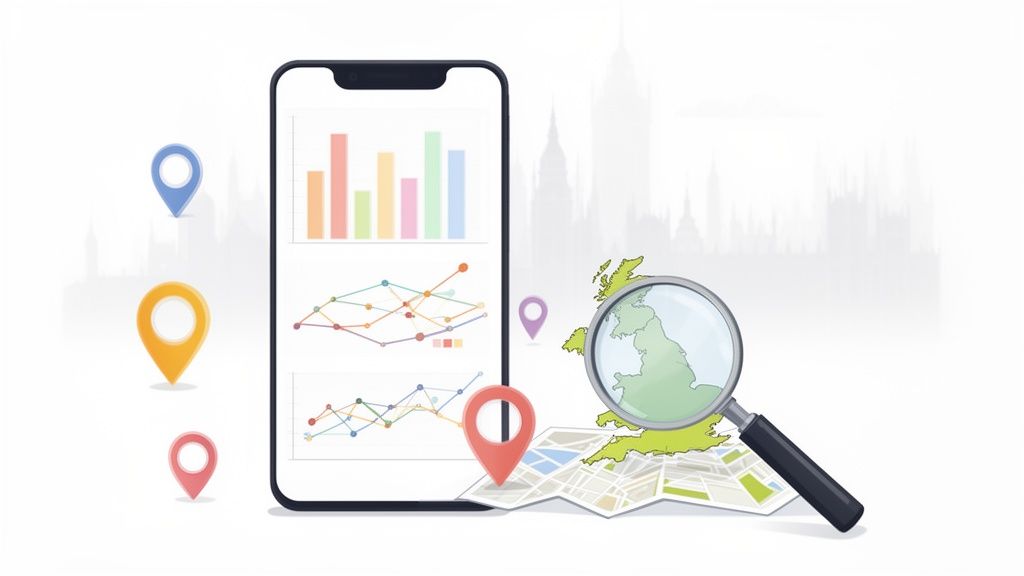
Your Google Business Profile (GBP) is one of your most powerful local marketing tools, but are you tapping into its full potential? Tucked away inside your profile is a free analytics suite from Google called Insights. This is where the magic happens.
These critical data points show you exactly how customers are finding your business on Google Search and Maps. It’s not just about views; it’s about understanding the entire customer journey, from the moment they type in a search term to when they click for directions or call your number.
Why Your GBP Insights Are a Goldmine of Customer Data

For many local business owners, the analytics dashboard looks like a confusing jumble of charts and numbers. But what if you saw it as a direct roadmap to getting more customers through your door? That’s the real value of Google Business Profile insights. They’re so much more than vanity metrics; they tell the story of how your customers find you.
This data reveals exactly how potential customers are searching, what they’re looking for, and how they choose to interact with your business. It’s the difference between guessing what works and knowing for sure.
Decoding the Customer Journey
Think of your insights as a detailed report card on customer behaviour. Every single metric is a clue that can sharpen your business strategy and drive real-world results, whether that’s more footfall, phone calls, or website clicks. By learning to interpret this information, you can stop making assumptions and start making data-driven decisions.
Here's a quick look at the core metrics you'll find and what they tell you.
Core Google Business Profile Insights at a Glance
This table breaks down the essential metrics in your GBP dashboard and what they really signal for your business's growth.
| Metric Category | What It Measures | Why It Matters for Growth |
|---|---|---|
| Searches | How customers found you (e.g., searching for your name vs. a category like "plumber near me"). | Shows whether your brand is known or if you're capturing new customers looking for your services. |
| Views | The number of times your profile was seen on Google Search or Google Maps. | A key indicator of your overall visibility and reach in local search results. |
| Customer Actions | Clicks on your website, direction requests, and phone calls initiated from your profile. | These are high-intent actions, signalling a customer is ready to engage or make a purchase. |
| Photo Views | How often your photos are viewed compared to photos from other businesses. | Strong photo engagement suggests your visuals are resonating and building trust with searchers. |
Understanding these numbers allows you to pinpoint what's working and where there's room for improvement.
The main benefits of regularly analysing your GBP insights include:
- Understanding Customer Intent: You can see the exact search terms people use to find services like yours, helping you align your profile with real demand.
- Measuring Real-World Actions: Track tangible results like direction requests and phone calls, which are strong indicators of a customer's intent to visit or buy.
- Optimising Your Profile: Identify weaknesses, such as low photo views or a lack of engagement, and take specific steps to improve them.
By treating your Google Business Profile insights as a goldmine, you uncover invaluable information about your audience. This data allows you to refine your local SEO, enhance your visibility, and ultimately, attract more paying customers.
In this guide, we’ll demystify these numbers, turning them from confusing charts into an actionable growth strategy. We'll show you how to read the story your customers are telling you—and then write the next chapter yourself.
If you want to get a head start, you can explore how a specialised Google My Business reporting tool can automate this entire process for you, turning complex data into clear, actionable steps.
How Customers Are Discovering Your Business
Every business owner wants to know: how are people actually finding me online? Your Google Business Profile insights report holds the key, specifically in the section titled ‘How customers search for your business’. This isn't just a list of numbers; it’s the story of how people connect with your brand.
Think of it as separating the regulars who know you by name from the new faces just discovering what you do. This data gets right to the heart of customer intent. Are they searching for you directly, or are they stumbling upon your profile while looking for a service you happen to offer? Getting this right is fundamental to your entire marketing plan.
Decoding Your Search Traffic
Your dashboard splits your search traffic into three main buckets. The balance between these is a fantastic indicator of your brand's strength and how well your local SEO is performing. A healthy profile will have a mix of all three, but the specific ratio tells a unique story about your business.
Let’s break down what each search type really means:
Direct Searches: This is someone searching for your business by name or address—for example, typing "The Corner Cafe Bristol" into Google. It's a clear sign of brand recognition and shows you have loyal customers who seek you out.
Discovery Searches: This is the real gold for local growth. It’s when someone searches for a category, product, or service you offer, and Google shows them your profile. Think "best coffee near me" or "emergency plumber in Manchester". A high volume of Discovery searches means your optimisation is paying off and you're attracting brand-new customers.
Branded Searches: This one is a bit of a hybrid. A user searches for a brand related to your business (like "Costa Coffee near me" if you run an independent cafe). It’s less common for many small businesses, but it gives you context on how you stack up against the big names.
This screenshot from the performance report gives you a clear visual on how this data is displayed.
At a glance, you can see whether your traffic is coming from people who already know you (Direct) or from fresh prospects finding you for the first time (Discovery).
Turning Insights Into Actionable Strategy
If you see a steady climb in Direct searches, pat yourself on the back. It means your branding is working and people are coming back for more. This is usually the result of great service and building a solid reputation. Your job is to keep that momentum going.
For many local businesses, a high percentage of Discovery searches—often over 80%—is a brilliant sign. It proves your profile is correctly optimised to show up for those generic, high-intent searches that bring in customers who’ve never even heard of you. This is where your growth comes from.
But what if your Discovery numbers look a bit weak? That’s a clear signal to get back to basics and work on your local SEO. To give this a boost, focus on these areas:
- Keyword Optimisation: Make sure your business description, services, and products are filled with the terms your ideal customers are actually typing into Google.
- Google Posts: Get into the habit of creating regular posts that feature specific offers or services. Use relevant keywords to help you get found in Discovery searches.
- Category Accuracy: This is a simple but crucial one. Double-check that your primary and secondary business categories are a perfect match for what you do.
By keeping an eye on these search trends, you can start making smarter decisions. Nurturing brand loyalty will lift your Direct searches, while sharp profile optimisation will expand your reach through Discovery. For a much deeper look at how your profile is ranking for these critical search terms in different postcodes, using a local rank tracking tool will give you the granular insights you need to truly dominate.
Turning Clicks and Calls Into Customers
High search visibility is a great start, but let's be honest—impressions don't pay the bills. The real gold in your Google Business Profile insights is found in the actions people take. These are the tell-tale signs that someone is moving from a casual browser to a potential customer.
We’re focusing on three key metrics here: website clicks, direction requests, and phone calls. Each one tells you something different about a customer's journey and how ready they are to buy. Getting to grips with these actions is the secret to understanding what actually drives revenue for your local business.
From Digital Interest to Physical Footfall
For any brick-and-mortar business, a request for directions is one of the strongest buying signals you can get. It’s a clear sign that someone intends to walk through your door, and soon. If you run a restaurant, shop, or local clinic, this metric is a direct window into your upcoming footfall.
A phone call is just as valuable, especially for service-based businesses like plumbers, solicitors, or home repair specialists. When a person picks up the phone, they've usually done their research and are ready to get a quote, book a service, or ask a final, decisive question.
This diagram shows how different customer searches can lead to these high-value actions.

Seeing the path from a general search to a specific action like a direction request really shows how a well-optimised profile can literally lead customers straight to you.
How to Get More Customer Actions
So, how do you get more people to take that next step? It all comes down to creating a complete and compelling profile that removes any and all friction.
Try these strategies to start:
- Write Compelling Calls-to-Action (CTAs): Don't just post updates; use your Google Posts to promote offers, events, or new stock with clear CTAs like "Book Now," "Call Today," or "Learn More."
- Check Your Contact Details Religiously: Make sure your phone number, address, and website URL are 100% accurate. A typo in your number or a broken link is a customer lost forever. Simple as that.
- Show Off Your Location: Use high-quality, professional photos and videos. An inviting picture of your shop front, a beautifully presented meal, or a shot of your friendly team can be the final push someone needs to hit that "Directions" button.
Trust is the currency that turns a view into an action. By managing your profile consistently—answering questions in the Q&A section and responding to every single review—you build the social proof needed to convince someone that you’re the best choice.
UK data shows just how important this is. For many businesses, direction requests account for 3%–5% of total profile views. But for high-traffic sectors like restaurants and retail, that can jump to 7%–10%, which translates directly into people walking in and spending money.
Tracking and Optimising for High-Intent Actions
To really measure the impact of your profile, you need to connect the dots. This is where tools like call tracking software come in. They help you trace leads directly back to your GBP, giving you a much clearer picture of your return on investment.
Beyond tracking, it's about constant refinement. If your website clicks are low, it might be time to rewrite your business description or check that your website link is easy to spot. If phone calls are lagging, think about making the "Call" button your main CTA in Google Posts.
By focusing on these action-based metrics in your Google Business Profile insights, you stop just being seen and start being chosen. For a deeper look at improving every part of your profile, our complete guide to Google Business Profile management covers more advanced strategies.
Reading the Minds of Your Local Searchers
Think of your Google Business Profile's search queries report as a direct line into your customers' thoughts. It's not just a dry list of keywords; it’s a transcript of exactly what people are typing into Google Search and Maps to find a business just like yours.
By really digging into these phrases, you can stop guessing what your customers want and start aligning your business with their actual needs. This data shows you, clear as day, whether people are finding you by name or by searching for a service you provide—a critical piece of the puzzle for any local marketing strategy.
Branded vs. Non-Branded Queries
First things first, you need to sort your search queries into two main piles: branded and non-branded. Each one tells a completely different story about how people find you.
Branded Queries: These are searches that include your business name, like "The Ginger Pig Butchers" or "Bob's Bikes opening times". These people already know who you are. This is a sign of brand recognition, repeat business, and good old-fashioned word-of-mouth working its magic.
Non-Branded Queries: Here's the real gold. These are generic, service-based searches like "emergency electrician in Manchester" or "dog-friendly cafe near me". When you see a lot of these, it’s a clear signal your local SEO is hitting the mark, bringing in new customers who are looking for a solution, not a specific business.
Getting the balance right is crucial. While a steady stream of branded searches confirms you have a loyal customer base, it's the non-branded queries that fuel your growth and bring new faces through the door.
From Keywords to Business Intelligence
Your search queries report is so much more than a simple SEO tool. It's a genuine source of business intelligence. If you pay close attention to the terms people are using, you'll start to spot trends, pinpoint your most valuable services, and even uncover brand-new opportunities.
Imagine you're a plumber and you suddenly see a spike in searches for "leak detection service". That’s the market sending you a direct signal about a high-demand service. With that insight, you can immediately:
- Fine-tune Your Profile: Add "Leak Detection" as a specific service on your GBP.
- Create Targeted Content: Write a few Google Posts about your expertise in finding hidden leaks.
- Update Your Description: Weave that valuable phrase naturally into your main business description.
One of the most common mistakes we see is businesses chasing high-volume keywords that have nothing to do with their actual services. Your goal isn't to rank for everything; it's to dominate the search terms that lead to profitable customers.
On the other hand, you might discover queries you never expected. A coffee shop owner might find people are searching for a "quiet place to work with WiFi". This reveals a customer need you weren't actively promoting. Armed with this knowledge, you can shift your messaging to attract this whole new crowd. You can even use artificial intelligence to analyse these patterns and predict what customers will search for next. For more on that, check out our guide on how to use AI for local SEO.
By regularly checking in on your search queries, you can make sure your Google Business Profile perfectly reflects what your local customers are looking for, turning their searches into your success.
Putting Your Insights Into Action
So, you've got all this data from your Google Business Profile. What now? Let's be honest, data is useless until you do something with it. The real magic happens when you turn those numbers into a practical, hands-on checklist for growing your business.
Think of it this way: a low number of photo views isn't just a stat; it’s a sign that your visual shopfront isn't catching anyone's eye. And if you’re not showing up for the search terms you know are vital, it means potential customers are looking for you but can't find you. This is where your insights become your roadmap.

Optimising Based on Your Data
Think of your insights report as a diagnostic tool. Each metric shines a light on what’s working and, more importantly, what needs a bit of a tune-up. Here’s how you can take direct action based on what the numbers are telling you.
Photo Views Lagging? This is your cue to get a simple photo strategy in place. Make a plan to upload at least one new, high-quality picture every single week. Use geotagged photos of your premises, your team in action, or your products to give people a genuine feel for what you do.
Missing Key Search Queries? If you're not appearing for crucial search terms, it’s time for a content refresh. Weave those keywords naturally into your business description, update your services list, and even answer questions in the Q&A section. This helps align your profile with how real customers are searching.
Customer Actions Are Low? High views but few calls or direction requests? Your profile isn’t giving people a strong enough reason to take that next step. You need to strengthen your calls-to-action in Google Posts, double-check that every contact detail is spot-on, and respond to all reviews to build that all-important trust.
Benchmarking Against Your Competitors
Remember, your performance doesn't happen in a bubble. A really powerful way to get some context is to see what your top-ranking local competitors are doing right. Go ahead, search for your main services in your area and take a close look at the businesses that land in the top three spots.
What’s the quality of their photos like, and how often do they post? How do they word their business descriptions? Pay attention to the level of detail in their service lists. This kind of analysis gives you a clear benchmark and quickly reveals gaps in your own strategy, helping you learn from what’s already working for others.
Actionable data is the absolute key to local search success. It’s not about having the most data, but about using it to make smarter decisions. Each insight is a signpost telling you exactly where to focus your efforts for the greatest impact.
This is especially true for something as basic as profile completeness. UK-focused GBP insights show that a whopping 75% of businesses ranking in the top three local search positions have fully completed their profile descriptions. This drops to just 65% for businesses in positions 6-10 and plummets to under 40% beyond that. It’s a simple step, but it’s a game-changer for getting into that coveted Local 3-Pack.
Once you understand what the metrics mean, the next job is to act. This involves everything from actively encouraging positive feedback to efficiently handling negative comments, which is central to Mastering Google Business Reviews. Turning these analytical insights into a repeatable process is what separates the businesses that thrive from those that just tread water. You can make this whole job easier by creating straightforward SEO reports for customers that turn complex data into a clear plan of action.
Your Google Business Profile Questions, Answered
Got questions about your Google Business Profile performance? You're not alone. Here are the answers to some of the most common queries we get from UK businesses trying to make sense of their Insights data.
How Often Should I Check My Google Business Profile Insights?
It’s tempting to check your stats every day, but you'll drive yourself mad trying to interpret every little spike and dip. For most businesses, a monthly check-in is the sweet spot. It gives you enough data to see genuine trends and understand if your marketing efforts are actually paying off, without getting bogged down in daily noise.
The exception? If you’re running a specific campaign, have just overhauled your profile, or you're in a really tough local market, switching to a weekly review can be smart. It lets you see what’s working much faster, so you can tweak your strategy on the fly.
Why Are My GBP Views High But Customer Actions Are Low?
Ah, the classic "plenty of window shoppers, but nobody's coming in" problem. This is a tell-tale sign that while your profile is visible, it isn't compelling enough to get people to take the next step. Getting seen is half the battle, but you're falling at the final hurdle.
Think of it as a conversion problem. You need to give people a reason to click. Take a hard look at your profile's fundamentals:
- Your Photos: Are they sharp, professional, and do they truly represent the best of your business? Grainy, outdated images won't inspire confidence.
- Your Description: Does it quickly and clearly explain what you do and why a customer should choose you over the competition?
- Your Reviews: Are you responding to reviews, both good and bad? An active, engaged owner builds a huge amount of trust and social proof.
Fixing these elements is often all it takes to turn those passive views into phone calls and direction requests.
Can I See Who Specifically Viewed My Profile?
In a word, no. For privacy reasons, Google keeps all personal user data anonymous. You can't see the names, email addresses, or any other identifying details of the people who find your business on Google.
Google Business Profile insights are all about spotting broad trends, not tracking individuals. The data will tell you that 50 people requested directions to your shop, but it will never tell you who those 50 people were. The goal is to understand what your potential customers are doing as a group so you can better serve them.
What Is the Difference Between Performance and the Old Insights?
You might have noticed Google talking about 'Performance' reports instead of the old 'Insights' dashboard. Don't worry, you haven't missed much! This is mainly a name change and a shift in location.
The new Performance reports are now built directly into the Google Search and Maps interfaces where you manage your profile, making them easier to find. While the charts look a bit slicker and more interactive, the core information—how many people saw your profile, where they came from, and what they did next—is essentially the same. Google's aim was simply to make the data a bit more straightforward for busy owners to digest.
Ready to stop guessing and start making decisions based on clear data? The LocalHQ platform takes the confusion out of GBP reporting, turning those charts into a simple, actionable plan. It shows you exactly what’s driving your calls, clicks, and footfall, and even provides AI-powered recommendations to help you climb the local rankings and win more customers.
Discover how LocalHQ can transform your Google Business Profile performance.