The £2M Mistake: Why Most Franchise SEO Strategies Fail at Scale

For a growing franchise, local search visibility is the engine of growth. It's the difference between a new customer walking through your door or choosing a competitor just down the road. Yet, countless multi-location businesses make the same critical franchise SEO mistakes, leaving millions in potential revenue on the table.
The problem isn't a lack of effort; it's a failure of scale. A strategy that works for one location often breaks down completely when applied across ten, fifty, or five hundred outlets. This isn't just a theoretical loss. We’ve analysed real case studies where simple, repeated errors in areas like Google Business Profile management and location-specific content have directly led to stagnated growth and a seven-figure gap in yearly revenue. These are the kinds of missteps that quietly erode your brand's local footprint, one location at a time.
This guide moves beyond generic advice to dissect the most costly and common franchise SEO mistakes we see in the field. We will unpack eight specific pitfalls, from inconsistent NAP (Name, Address, Phone number) data to neglecting a localised review strategy. For each mistake, we provide a clear, step-by-step fix, its priority level, and show how you can build a robust, scalable system to turn a widespread weakness into a powerful competitive advantage. You will learn not just what goes wrong, but precisely how to get it right.
1. Inconsistent Google Business Profile Information Across Locations
One of the most fundamental yet damaging franchise SEO mistakes is failing to maintain consistent business information across every single location. This error fragments your digital presence, sending conflicting signals to Google's algorithms and potential customers. For a multi-location business, consistency in your Name, Address, and Phone number (NAP) is the bedrock of local search visibility.
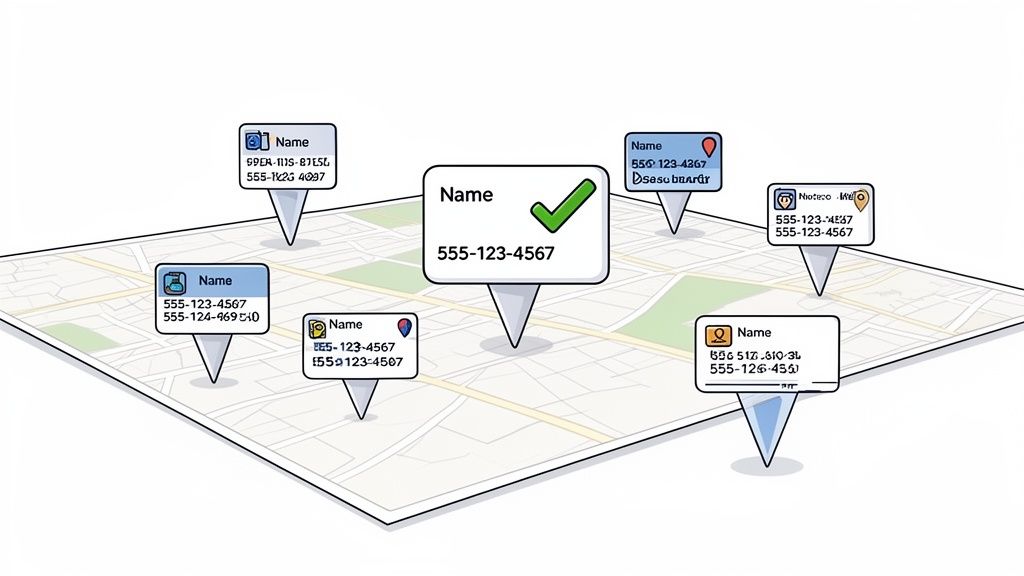
When search engines crawl the web, they look for matching NAP details across your website, Google Business Profiles (GBP), and other online directories like Yelp or TripAdvisor. Inconsistencies, even minor ones, create doubt about the accuracy of your data. This directly impacts your ranking in the local pack and on Google Maps, as Google prioritises businesses it can confidently verify and recommend.
The Impact of Inconsistent Data
Imagine a customer searching for your brand. One GBP profile lists your phone number as "(020) 7946 0123" while another uses "02079460123". Or perhaps one location is categorised as a ‘Fast Food Restaurant’ while another, offering the same menu, is listed as just a ‘Restaurant’. These small differences erode trust with search algorithms, suppressing your rankings and handing a competitive advantage to more organised rivals. For franchises, this problem is often magnified by local managers making unauthorised or non-standardised changes, leading to widespread data chaos.
How to Fix Inconsistent GBP Information
Centralised control is the key to solving this issue. Auditing and standardising your data is a critical first step towards better local search performance.
Actionable Steps:
- Conduct a Full NAP Audit: Manually check or use a tool to review the Name, Address, and Phone number for every location on its respective GBP profile and website location page.
- Create a Standardisation Document: Establish a single, correct format for all data points. Define rules for address lines (e.g., "Street" vs "St."), phone numbers, and business categories. Distribute this guide to all franchisees.
- Implement Centralised Management: Use a platform that allows you to manage all GBP profiles from one dashboard. This prevents rogue edits and ensures updates are pushed out uniformly.
Key Insight: Google values consistency as a primary trust signal. A franchise with 50 locations all presenting identical, accurate information will almost always outperform a competitor with 50 locations sending mixed signals.
By addressing this foundational franchise SEO mistake, you build a solid base for all other local marketing efforts. LocalHQ’s AI Optimisation Wizard and GBP Sync features can automate this entire process, auditing all profiles for inconsistencies and synchronising correct information across your entire network from a single, controlled source.
2. Neglecting Location-Specific Content and Keyword Optimisation
A widespread franchise SEO mistake is broadcasting generic, one-size-fits-all content across every location page. Relying on a corporate template without local customisation means you’re communicating with every community in the exact same way, ignoring their unique character, needs, and search behaviours. Search engines are designed to reward relevance, and duplicate content fails this test spectacularly.
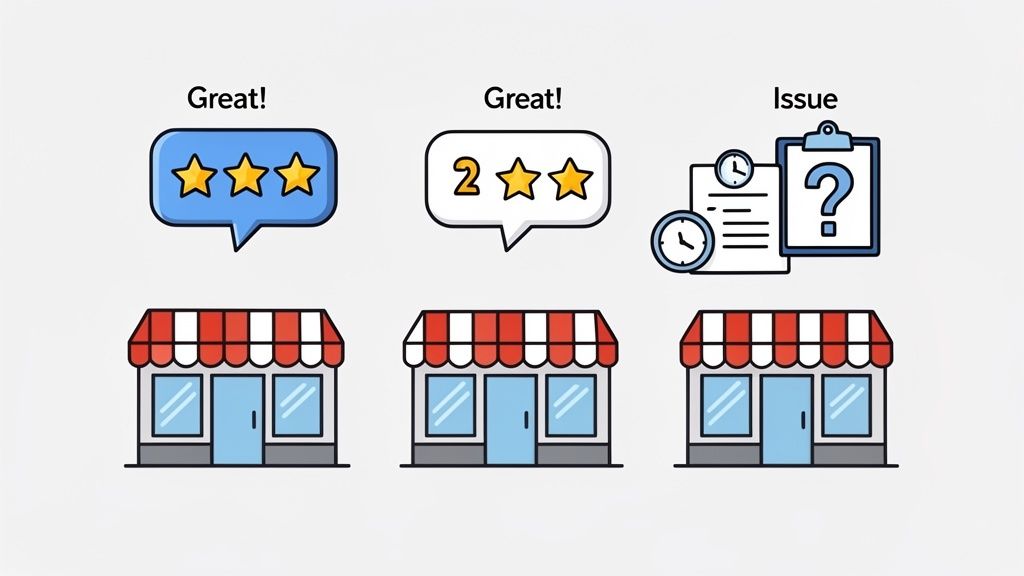
This oversight directly harms your ability to rank for valuable, location-based searches. Customers don't search for a "pest control company"; they search for "wasp nest removal in Croydon" or "termite specialist near me". Without content specifically optimised for these local queries, your franchise locations become invisible to the very people they are meant to serve.
The Impact of Generic Content
Consider a national hair salon franchise using the same service descriptions and imagery for its locations in Manchester and Brighton. This approach misses the chance to mention its proximity to The Lanes in Brighton or its expertise with styles popular among students near the University of Manchester. It fails to connect. A competitor with a page titled "Best Balayage Near Old Trafford" that discusses local trends will capture that specific, high-intent audience. This is a critical failure in any franchise SEO strategy, as it treats distinct markets as a monolith.
How to Fix Neglected Local Content
The solution lies in creating a scalable system for content localisation. This doesn’t mean writing a completely new website for each franchisee, but rather enriching a solid template with meaningful, location-specific details.
Actionable Steps:
- Conduct Location-Level Keyword Research: Use SEO tools to find out what customers in each specific city, town, or even neighbourhood are searching for. Identify local keywords, such as "[service] in [local area]" or "[product] near [landmark]".
- Develop Dynamic Content Templates: Create location page templates that include designated sections for local information. These variables can be used to insert local team photos, neighbourhood names, testimonials from local customers, and mentions of nearby attractions.
- Encourage Local Input: Empower franchisees or local managers to provide authentic content. Ask them about community partnerships, local events they’re sponsoring, or unique customer stories. This adds a layer of authenticity that corporate content can never replicate.
Key Insight: Localisation is about more than just adding a city name. It's about proving to both Google and customers that your business is an active, integrated part of the local community it serves.
By fixing this common franchise SEO mistake, you transform your location pages from generic digital pamphlets into powerful local ranking assets. LocalHQ's content management features allow you to build and deploy localised content templates at scale, ensuring each franchise location has a unique voice while maintaining brand consistency.
3. Poor Management of Multiple Location Google Business Profiles
A frequent and costly franchise SEO mistake is the decentralised and chaotic management of Google Business Profiles (GBPs) across multiple locations. This error often arises from weak verification chains, where corporate teams lack direct control, leading to incomplete profiles, outdated information, and an inability to maintain brand standards across the network. Without a unified strategy, each location becomes a digital island, weakening the entire brand's local search presence.
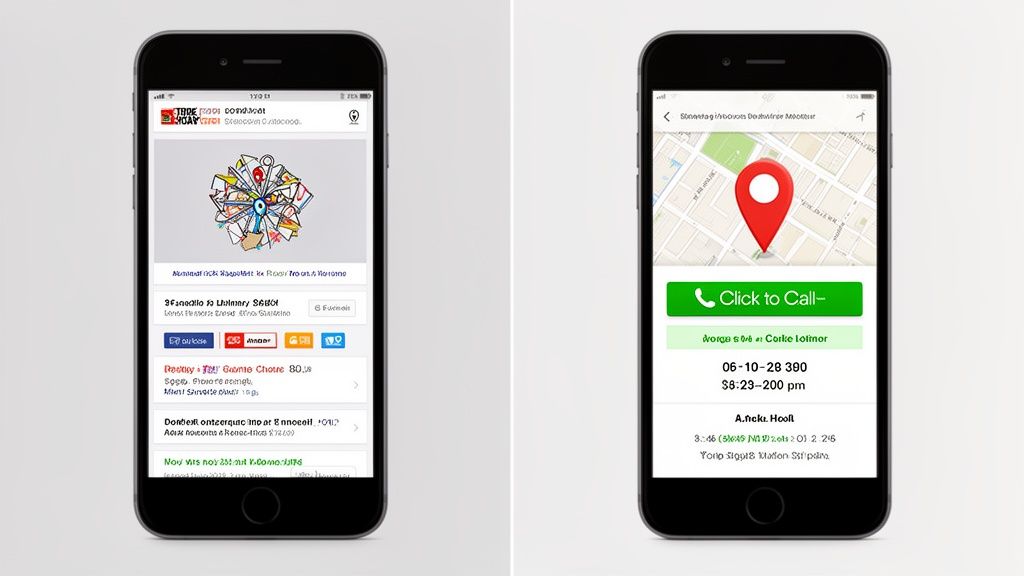
When franchisees or local managers individually claim and manage profiles, inconsistencies are almost guaranteed. This results in profiles missing crucial details like opening hours, menu links, or appointment booking features. Unverified or rogue profiles can persist with incorrect data, damaging customer trust and sending negative signals to Google. Ultimately, this disorganisation prevents the franchise from presenting a strong, cohesive brand front, which is critical for successful local SEO for multiple locations.
The Impact of Poor Profile Management
Consider a quick-service restaurant chain where 60% of its locations have incomplete GBP listings; they lack menu links and online ordering options. Customers searching for a quick meal will likely choose a competitor whose profile offers a seamless path to purchase. Similarly, a retail franchise with unverified locations claimed by former managers displays outdated information, confusing customers and leading to negative reviews. This lack of central control makes it impossible to roll out brand-wide promotions, respond to feedback promptly, or ensure every customer has a consistent, positive experience.
How to Fix Poor GBP Management
Regaining control and establishing a clear management hierarchy is the only way to resolve this widespread issue. A systematic approach will ensure every profile is an asset, not a liability.
Actionable Steps:
- Establish a Proper Verification Chain: Use Google’s organisational structure tools to create a hierarchy that gives corporate oversight while still allowing for local input where appropriate.
- Audit Every Profile for Completeness: Use a platform to check all listings against a brand-defined standard. Ensure all fields, attributes, and features (like Posts and Q&A) are being used effectively.
- Create Standard Operating Procedures (SOPs): Develop clear guidelines for franchisees and location managers on their roles and responsibilities regarding GBP, from verification to responding to reviews.
- Implement Centralised Posting and Updates: Use a tool to schedule and publish posts, offers, and images across all or select groups of locations from a single dashboard, ensuring brand consistency.
Key Insight: Centralised management of Google Business Profiles doesn't mean removing local autonomy. It means creating a framework where brand standards are upheld, performance is measurable, and every location benefits from a strong, unified digital strategy.
By correcting this common franchise SEO mistake, you can transform your disparate profiles into a powerful, coordinated network. LocalHQ’s platform provides the tools for central control, enabling you to sync information, schedule posts, and manage reviews across your entire franchise network from one dashboard. The AI Optimisation Wizard provides continuous recommendations to ensure every profile is fully complete and performing at its best.
4. Ignoring Local Citations and Directory Consistency
While Google Business Profile is the centrepiece of local SEO, it doesn’t exist in a vacuum. A common franchise SEO mistake is overlooking the wider ecosystem of online directories and citations. Citations are mentions of your business's Name, Address, and Phone number (NAP) on other websites, such as Yelp, Apple Maps, Facebook, and industry-specific portals. Ignoring them weakens your digital authority and creates a confusing picture for search engines.
Think of each consistent, accurate citation as a vote of confidence for your location's existence and legitimacy. When Google finds your franchise location listed with the same details across multiple trusted directories, it reinforces that your GBP information is correct. This consistency is a powerful ranking signal that helps solidify your position in local search results.
The Impact of Inconsistent Data
Inconsistent or missing citations create digital ambiguity. For instance, a home services franchise might have correct details on Google but conflicting service areas or phone numbers on Checkatrade and TrustATrader. A pizza franchise with 50 locations could find that only 15 are correctly listed on Yelp, leaving the rest invisible to a huge customer base. This fragmentation doesn't just confuse algorithms; it directly leads to lost visibility, missed phone calls, and frustrated customers who can't find reliable information. It opens the door for competitors with a more organised citation profile to dominate search results.
How to Fix Inconsistent Citations
A systematic approach is needed to build and clean up your franchise's citation portfolio. This involves auditing your current presence and strategically building new, relevant listings.
Actionable Steps:
- Audit Your Core Citations: Start by checking your presence and accuracy on major platforms like Yelp, Apple Maps, and Facebook for every single location.
- Identify Industry-Specific Directories: Research and prioritise high-authority directories relevant to your sector. A dental practice must be on the GDC register and dental-specific directories; a restaurant needs to be on TripAdvisor and Zomato.
- Establish Citation Guidelines: Create a master document with the exact NAP format, business description, and service categories for franchisees to use, ensuring all new listings are consistent.
- Clean Up and Build: Manually or with a service, correct all inaccurate listings you find. Then, begin building new citations on the priority directories you identified.
Key Insight: Citations act as third-party verification for your business data. The more high-quality, consistent mentions you have across the web, the more Google trusts that your franchise locations are legitimate, active, and correctly represented.
Managing this across dozens or hundreds of locations is a significant task. LocalHQ’s upcoming Citation Manager module simplifies this by automatically auditing your citation health across key directories, identifying inconsistencies, and helping you build a powerful and consistent citation profile for every location. If you'd like to learn more about what local citations are and why they matter, our detailed guide can help.
5. Failing to Implement a Review Management Strategy
A significant and damaging franchise SEO mistake is neglecting a systematic approach to online reviews. Many multi-location businesses fail to generate and manage customer feedback across their network, leading to low review volume, slow response times, and inconsistent brand messaging. This is particularly harmful because reviews are a major local ranking factor and are often the first thing a potential customer sees.
Google's algorithms view recent, frequent, and positive reviews as strong indicators of a business's relevance and authority. Franchises that don't proactively manage their reputation miss out on a prime opportunity to improve local pack rankings, build customer trust, and gather invaluable feedback for operational improvements.
The Impact of Unmanaged Reviews
The damage from a passive review strategy is felt across the board. Consider a restaurant franchise where some locations have 200+ glowing reviews while others languish with fewer than 10; this creates huge visibility and trust disparities. Or imagine a service provider with a decent 4.2-star average but no responses to any reviews, making the brand appear unresponsive and unprofessional. Inconsistent response tones, from overly formal at one branch to defensive at another, also fracture brand identity and confuse customers.
How to Fix a Lacking Review Strategy
A successful review strategy requires a centralised, proactive system for both generation and response. Building a steady stream of authentic feedback while ensuring all replies align with your brand voice is essential.
Actionable Steps:
- Create a Review Generation Workflow: Implement automated post-purchase emails, SMS campaigns, or in-store QR codes that make it easy for happy customers to leave feedback.
- Develop Response Templates: Establish brand-approved templates for positive, negative, and neutral reviews. These should guide local managers while still allowing for personalisation.
- Set Up Centralised Alerts: Use a platform to monitor all locations for new reviews from a single dashboard, enabling rapid and consistent responses.
- Monitor Competitor Activity: Benchmark your review volume, average rating, and response rate against key competitors to set clear performance goals for your franchisees.
Key Insight: Reviews are not just a ranking factor; they are a direct conversation with your customers. A proactive review management strategy demonstrates that you are listening, which builds trust with both customers and search engines.
By making review management a priority, you address a critical franchise SEO mistake and turn customer feedback into a powerful marketing asset. To learn more about building a robust reputation system, explore these expert tips for managing online reviews. LocalHQ's Review Autoresponder can instantly craft on-brand, AI-powered responses, ensuring no customer feedback ever goes unanswered across your entire network.
6. Inadequate Mobile Optimisation for Franchise Locations
In an age where the majority of local searches happen on a smartphone, having inadequate mobile optimisation is a critical franchise SEO mistake. Many franchises pour resources into beautiful desktop websites but neglect the mobile experience for their individual location pages. This oversight is particularly damaging for industries like restaurants, retail, and home services, where customers are often searching on-the-go and need immediate, clear information.
A poor mobile experience leads directly to high bounce rates, lost conversions, and lower rankings. Since Google's shift to mobile-first indexing, the mobile version of your page is the primary one used for ranking and indexing. If your location pages are slow, difficult to navigate, or hide key details on a mobile screen, you are effectively invisible to a huge segment of your target audience.
The Impact of a Poor Mobile Experience
Consider a potential customer searching for a nearby restaurant. They land on your location page, but it takes over five seconds to load on a 4G connection. When it finally appears, the phone number is tiny and not clickable, and they have to scroll past a large, unoptimised image just to find your opening hours. Frustrated, they will simply hit the 'back' button and choose a competitor whose site provides the information instantly. This scenario plays out thousands of times a day, costing franchises countless leads and direct footfall.
How to Fix Inadequate Mobile Optimisation
A mobile-first approach to your location pages is non-negotiable. The goal is to deliver essential information quickly and seamlessly to users on any device.
Actionable Steps:
- Test and Validate: Use Google's Mobile-Friendly Test and PageSpeed Insights for every location page. Ensure they pass Core Web Vitals assessments, focusing on loading speed, interactivity, and visual stability.
- Prioritise Key Information: Make the address, a click-to-call phone number, and hours of operation immediately visible on mobile without any need for scrolling. Use prominent, easily tappable buttons.
- Optimise for Speed: Compress all images and implement responsive sizing to ensure they load quickly on mobile networks. Consider using modern image formats like WebP.
Key Insight: Mobile optimisation is not just about a responsive design; it's about prioritising the user journey for someone on the move. They need quick access to contact details and directions, not a slow-loading, desktop-centric experience.
By correcting this common franchise SEO mistake, you cater directly to the modern local searcher. LocalHQ’s platform is built with a mobile-first philosophy, ensuring all location pages and content modules are automatically optimised for speed and usability on mobile devices, helping you capture every potential customer, no matter how they search.
7. Lack of Schema Markup and Structured Data Implementation
A significant and often overlooked franchise SEO mistake is the failure to implement schema markup, also known as structured data. This code acts as a translator, helping search engines like Google understand the specific details of your business, such as location information, opening hours, services, and pricing. Without it, you miss out on opportunities for your locations to appear in eye-catching rich snippets and enhanced local search results.
Proper schema implementation allows your franchise locations to stand out directly on the search engine results page (SERP). This is especially critical for multi-location businesses, where a richer presentation can dramatically improve click-through rates and give you a clear advantage over competitors who appear as plain blue links.
The Impact of Missing Structured Data
Imagine a restaurant franchise without AggregateRating schema; its star ratings won't show up directly in search results, making it look less appealing than a competitor whose ratings are instantly visible. Or consider a medical franchise with 40 clinics where none use Physician or MedicalClinic schema, missing the chance to highlight specific doctors, specialities, and accepted insurance plans in enhanced search features.
Similarly, a home services franchise without Service and Offer schema cannot highlight its service areas or pricing upfront. This technical gap means search engines can’t fully grasp what each location offers, leading to lower visibility and fewer qualified leads.
How to Fix a Lack of Schema Markup
Implementing structured data across all location pages is a technical but powerful step towards dominating local search. The goal is to give Google a detailed, machine-readable summary of each location's key information.
Actionable Steps:
- Implement LocalBusiness Schema: Add comprehensive
LocalBusinessschema to every location page. Include name, address, phone number, coordinates, and an image. You can use a free tool like our LocalBusiness Schema Markup Generator to get started. - Specify Opening Hours: Use
OpeningHoursSpecificationschema to clearly define the opening times for each day, ensuring they display correctly in Google Search and Maps. - Add Ratings and Services: Incorporate
AggregateRatingschema to pull in star ratings from sources like your Google Business Profile. UseServiceorProductschema to detail the specific offerings at each franchise location. - Validate Your Code: Use Google's Rich Results Test or the Schema Markup Validator to check for errors and ensure your structured data is implemented correctly.
Key Insight: Structured data turns your standard search listing into a powerful marketing asset. It allows you to feed Google precise information about each location, which the algorithm rewards with better visibility and rich results that attract more clicks.
By adding this layer of information, you make it easier for both search engines and customers to understand exactly what each of your franchise locations provides, directly addressing a common but costly franchise SEO mistake.
8. Insufficient Geo-Grid Tracking and Local Keyword Visibility Monitoring
A pervasive and costly franchise SEO mistake is operating without a clear view of local keyword rankings. Many multi-location businesses fail to monitor how their individual branches perform for crucial search terms across different geographic areas, leaving them blind to both underperforming locations and emerging competitive threats. Without this granular visibility, franchises cannot make data-driven decisions, effectively allocate resources, or measure the true return on their SEO investment.
Geo-grid tracking visualises where your locations rank on a map, not just from a single, arbitrary point. A search for "emergency pest control" can yield different results from one side of a city to the other. Standard rank trackers often miss this nuance, providing a misleading picture of your actual search visibility where it matters most: in the specific neighbourhoods your customers live and work.
The Impact of Flying Blind
Imagine a hair salon franchise with 50 locations. Corporate might see a healthy overall ranking trend, but without local tracking, they are oblivious to the fact that 15 of their salons are on page three for their primary money-making keywords. Elsewhere, a pest control franchisee is being consistently outranked by a local competitor just a few streets away, but head office has no visibility of this critical performance gap. This lack of insight prevents targeted action, allowing competitors to dominate key service areas unchecked.
How to Fix Visibility Gaps
Implementing a robust local rank tracking system is essential for any serious franchise. This moves you from guesswork to a strategic, evidence-based approach to local SEO. A crucial step is establishing a comprehensive keyword rankings and visibility report that gives you a clear picture of performance.
Actionable Steps:
- Implement Geo-Grid Tracking: Use a tool to visualise keyword rankings across the genuine service areas of each franchise location, identifying strong and weak spots on a map.
- Track Location-Level Keywords: Monitor a core set of target keywords (e.g., "solicitors in Chelsea," "best pizza near me") for every single branch, not just at a national level.
- Benchmark Against Competitors: Compare your rankings against 3-5 key local competitors for each franchise to identify where you are losing ground and where opportunities exist.
- Connect Rankings to Conversions: Monitor calls, direction requests, and website clicks alongside ranking data to directly correlate SEO efforts with business outcomes.
Key Insight: True local visibility isn't about one ranking number; it's about understanding your search performance across every street and neighbourhood your franchise serves. Without this ground-level view, you are simply guessing.
By correcting this common franchise SEO mistake, you can pinpoint exactly which locations need support and measure the impact of your optimisations. LocalHQ’s Geo-Grid Rank Tracker provides this precise visibility, showing you exactly where you rank and helping you identify location-specific opportunities to dominate the local search results.
8-Point Franchise SEO Mistakes Comparison
| Issue | Implementation Complexity 🔄 | Resources & Scalability ⚡ | Expected Outcomes 📊 | Ideal Use Cases 💡 | Key Advantages ⭐ |
|---|---|---|---|---|---|
| Inconsistent Google Business Profile Information Across Locations | 🔄 Moderate–High: audit and governance processes required | ⚡ Moderate: centralised dashboard + ongoing training; scales with tooling | 📊 Significant local visibility and map ranking improvements over time | 💡 Multi-location franchises with varied local edits or legacy data | ⭐ Restores trust with search engines and customers; reduces duplicates |
| Neglecting Location-Specific Content and Keyword Optimisation | 🔄 High: content creation and localisation per location | ⚡ High: writers, local research, CMS templates; scalable with automation | 📊 Higher local keyword rankings, CTRs and relevance per market | 💡 Franchises in diverse markets where local intent differs by location | ⭐ Increases relevance and conversion from local searches |
| Poor Management of Multiple Location Google Business Profiles | 🔄 High: verification chains and centralised access setup | ⚡ Moderate–High: GBP management platform + verification effort | 📊 Critical gains in profile completeness, feature access and review handling | 💡 Networks with unverified/claimed locations or decentralised control | ⭐ Enables corporate oversight, consistent responses and optimisation |
| Ignoring Local Citations and Directory Consistency | 🔄 Medium–High: many directories and submission rules to manage | ⚡ Moderate: citation tools and ongoing monitoring needed | 📊 Improved local authority and cross-platform visibility; fewer false listings | 💡 Industries relying on niche directories (medical, home services, restaurants) | ⭐ Strengthens trust signals and protects against fraudulent listings |
| Failing to Implement a Review Management Strategy | 🔄 Medium: workflows, templates and response protocols | ⚡ Moderate: monitoring tools, autoresponders and staff time | 📊 Better ratings, faster response times, higher CTR and conversion | 💡 High-volume customer-facing locations where reputation drives traffic | ⭐ Boosts trust, provides UX insights and influences rankings |
| Inadequate Mobile Optimisation for Franchise Locations | 🔄 High: technical changes, performance and UX testing required | ⚡ High: development resources, testing on devices and networks | 📊 Lower bounce, higher mobile conversions and improved mobile rankings | 💡 Restaurants, retail and service franchises with mobile-first customers | ⭐ Direct impact on conversions and mobile-first ranking signals |
| Lack of Schema Markup and Structured Data Implementation | 🔄 Medium: developer implementation and validation | ⚡ Moderate: dev time plus ongoing validation and updates | 📊 Increased chance of rich results, higher CTR and voice/search coverage | 💡 Businesses seeking rich snippets, knowledge panels or product highlights | ⭐ Enhances SERP presence and helps match search intent |
| Insufficient Geo-Grid Tracking and Local Keyword Visibility Monitoring | 🔄 Medium: setup of geo-tracking and reporting workflows | ⚡ Moderate: rank trackers, analytics and analyst time; scales with tools | 📊 Data-driven prioritisation, ROI measurement and targeted fixes | 💡 Large multi-location franchises needing location-level performance insight | ⭐ Enables actionable insights and demonstrates SEO ROI |
From Mistakes to Mastery: Your Path to Scalable Franchise SEO
Navigating the complexities of multi-location marketing can feel like a constant battle against inconsistency and scale. Throughout this article, we’ve dissected the most common and costly franchise SEO mistakes, from inconsistent Google Business Profile data and neglected local content to poor review management and a lack of structured data. These aren’t just isolated errors; they are systemic fractures in your digital foundation that directly impact visibility, customer trust, and ultimately, revenue.
The core lesson is that what works for a single-location business breaks down when multiplied across dozens or hundreds of franchise outlets. Success at scale demands a shift in mindset from reactive, location-by-location fixes to a proactive, centralised strategy. It requires a system built on consistency, local relevance, and reputation management.
Key Takeaways for Building a Resilient Strategy
To move beyond simply avoiding these common pitfalls, focus on building a successful and repeatable online presence. This involves creating a detailed roadmap for your brand. For a deeper look into structuring this, exploring a High Performance Franchise Marketing Strategy can provide a blueprint for long-term growth and market leadership. The most critical takeaways to implement immediately include:
- Centralise Your Data: Consistency is king. Ensure every franchisee’s Name, Address, and Phone number (NAP) is uniform across all platforms, starting with Google Business Profile and extending to every local directory. A single source of truth prevents customer confusion and strengthens your authority in local search.
- Empower Local Relevance: While brand consistency is vital, local authenticity wins customers. Create a framework that allows franchisees to produce location-specific content, respond to local reviews, and highlight community involvement. This blend of corporate guidance and local flavour is a powerful combination.
- Prioritise Reputation Management: Reviews are a direct line to your customers and a major ranking factor. A proactive review strategy, involving consistent monitoring and prompt responses, demonstrates that you value customer feedback and are committed to service excellence at every branch.
- Measure What Matters: You cannot improve what you don’t measure. Implementing tools like geo-grid tracking to monitor local keyword rankings provides the tangible data needed to understand performance, identify weaknesses, and prove the return on your SEO investment.
Your Next Steps to SEO Mastery
Moving from making franchise SEO mistakes to achieving mastery is an ongoing process, not a one-time fix. The goal is to build a robust, scalable system that supports growth rather than hindering it. Start by conducting a comprehensive audit of your current digital presence against the mistakes outlined in this guide. Prioritise the issues that pose the greatest risk, such as inconsistent NAP data or a complete lack of review management.
By addressing these foundational problems, you’re not just correcting errors; you are investing in a future where every single one of your locations can become a local market leader. The journey from scattered efforts to a unified, powerful digital strategy begins with the decision to systematise your approach and equip your entire network with the right tools and knowledge. This commitment is what separates the franchises that merely survive from those that truly dominate their local markets.
Ready to turn these insights into action and eliminate franchise SEO mistakes for good? LocalHQ’s Geo-Grid Rank Tracker provides the precise visibility you need to stop guessing and start winning in local search. See exactly where you rank across every neighbourhood, identify your weakest spots, and make data-driven decisions to dominate the map. Stop letting inconsistent visibility undermine your brand and start building a scalable strategy with pinpoint accuracy.
For more detailed information about franchise SEO, read our Franchise SEO Strategy That Actually Scales: From 5 to 500 Locations.