White Label SEO Services: Your UK Agency’s Growth Guide

You've probably hit this point already. Sales is doing its job, clients keep asking for SEO, and your account team is promising timelines that your delivery team can't meet without late nights, rushed audits, or another expensive hire. That's usually where agencies start looking seriously at white label seo services.
The appeal is obvious. You keep the client relationship and the strategic lead, while another team handles the specialist work behind the scenes. On paper, that sounds clean. In practice, it can be one of the fastest ways to grow an agency, or one of the fastest ways to wreck trust if the partner is poor.
For UK agencies, the decision is rarely about whether outsourcing is morally right or wrong. It's about control. Which parts of SEO can you safely hand off, which parts need tight oversight, and where the standard white label model starts to creak, especially for local and multi-location clients.
Why UK Agencies Are Turning to White Label SEO
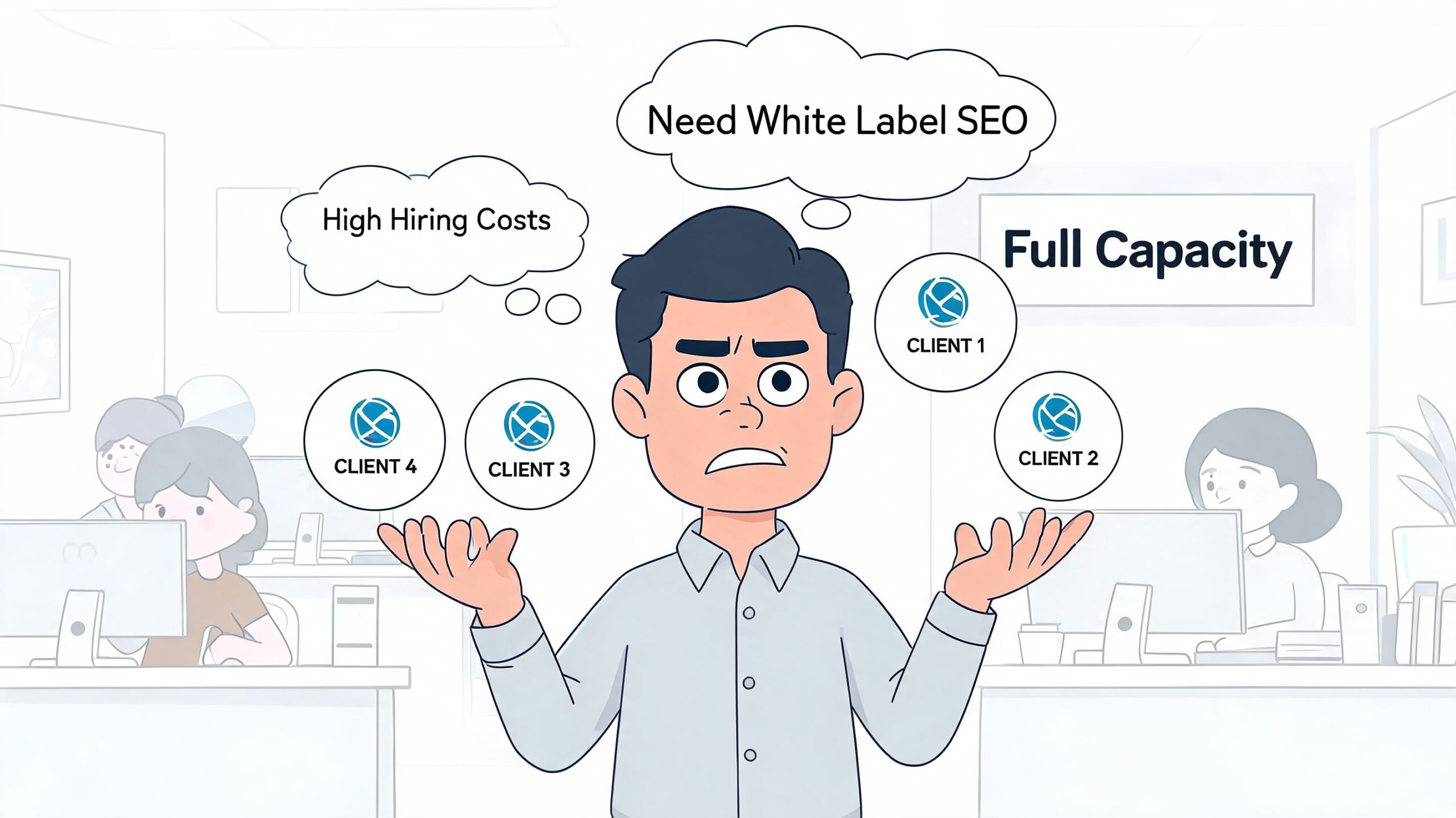
Monday morning often starts the same way. A client wants answers on a rankings drop, another needs new service pages signed off, and a third has finally approved a multi-location rollout that should have gone live two weeks ago. For a UK agency without spare SEO capacity, that backlog turns into rushed work, thin margins, or both.
White label seo services appeal because they solve a staffing problem faster than recruitment does. An agency keeps the client, keeps the commercial relationship, and buys in the delivery it cannot cover properly in-house.
What agencies are actually buying
In practice, agencies are usually buying one of three things. Extra production capacity, specialist skills they do not want to hire for yet, or a way to smooth delivery during busy periods.
That can work well. A decent partner can cover technical audits, on-page work, content production, and reporting without the delay of hiring, onboarding, and training a new team member. It also gives smaller agencies a way to sell SEO before they have a mature internal department.
The trade-off is control. Once delivery sits outside your business, quality slips are harder to spot early, turnaround times are less predictable, and account managers can end up translating between the client and a supplier who does not fully understand the commercial context.
A useful reference on the wider outsourcing model is this PostOnce guide to scaling agency services. It is useful if you are deciding which services your team should keep close and which can be delegated without causing delivery issues.
Why the model makes commercial sense
The financial case is usually straightforward. Agencies use white label SEO because fixed payroll is expensive, senior specialists are hard to recruit, and client demand is rarely steady enough to justify a full bench in every discipline.
That matters in the UK market, where retainers are often sold before delivery is fully built out. I have seen agencies win SEO work on the strength of good relationships and decent strategy, then struggle once the campaign needs technical resource, content production, local page deployment, and monthly reporting at the same time. Outsourcing protects margin if the partner is priced sensibly. It destroys margin if your team spends hours rewriting poor work.
A key benefit is flexibility.
A white label arrangement lets an agency add capacity without committing to salaries, pensions, software licences, management time, and the risk of underused staff in quiet months. For owners trying to grow without over-hiring, that matters more than theory.
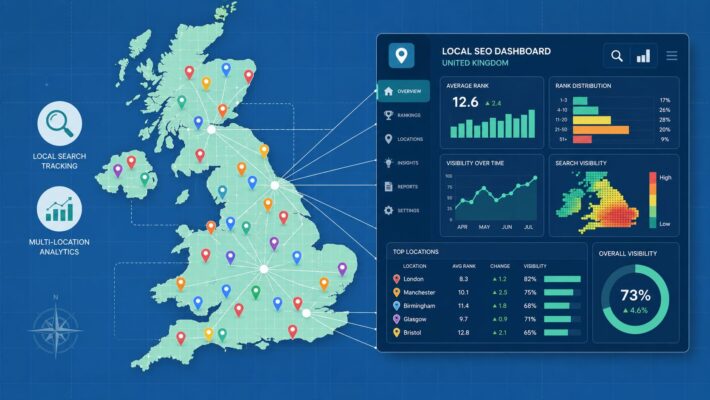
UK agencies also face a specific delivery problem that generic white label providers do not always handle well. Local SEO for businesses with multiple branches is repetitive, operationally messy, and easy to underestimate. Publishing location pages, keeping business data consistent, coordinating Google Business Profile changes, and reporting across dozens of sites or listings can swamp a small team. For agencies focused on improving multi-location search visibility, the question is not only whether to outsource. It is whether the standard agency-to-provider model is even the right setup for that work.
That is why more agencies are looking past simple fulfilment and asking a harder question. Do they need another delivery partner, or a better operating system for local SEO?
What a White Label SEO Partnership Includes
A decent white label partner shouldn't just sell “SEO” as a vague monthly retainer. They should be able to tell you exactly what gets delivered, by whom, how often, and in what format. If they can't do that, you're not buying a service. You're buying hope.
The core delivery areas
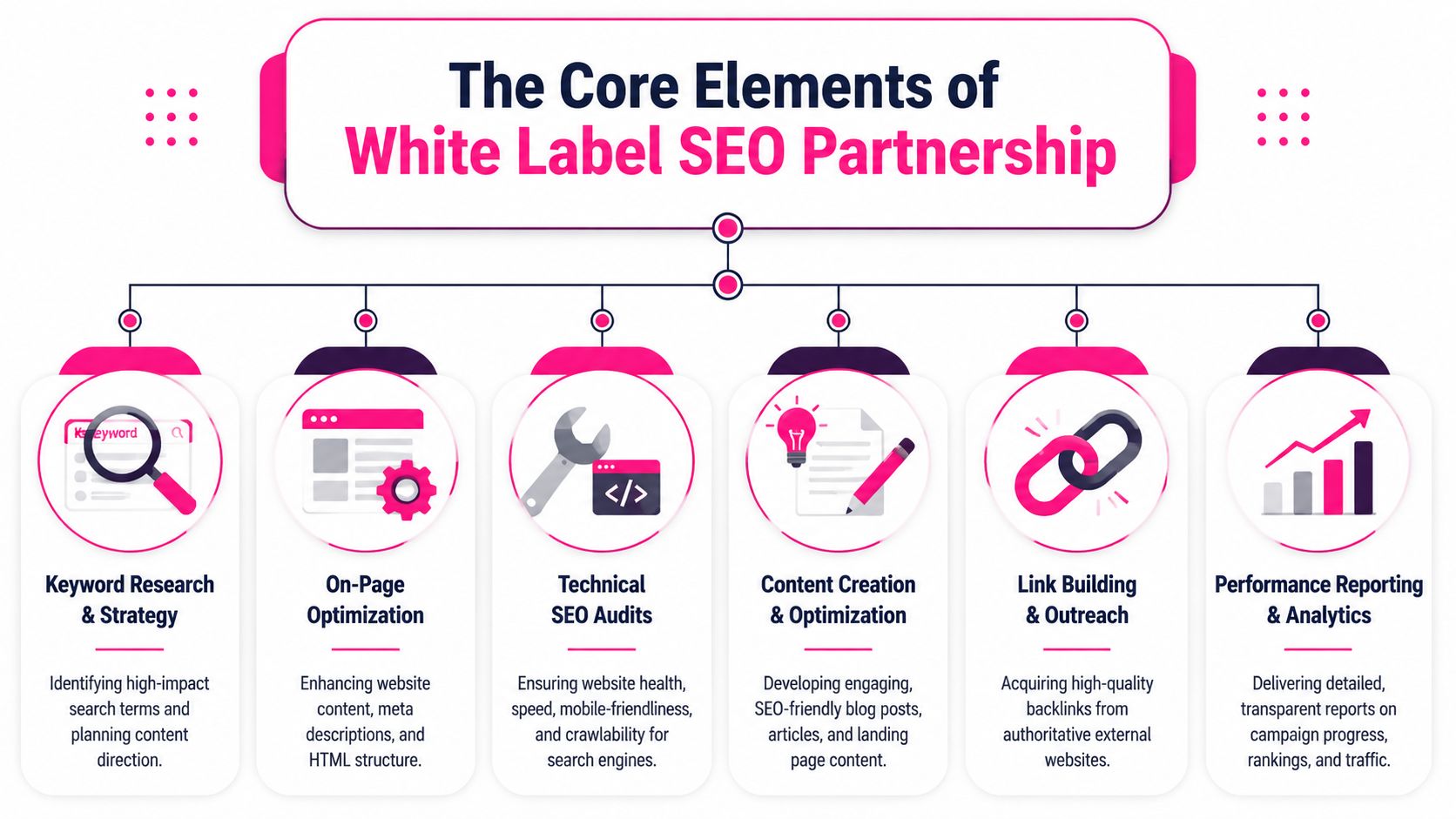
Most white label seo services are built from the same broad components, even if providers package them differently.
Technical SEO work
This includes crawl checks, indexation reviews, redirect issues, internal linking problems, sitemap validation, page speed observations, and implementation recommendations. Strong partners don't just dump tool exports from Screaming Frog or Google Search Console. They prioritise fixes and explain what matters first.Keyword research and search intent mapping Campaigns often go wrong early at this stage. The provider should identify terms the client can realistically target, group them by intent, and align them to existing or planned pages. Good keyword work shapes the rest of the campaign.
On-page optimisation
Titles, meta descriptions, headers, page structure, internal links, service-page copy, category copy, and content refreshes usually sit here. This is the bread-and-butter work many agencies outsource because it's time-consuming and repetitive at scale.Content production
Blog posts, landing pages, local area pages, FAQs, and support content are common inclusions. The challenge isn't producing words. It's producing copy that matches the client's tone, legal constraints, and commercial priorities.Link building and digital PR support
Some providers include outreach and placements as a standard deliverable. Others sell it separately. Either way, you need to know whether links come from manual outreach, existing publisher relationships, guest posts, citations, or niche edits.Reporting and account support
Monthly reports, ranking summaries, traffic trends, actions completed, next steps, and a named contact should be standard. If the report is impossible for your account manager to explain to a client, it's not useful.
What each deliverable should actually do
The problem with many provider lists is that they describe outputs, not outcomes. “Technical audit” can mean a proper prioritised document with implementation notes, or a PDF full of warnings that nobody acts on.
A better way to assess the package is to ask what each part changes:
| Deliverable | What it should change |
|---|---|
| Technical audit | Removes blockers and clarifies implementation priorities |
| Keyword strategy | Stops content drifting into low-value topics |
| On-page work | Improves relevance and page structure |
| Content production | Supports target terms and fills topic gaps |
| Link acquisition | Builds authority where rankings need support |
| Reporting | Helps you defend budget and explain progress |
Where agencies get caught out
Content is a good example. A provider may promise regular blog output, but if they don't understand the client's real services, geography, or conversion goals, you end up with generic filler that ticks a production box and does little else. The same issue shows up in reporting. White-labelled dashboards can look polished while saying almost nothing.
If your agency is leaning more heavily into repeatable local content workflows, this content automation roadmap for startups is useful context for thinking about process design, editorial control, and where automation helps versus where it creates bland output.
A white label package is only as good as the briefing system behind it. Weak briefs produce weak SEO, even with a competent supplier.
For local clients, content deliverables increasingly overlap with operational tasks beyond the website. That includes publishing events and images to Google, keeping profile updates current, and making sure local activity supports the wider campaign rather than sitting in a separate silo.
Comparing White Label SEO Service Models
A client signs three new locations on a Friday, wants ranking gains in six weeks, and expects one point of contact. By Monday, the agency has to decide whether to build delivery capacity, buy specialist help, or hand over most of the campaign to a supplier. The service model you choose affects margin, quality control, client communication, and how much risk sits with your team when results stall.
The useful comparison is simple. Who owns strategy, who does the work, and who carries the blame when deadlines slip or local rankings go backwards?
Comparison of White Label SEO Service Models
| Model | Best For | Control Level | Typical Pricing (GBP) |
|---|---|---|---|
| Dedicated team | Agencies with steady SEO volume and ongoing fulfilment needs | High | Monthly retainer |
| À la carte services | Agencies needing specific deliverables such as content or links | Medium | Per project or per task |
| Full-service retainer | Agencies wanting outsourced campaign delivery | Lower to medium | Monthly retainer |
| Project-based support | Agencies handling one-off audits, migrations, or clean-up work | High on strategy, lower on fulfilment | Fixed project fee |
Dedicated team model
A dedicated team works best when SEO is already a meaningful part of the agency's revenue and the monthly workload is predictable. You get continuity, cleaner processes, and fewer onboarding headaches because the same people stay close to the account.
That consistency has a cost. Someone in-house still needs to set priorities, review output, and push back on weak work. Agencies often buy a dedicated team expecting relief, then realise they have swapped recruitment problems for vendor management. It can still be the right decision, but only if your internal operation is disciplined enough to brief well and QA properly.
À la carte buying
À la carte suits agencies that know what good SEO looks like but do not want full-time capacity in every discipline. It is common for strategy to stay in-house while technical audits, content production, digital PR, or citation work are bought in as needed.
This keeps fixed costs lower, which helps when demand is uneven.
It also creates fragmentation. One supplier writes location pages, another builds links, and nobody is accountable for whether the pieces support the same commercial goal. For general SEO campaigns that is awkward. For multi-location local SEO, it can become messy fast because page creation, Google Business Profile updates, local landing page structure, and location data all affect each other.
If your margin depends on coordinating several niche suppliers every month, the agency is running an operations exercise as much as an SEO service.
Full-service retainers
Full-service retainers appeal to agencies that want a cleaner offer. One supplier handles most delivery, reporting follows a set pattern, and account managers have fewer moving parts to coordinate. For agencies without senior SEO leadership, this is often the fastest way to sell SEO beyond a handful of retained clients.
It is also the model that can do the most damage if the supplier is average. Weak technical decisions, generic content, or poor local targeting affect the entire campaign, and the client still holds your agency responsible. The commercial model can look attractive on paper because retainers are easier to mark up and easier to forecast. In practice, those margins disappear quickly if you spend unbilled time fixing work, managing complaints, or replacing churned clients.
Project-based support
Project support is the lowest-commitment option. It works well for migrations, recovery work, audits, or testing a supplier before giving them recurring accounts.
The limitation is obvious. Projects solve defined problems. They do not replace ongoing ownership. Agencies sometimes use project suppliers as a safe trial, then expect the same setup to support month-by-month local SEO delivery. That usually breaks once clients need regular content, location page updates, review responses, or coordinated work across dozens of branches.
How to choose the right model
The right model depends less on agency size and more on operational maturity.
- Choose dedicated support if SEO volume is stable and your team can manage briefs, QA, and client strategy.
- Choose à la carte if you already have strong internal oversight and only need specialist production help.
- Choose full-service if you need broad fulfilment capacity and have a clear process for checking quality before work reaches clients.
- Choose project support if the immediate need is narrow or you want to test how a supplier handles pressure, revisions, and deadlines.
UK agencies handling estate agents, dental groups, storage companies, hospitality brands, or any business with multiple sites should assess one more factor. Standard white label models often struggle when local SEO depends on repeatable workflows across many locations, not just labour. In that case, a platform can be a better fit than a junior fulfilment partner. LocalHQ's 2026 multi-location software review is a useful reference point if you need to compare software-led delivery against traditional outsourced service models.
Evaluating Potential White Label SEO Providers
A supplier can sound polished on a sales call and still be a poor delivery partner once work starts. The definitive test is what happens after the first brief, the first revision, and the first awkward client question about why rankings have stalled in Leeds but improved in Bristol.
Check how they actually work
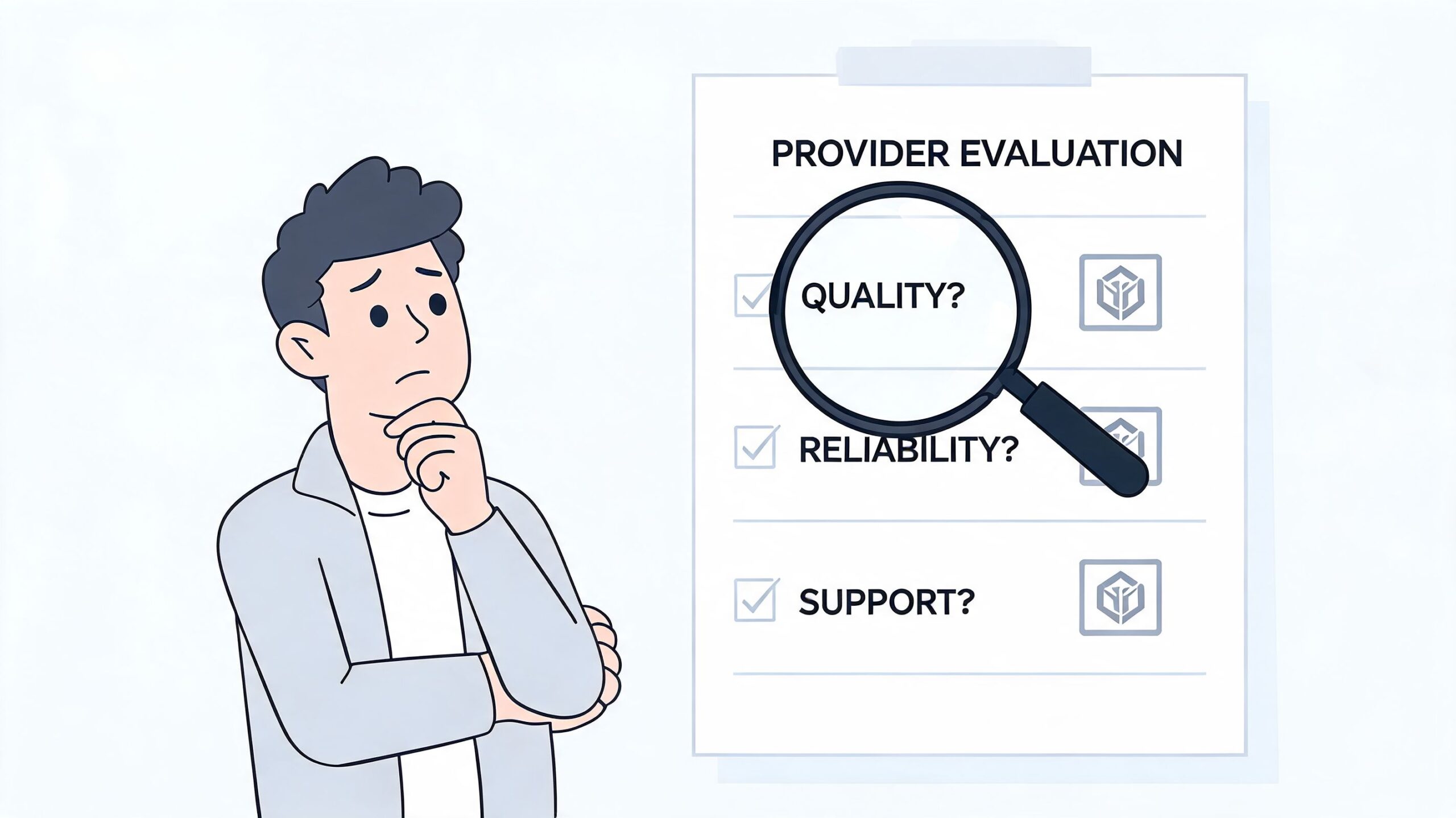
Start with process, not promises. A decent white label provider should be able to explain how work is scoped, who signs it off, what gets checked before it reaches your agency, and how they deal with delays on the client side. If those answers are vague, quality usually is too.
I also want to know how they handle messy accounts. Any provider can look organised on a clean brochure site with one location and no legacy issues. The better test is a multi-location business with duplicate pages, weak Google Business Profile alignment, inconsistent NAP data, and a client who approves content two weeks late. That is closer to real agency life in the UK.
Review evidence, not marketing
Ask for material you can inspect properly.
A redacted technical audit
Look for prioritised actions, not a pile of exported warnings. The provider should separate urgent fixes from lower-value tidy-up work.Monthly reports
Check whether the reporting would stand up in front of a paying client. Weak reports hide behind tool screenshots and generic commentary.Published content samples
Read work from sectors similar to yours. If the copy feels generic or padded, it will create editing time for your team and eat your margin.Examples of local SEO execution For agencies with branch networks, ask for examples involving location pages, internal linking between branches, Google Business Profile work, and duplicate suppression. Many service-led providers look thinner in these areas than their pitch suggests.
Questions that expose weak operators
A first call should leave you with a clear view of how the provider thinks, not just what they sell.
- How do you prioritise technical fixes against content and link work on a limited budget?
- Who does quality control, and what happens when output fails review?
- What is included in the monthly fee, and what regularly falls out of scope?
- How do you handle local SEO for brands with ten, fifty, or one hundred locations?
- What tools do you use for crawling, tracking, and local listing management?
- How quickly do you turn revisions, urgent fixes, and client-specific requests?
Good answers include trade-offs. If a provider claims they can do everything, across every niche, at high quality, on short timelines, for low cost, they are selling around the problem rather than addressing it.
Judge commercial fit as hard as delivery fit
A technically capable provider can still be wrong for your agency model. If your retainers are modest, a supplier with heavy account management overhead can wipe out profit. If your clients expect senior strategic input, a low-cost fulfilment partner may produce work that is serviceable but too thin to defend in review calls.
This matters even more in local SEO. Traditional white label fulfilment often struggles when the account depends on repeatable execution across many locations rather than bespoke strategy for one site. In those cases, it helps to compare service partners against software-led options. LocalHQ's guide to UK local SEO tools is useful for checking whether a provider really understands the workflows involved.
Agencies also need to watch how providers position newer delivery models. Some suppliers now bundle content, reporting, and automation under labels such as AI-powered outsourced SEO. That can be efficient, but only if there is still proper QA, clear accountability, and someone competent reviewing local intent, page structure, and duplication risk before work goes live.
Navigating the Risks of Outsourced SEO
White label SEO is often sold as low-risk scale. It isn't. It transfers work, but it also transfers part of your reputation to another company you don't fully control.
The biggest mistake agencies make is assuming a clean hand-off exists. It doesn't. Clients still hold your agency responsible for every missed deadline, weak article, indexing issue, or dubious link. The supplier remains invisible. You wear the consequences.
The risks that hit first
Quality drift is usually the earliest problem. The first month looks sharp because the provider is trying to win trust. By month three, content starts sounding templated, outreach quality slips, and reports become thinner.
Communication failure comes next. A delayed response from your provider becomes a delayed response from your agency. Your account manager then fills the silence with guesswork, which is how confidence starts to drop.
There's also method risk. Some providers still lean on tactics they don't fully explain. If they can't tell you how links are sourced, how content is produced, or what gets done each month, assume the worst until proven otherwise.
Red flags that should stop the conversation
Guaranteed rankings
No serious provider can promise specific ranking positions.No process transparency
They don't need to reveal every supplier relationship, but they do need to explain methods and quality control.Poor sample work
If their example content is generic or their reports are vague, your live deliverables won't be better.Over-reliance on jargon Teams that hide behind terminology often struggle to explain what they do.
Conflict-heavy client roster
If they work with several direct competitors in the same local market, ask how they handle overlap and confidentiality.
If you're exploring newer provider models, including automation-led fulfilment, this article on AI-powered outsourced SEO is worth reading for context. The useful takeaway isn't that AI replaces people. It's that agencies still need human QA, sensible workflows, and accountability.
What works better in practice
The agencies that handle outsourcing well usually do three things consistently:
- They keep strategy in-house
- They review every major deliverable before it reaches the client
- They build one communication rhythm and stick to it
Outsourcing SEO doesn't remove management. It changes where management happens. If you treat white label fulfilment as self-running, problems will surface in front of clients before they surface in your internal process.
Beyond White Label An Alternative for Local SEO
A client with 40 branches rings at 4pm because half their opening hours are wrong on Google, two locations have duplicate listings, and last month's “local SEO” report still doesn't show which branches were updated. That is the point where a standard white label arrangement starts to show its limits.
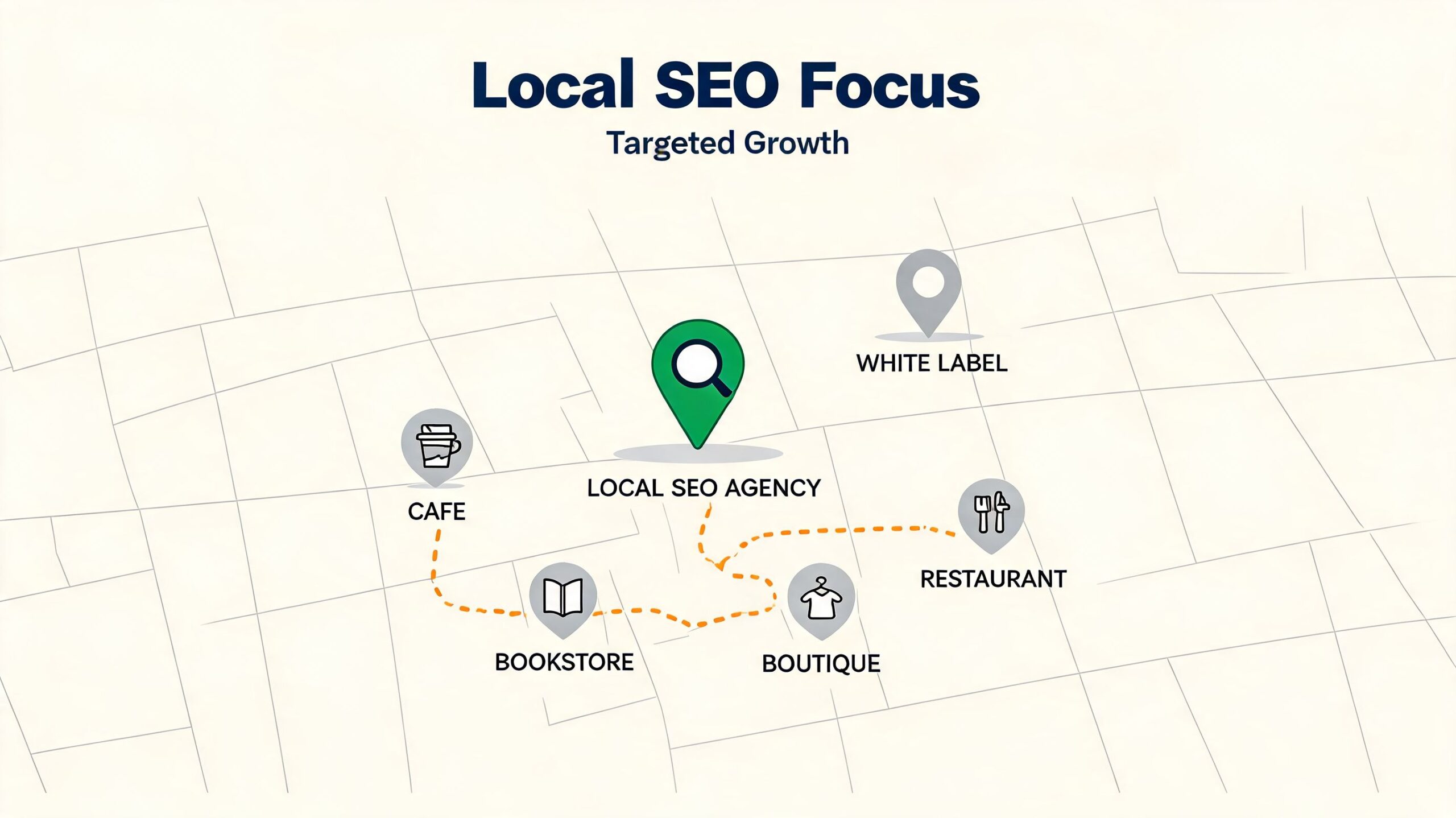
Broad SEO fulfilment can work well through a junior partner. Multi-location local SEO is a different operational job. Agencies handling restaurants, retail groups, clinics, franchises, and service brands across the UK are not just managing pages and keywords. They are dealing with Google Business Profile edits, local posts, images, reviews, citation consistency, and visibility that changes from one postcode to the next.
Where the usual partner model breaks down
The problem is not that white label providers are useless. The problem is that many are built around campaign deliverables, not branch-by-branch operational control. That gap shows up quickly in multi-location accounts, where agencies end up coordinating location changes manually and chasing updates across several systems. Do Market In's white label SEO guide for agencies touches on the breadth of fulfilment agencies often expect from these partnerships, but in practice local execution still tends to fall back on the agency.
That matters for margins. If your account managers are spending time briefing branch changes, checking live listings, correcting data, and stitching together reports, the outsourced model has not removed enough labour. It has shifted lower-value admin back into your team.
I have seen this happen more than once. The provider sends deliverables on time, the client still feels neglected, and the agency absorbs the hidden work.
Why a platform can be the better fit
For local SEO, a platform often gives agencies a better operating model than a manual fulfilment partner. Instead of paying for repeated task handling, agencies can keep control of location data, publishing, and reporting in one system.
A good setup improves the work in a few specific ways:
Google Business Profile management stays centralised
Teams can make updates directly instead of relying on email chains, tickets, and account manager relays.Location-level publishing becomes repeatable
Posts, offers, events, and image updates can be scheduled across many branches without recreating the process each time.Reporting is easier to defend with clients
Branch performance is visible in one place, which is far easier to explain than patching together spreadsheets, PDFs, and notes from a supplier.Quality control improves
Agencies can see what changed, when it changed, and which locations still need attention.
For multi-location local SEO, the bottleneck is usually coordination. The strategy is often straightforward. The execution is what breaks.
The trade-off is different
A platform will not replace every outsourced SEO service. Agencies may still want outside help for technical audits, long-form content, digital PR, or specialist link acquisition. But local execution is often better handled through software because the job is repetitive, location-specific, and sensitive to delays.
That is the alternative here, especially for UK agencies with franchise, retail, healthcare, and service-area clients. Traditional white label SEO helps you buy labour. A platform helps you standardise the work, protect margin, and keep control of branch-level details that clients notice first.
If your agency is stuck managing local SEO through spreadsheets, inbox threads, and disconnected suppliers, a local seo platform is worth a proper look. LocalHQ is built for the underserved use case many provider roundups miss: managing Google Business Profiles at scale, publishing local updates consistently, tracking visibility by area, and giving multi-location clients reporting that reflects what is happening on the ground.