Is SEO Worth It for Small Business? a UK Guide for 2026
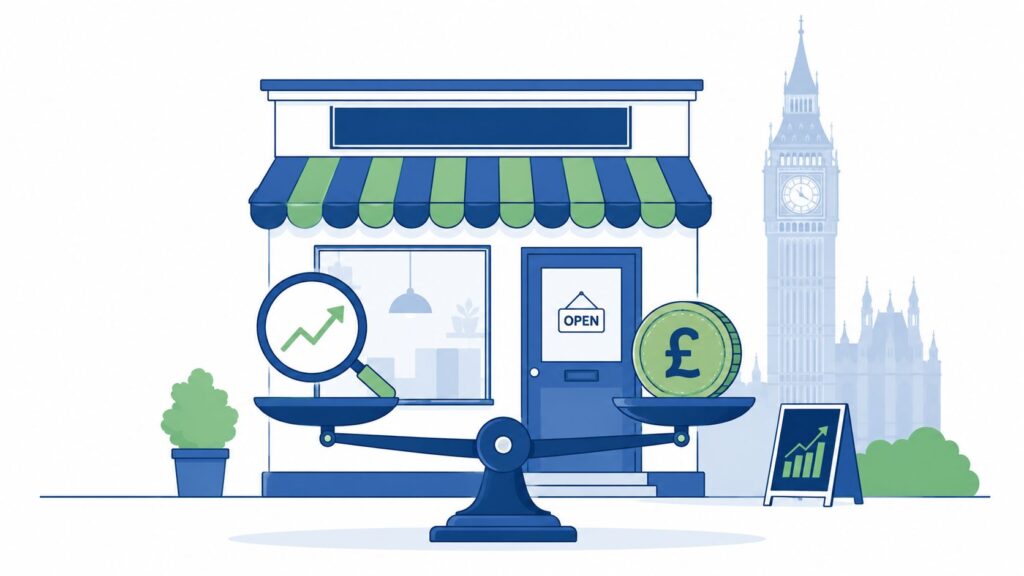
You're probably weighing the same trade-off most small business owners face. Put money into ads and get calls this week, or put money into SEO and hope it pays off later. That tension is real, especially when payroll, stock, rent, and rising costs don't wait for Google rankings to improve.
The honest answer to whether SEO is worth it for small business isn't a blanket yes. It's this. SEO is worth it when your customers already search for what you sell, your site and local presence are set up properly, and you can give it enough runway to work. When any of those pieces are missing, it can feel like a slow, expensive disappointment.
That's why so many opinions about SEO miss the point. They argue about whether SEO “works” in general. A better question is whether it works for your business model, your area, your cash flow, and your ability to execute the basics well.
The Small Business Dilemma Is SEO a Smart Investment
A local business owner usually doesn't reject SEO because they dislike the idea of appearing on Google. They reject it because the offers sound vague. One agency promises rankings. Another talks about authority. A freelancer says technical fixes matter most. Meanwhile, the phone still needs to ring.
That scepticism is healthy. SEO can be a strong investment, but only when it's tied to customer acquisition rather than marketing theatre. If you run a salon, plumbing firm, dental practice, café, or retail shop, the question is simple. Will better visibility turn into calls, bookings, direction requests, and walk-ins?
One market reality makes this worth taking seriously. In the UK, 70% of small business owners do not have an SEO strategy in place, which means businesses that do invest can gain a clear advantage over competitors relying on traditional advertising or no meaningful digital presence at all, according to Sure Oak's analysis of SEO for small business.
Why the answer depends on conditions
SEO isn't automatically smart just because it's popular. It tends to be worth it when:
- Customers already search locally for your service or product before choosing a provider.
- Your margins support a slower return, rather than needing every pound back immediately.
- You can stick to a plan, instead of changing direction every few weeks.
- Your website and Google Business Profile aren't neglected, because poor setup breaks otherwise good strategy.
If you want a broader view of where local marketing fits beyond search alone, you can discover LocalHQ's local online marketing expertise.
Most small businesses don't need more marketing channels. They need one channel set up properly enough to bring in reliable customers.
What usually goes wrong
The biggest mistake isn't choosing SEO. It's buying a version of SEO that sounds impressive but ignores the basics. Businesses often pay for blog posts while their contact details are inconsistent, their pages load poorly, or their Google Business Profile is half-complete.
That's when owners conclude SEO doesn't work. In many cases, the channel wasn't the issue. The implementation was.
Understanding What SEO Actually Means in 2026
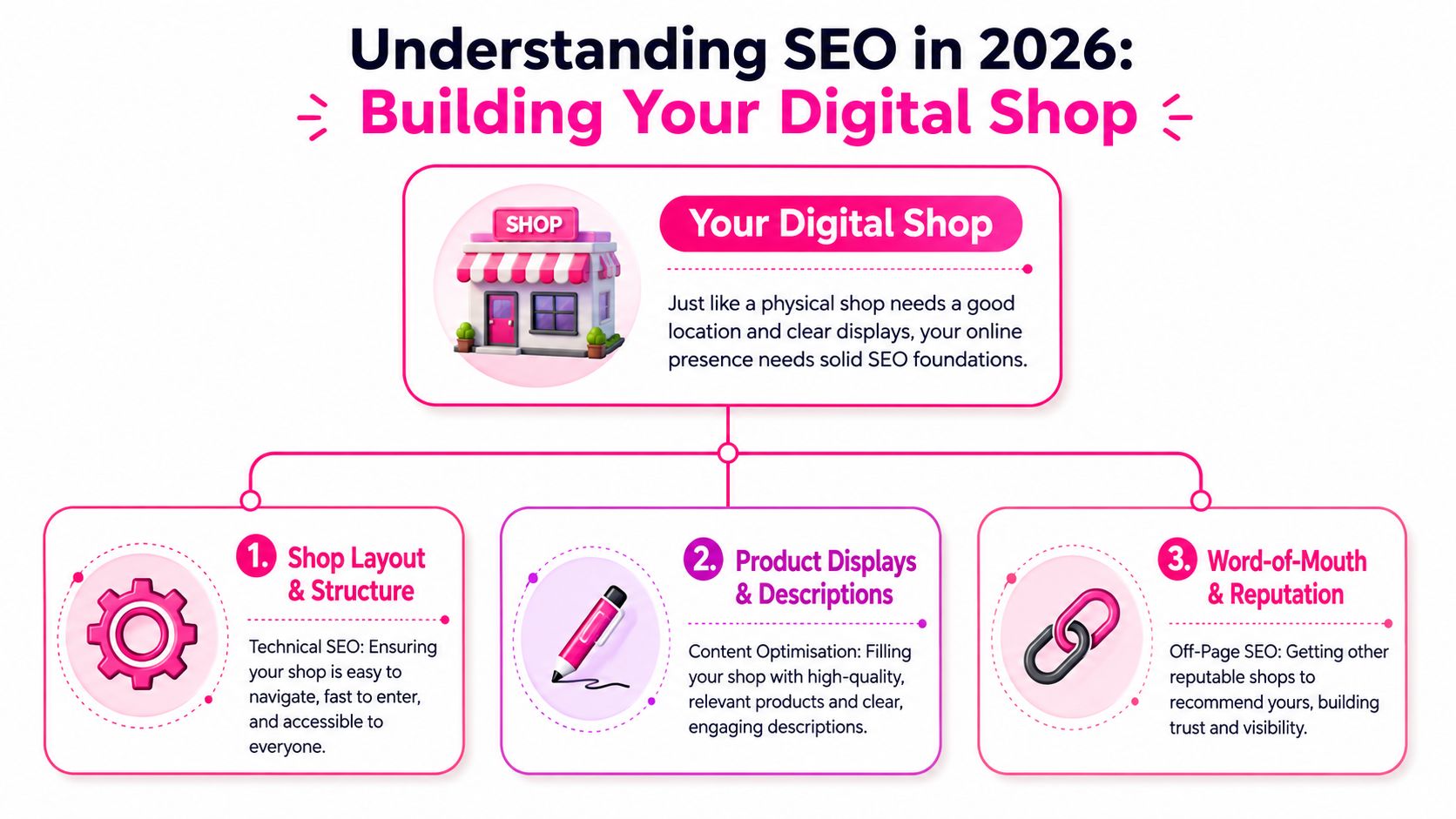
SEO sounds abstract until you compare it to a physical shop. If you had a real premises on a busy high street, you'd care about three things. Can people get in easily? Can they understand what you sell quickly? And do others trust and recommend you?
That's what SEO is online.
The foundation is technical SEO
Technical SEO is your building structure, front door, lighting, and wiring. If your site is slow, confusing, or difficult for search engines to crawl, everything else underperforms.
This includes things like:
- Page speed
- Mobile usability
- Clear site structure
- Proper indexing
- Schema markup
- Clean internal linking
A good-looking website can still fail here. That's common with small business sites built quickly and never reviewed properly after launch.
The next layer is content and page relevance
Once the building works, you need shelves, signs, and product labels. On-page SEO covers the words on your site, the way services are organised, and whether each page matches what people are actually searching for.
For a local electrician, that might mean service pages for emergency call-outs, rewiring, fuse board upgrades, and EV charger installation. For a restaurant, it might mean clear pages for menus, booking, opening hours, location, and private dining.
Local intent matters here far more than many owners realise. Approximately 46% of all Google searches have local intent, and 76% of people who search locally on their phone visit a business within 24 hours, based on figures cited in Red Eagle's local SEO analysis. That's why vague copy and generic service pages leave money on the table.
Reputation and local signals do the rest
Then there's the part people outside SEO often notice first. Reviews, mentions, links, citations, and Google Business Profile signals. That's your reputation in the local market.
If you want a practical view of how automation can support this process, especially for repeated local tasks, it's worth seeing how to optimise local SEO with AI.
A small business doesn't need every SEO tactic. It needs the few that remove friction for buyers and help Google trust the business is real, relevant, and nearby.
When people ask, “Is SEO worth it for small business?”, the useful answer starts here. SEO isn't one job. It's a system. If one part is broken, the rest can't carry it.
Crunching the Numbers The True Cost of SEO in the UK
Most frustration around SEO pricing comes from comparing offers that aren't remotely the same. One provider is fixing technical issues, writing pages, building local citations, and improving your Google Business Profile. Another is sending a monthly ranking report and little else. Both may call it SEO.

In the UK, hiring a proper SEO agency for small businesses typically costs between £350 and £1,500 per month, depending on competition and website size, according to Authentic Style's breakdown of small business SEO costs. That range gives you a useful benchmark, but what matters is what work is included.
The three common ways small businesses buy SEO
| Model | Best for | Main trade-off | Typical reality |
|---|---|---|---|
| DIY | Owners with time and patience | Costs less in cash, more in time | Works if the market is simple and you can stay consistent |
| Freelancer | Single-location firms needing specialist help | Quality varies a lot | Can be strong if the person handles both technical and local work |
| Agency | Businesses needing a wider system | Higher monthly spend | Usually better for ongoing execution and reporting |
DIY sounds cheapest, but it often costs the most in opportunity. If you're spending evenings trying to learn keyword mapping, metadata, page speed, and review workflows, you're not serving customers or running the business.
A freelancer can be excellent if they're practical and transparent. The problem is that some are good at one piece only. You might get content help without technical fixes, or technical fixes without local visibility work.
What to look for in a quote
Before agreeing to any monthly retainer, check whether it includes:
- Technical work such as speed, crawlability, and structural fixes
- On-page improvements for service, location, and product pages
- Google Business Profile management
- Review strategy and response process
- Local citation consistency
- Meaningful reporting, not just keyword screenshots
If you want another useful reference point, this guide to UK SEO pricing for businesses gives extra context on what different budgets typically cover.
For owners who are comparing tools alongside services, it's also helpful to review options built specifically for LocalHQ for UK local SEO.
Cheap SEO usually fails in predictable ways
Very low-cost SEO often means one of three things. Thin content. Automated reporting with no strategy. Or outsourced tasks with little understanding of your local market.
That doesn't mean expensive SEO is always better. It means clear scope beats low price. If you're paying monthly, you should know what's being improved, why it matters, and how it connects to more customers.
Calculating Your SEO Return on Investment
The wrong way to judge SEO is by asking whether you rank for a phrase you happen to like. The right way is to ask whether organic visibility is producing leads that turn into revenue.
That sounds obvious, but plenty of small businesses still measure success with vanity metrics. They celebrate impressions and obscure rankings while ignoring whether anyone called, booked, or asked for directions.
Start with the KPIs that matter
For most local businesses, useful SEO KPIs are:
- Phone calls
- Contact form submissions
- Direction requests
- Booked appointments
- Qualified leads
- Revenue from organic enquiries
Those numbers tell you whether search visibility is attracting buyers, not just browsers.
The quality of those leads matters too. SEO leads close at a rate of 14.6%, roughly eight times higher than the 1.7% close rate for outbound methods, based on figures published by Whitehat SEO in its strategy analysis. If your business depends on leads that have buying intent, that gap is hard to ignore.
A practical way to estimate ROI
Use a simple working model:
| Step | Question |
|---|---|
| 1 | How many organic leads do you get now? |
| 2 | How many could you realistically handle if visibility improved? |
| 3 | What's an average customer worth on first sale? |
| 4 | What's a customer worth over repeat business or referrals? |
| 5 | How much are you spending monthly to acquire those customers? |
If SEO brings in even a modest number of qualified enquiries, the maths can become attractive quickly, especially for businesses with high customer value. A solicitor, dentist, roofer, physio clinic, or accountant doesn't need huge traffic. They need the right traffic.
Practical rule: Don't ask whether SEO brings more visitors. Ask whether it brings the kind of visitors your team can turn into paying customers.
If you're also reviewing how front-desk efficiency affects lead value, this piece can help you understand AI receptionist cost savings in a more operational way.
Reporting should explain outcomes, not hide them
A good report should answer three things. What improved. What that improvement means for leads. What should happen next.
That's especially important for agencies and in-house teams that need to prove your value with SEO reports. If reporting can't connect SEO work to enquiries and business impact, the campaign becomes difficult to defend even when useful progress is happening.
Patience Versus Payday Realistic SEO Timelines and Alternatives
SEO has a reputation problem for a reason. Owners are told it's a long-term channel, but they're rarely told what that means for cash flow in month one, month two, and month five. That gap between expectation and reality is where many campaigns die.
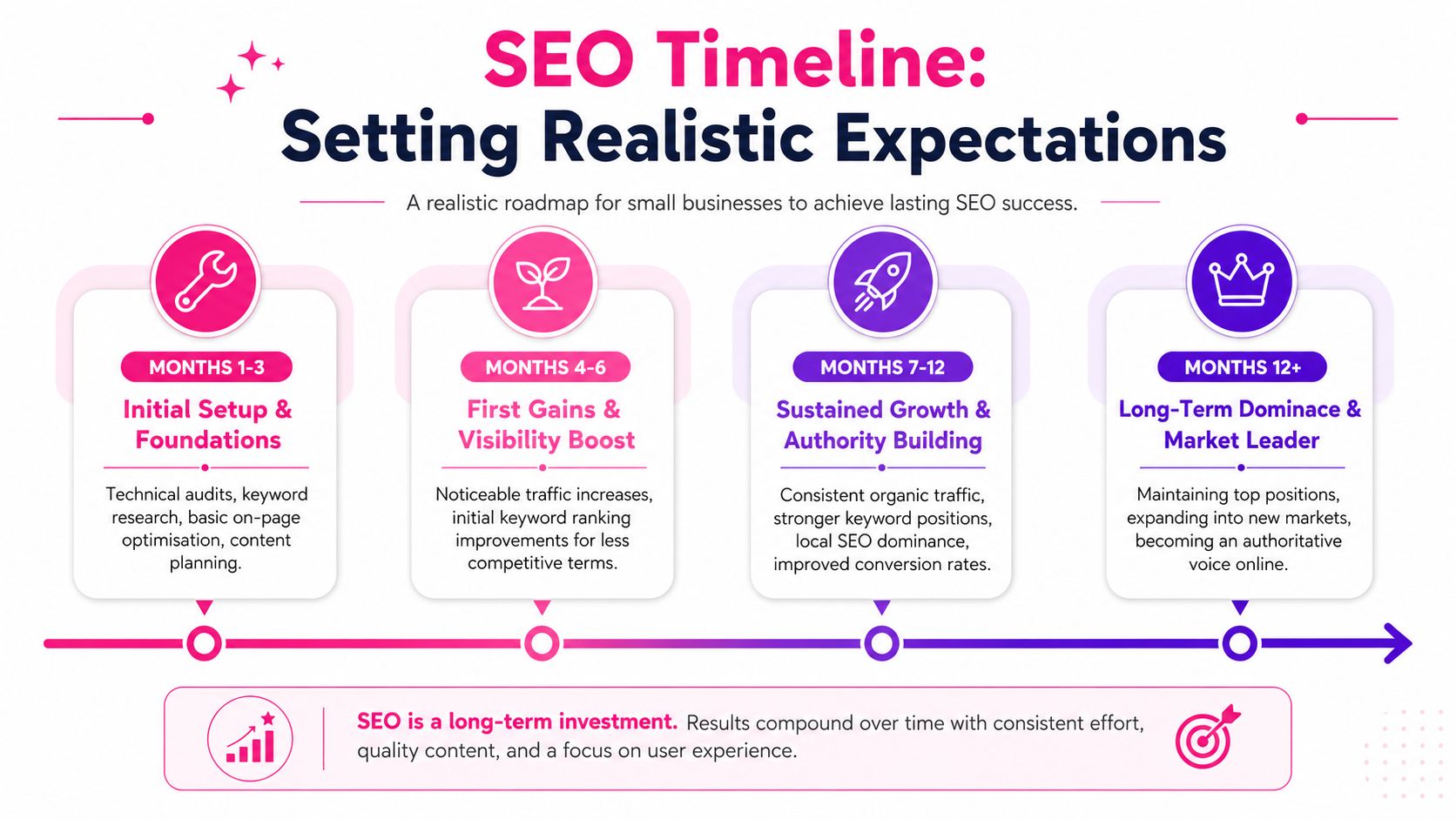
UK small businesses typically see first measurable ROI from SEO, such as calls and direction requests, after 4 to 6 months, and 30% switch to paid ads before that window closes because of cash pressure, according to Sovanza's review of whether SEO is worth it for small businesses.
That timeline is the part many providers gloss over.
What the first few months usually look like
In the early phase, most of the work happens behind the scenes. Technical fixes, page improvements, local profile work, review processes, and content upgrades often come before obvious lead growth.
That can feel frustrating because money is going out before results are clear. But that's the nature of building an asset rather than renting attention.
Here's the practical version:
- Months 1 to 3 usually involve setup, fixes, and alignment.
- Months 4 to 6 are often when traction starts to show in calls, map visibility, and enquiries.
- Later gains tend to come from compounding improvements rather than one big jump.
Why businesses quit too early
The issue usually isn't that SEO failed. It's that the business needed results faster than SEO could responsibly deliver them.
A salon with spare chairs this month, a plumbing company that needs emergency lead volume now, or a retailer under pressure after a weak quarter may not have the luxury of waiting for organic growth alone. If that's the position you're in, relying on SEO as your only acquisition channel is risky.
SEO works best when the business can afford the runway. If cash is tight, use it as part of a system, not as the entire system.
The hybrid strategy that makes sense
For many small businesses, the best answer isn't SEO versus paid ads. It's a hybrid plan.
Use SEO to build long-term visibility and lower dependence on paid traffic over time. Use paid search selectively to bridge the gap while SEO matures. Add referral partnerships, email follow-up, and review generation so you're not asking one channel to do everything.
A balanced setup often looks like this:
- Fix the local fundamentals first so your organic base isn't broken.
- Run tightly targeted paid campaigns for high-intent services that need immediate lead flow.
- Track lead quality by source so you know whether paid search or SEO is bringing better customers.
- Reduce paid dependency gradually as organic enquiries become steadier.
That's a much better answer to cash flow pressure than giving up on SEO after a few slow months.
Local Versus National SEO Choosing the Right Battlefield
Most small businesses don't need to rank across the country. They need to win where they serve customers. A locksmith in Leeds, a dental clinic in Bristol, or a boutique hotel in Bath gains far more from dominating its local area than from attracting the wrong traffic from hundreds of miles away.
That's why local SEO is usually the smarter battlefield.
Why local beats national for many SMEs
National SEO is broader, slower, and often more expensive. You're competing with larger brands, publishers, directories, and established sites with years of authority behind them.
Local SEO is narrower and more commercially useful. It focuses on map visibility, local service pages, review signals, and clear location relevance. It's designed around the searches that lead to visits, calls, and bookings.
According to BrightLocal's local SEO statistics, the Primary GBP category, Proximity, and Keywords in the business title collectively influence 70%+ of Local Pack rankings. That tells you something important. A local business often has more room to improve the factors that influence visibility than it would in a national search campaign.
What local implementation really involves
For a local campaign to work, focus on the basics that influence trust and relevance:
- Google Business Profile accuracy with the right category and complete service details
- Consistent contact details across the web
- Location-specific pages that match the areas you serve
- Review management that shows the business is active and credible
- Structured data that helps search engines understand the business clearly
If schema markup is one of the missing pieces, this tool can help you create business schema effortlessly without getting dragged into unnecessary technical complexity.
For a small business, the best ranking isn't “number one everywhere”. It's being visible exactly where profitable customers are searching.
When national SEO does make sense
There are exceptions. An eCommerce brand shipping nationwide, a software company, or a specialist service with no geographic limit may need a broader SEO approach.
But if you rely on local customers, local intent usually wins. That's where visibility turns into real-world action.
Your SEO Decision Checklist and Next Steps
At this point, the question isn't really “is SEO worth it for small business?” in the abstract. It's whether SEO fits your buying cycle, local demand, margin profile, and patience level.
If your customers search before they choose, SEO deserves serious consideration. If you need leads immediately and can't tolerate a slow build, it still may be worth doing, but only as part of a mixed strategy.
Quick checklist before you commit
Ask yourself:
- Search behaviour. Do people in your area already search for your service or product on Google?
- Local relevance. Is appearing on Maps and in local search likely to bring calls, visits, or bookings?
- Runway. Can the business support several months of investment before traction is obvious?
- Execution. Are your website, Google Business Profile, reviews, and location signals in decent shape?
- Measurement. Can you track calls, form fills, direction requests, and sales from organic search?
If you need a practical benchmark, this 10-point local SEO guide for 2026 is a solid place to sense-check the fundamentals.
SEO Priority Checklist by Business Type
| Business Type | Is SEO High Priority? | Key Focus Area | Primary KPI |
|---|---|---|---|
| Restaurant or café | Yes, if local discovery matters | Google Business Profile, reviews, menus, bookings | Direction requests and bookings |
| Retail shop | Yes, especially with footfall goals | Local pages, opening hours, products, reviews | Store visits and calls |
| Service provider | Usually very high | Service pages, area coverage, local pack visibility | Qualified enquiries |
| Healthcare or legal practice | High | Trust signals, reviews, service clarity, local authority | Consultations booked |
| Multi-location business | Very high | Location consistency, profile management, local reporting | Leads by location |
| eCommerce with national focus | Depends | Category pages, technical SEO, broader content strategy | Organic sales |
The clearest decision rule
SEO is worth it when three conditions are true:
- People are already searching for what you sell
- You can implement the basics properly
- You can survive the gap between setup and payoff
If one of those is missing, SEO may still help, but it shouldn't be your only plan. That's the practical answer most business owners need.
If you want a simpler way to manage the work that actually drives local visibility, LocalHQ brings the essentials into one place, from Google Business Profile updates and review responses to geo-grid tracking and reporting on calls, direction requests, and engagement. For small businesses that need clarity, not clutter, it's a practical way to turn local SEO into something you can act on and measure.