10 Best Yext Alternatives for UK Businesses (2026)
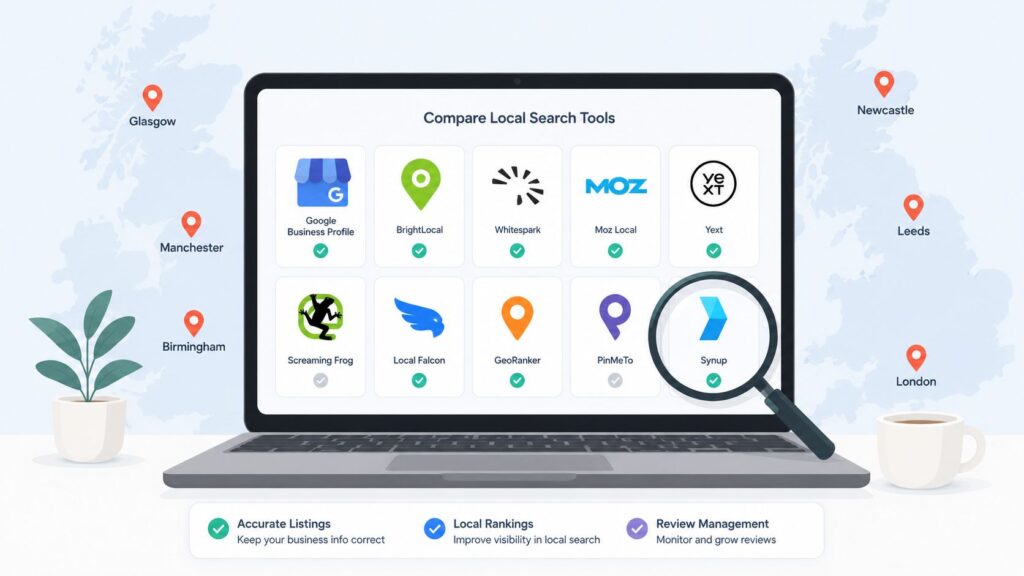
Feeling trapped by rising software costs, clunky workflows, and a platform that seems built for enterprise teams rather than your day-to-day reality? That's where a lot of UK business owners and agency managers find themselves when they start looking for Yext alternatives. The good news is that the market is broader than a simple “Yext replacement” conversation. The better question is which tool fits your UK locations, GBP support, review workflow, and pricing in pounds sterling (£) without forcing your team into extra admin.
For UK businesses, local intent is the main battleground. Google reported that near me searches from UK mobile users grew by 150% year on year, while searches for “open now” rose by 200%. At the same time, a 2024 BrightLocal Consumer Review Survey found that 98% of consumers used the internet to find local business information and 87% read reviews for local businesses, which is why platforms are judged so heavily on listings accuracy, review handling, and visibility in Maps and search results rather than on broad SEO promises alone. If you want a shortcut to the practical side of AI-led local search, GEO for AI search engines is a useful reference point.
1. LocalHQ
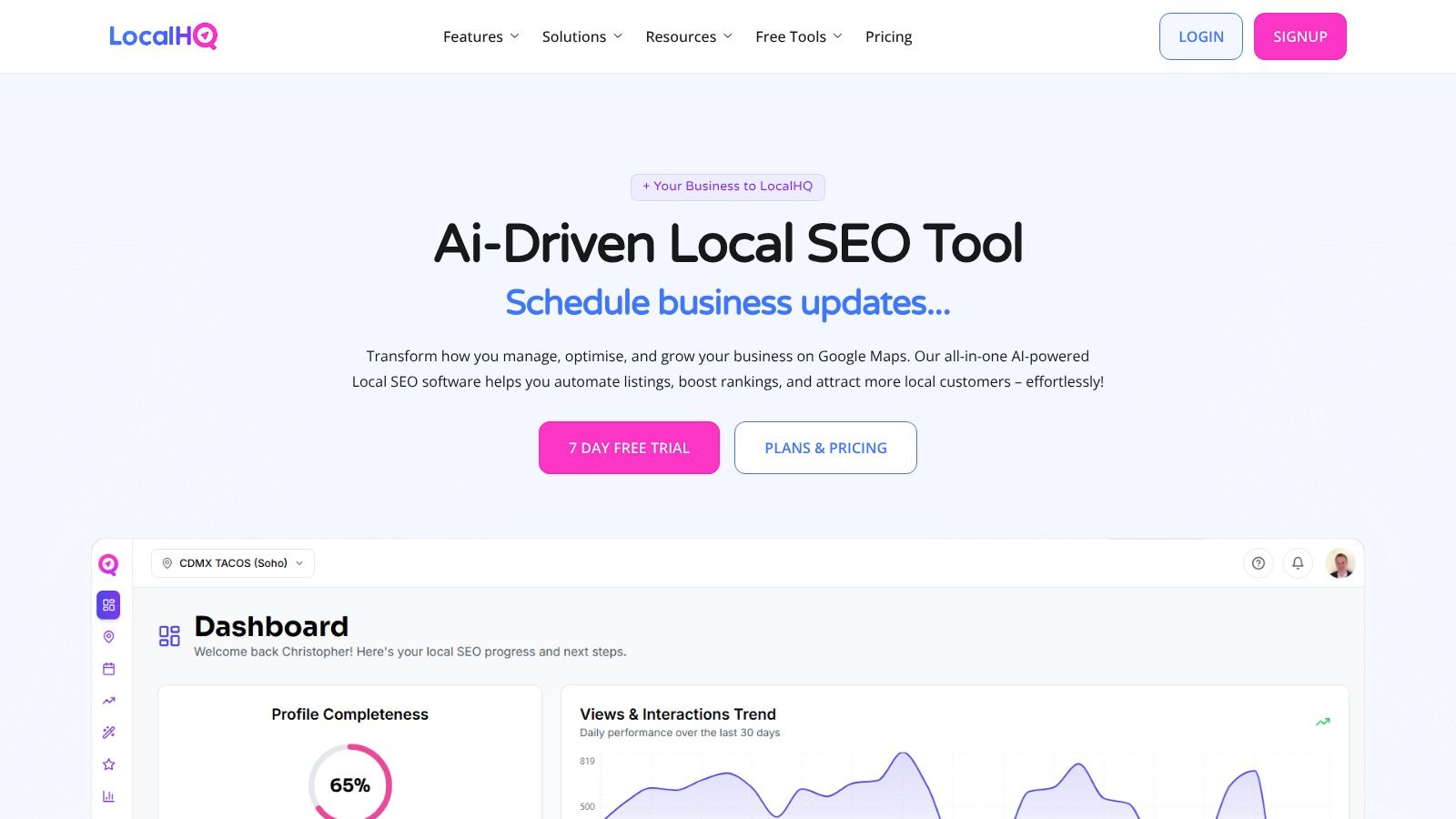
LocalHQ is the strongest fit for UK teams that want a modern, AI-driven local SEO stack without enterprise bloat. It brings Google Business Profile management into one dashboard for single sites, growing chains, and agencies, then adds the sort of workflow tools that save time every week rather than just look impressive in a demo. The result is less spreadsheet juggling and more time spent improving visibility where it matters, on Google Search and Maps.
Why it stands out
The platform's AI Optimisation Wizard is the headline feature for practitioners. It benchmarks competitors and recommends improvements to categories, keywords, and content, which is exactly the kind of guidance many local teams need when they don't have time for deep manual analysis. The Review Autoresponder also matters in practice, because replies can be drafted in brand voice as feedback arrives, and the Content Publisher lets teams plan posts, events, images, and videos well ahead.
Its visibility tools are practical rather than decorative. The geo-grid rank tracker shows how a location performs across target areas, and white-label reporting makes sense for agencies that need to prove value to clients without rebuilding reports every month. For teams managing NAP consistency at scale, the internal guide on automation for NAP at scale is worth a look.
Practical rule: if your team spends too much time replying manually, updating profiles one by one, or guessing where rankings are weak, a tool like LocalHQ is usually the first place to reduce friction.
Pros
- Centralised multi-location management, one dashboard for one site or many.
- AI-driven optimisation and automated review replies, which saves daily admin.
- Geo-grid ranking and clear analytics, useful for real local decisions.
- Affordable, scalable pricing in GBP terms of use, with a 7-day free trial.
Cons
- Some advanced modules are still coming soon, so the full suite isn't complete yet.
- It's heavily focused on Google Business Profiles and Maps, so it won't replace broader SEO software.
2. BrightLocal
A UK agency with a long client roster often needs local SEO reporting more than it needs a broad enterprise platform. BrightLocal fits that brief well. It is a specialist local SEO and reporting suite, so the value sits in audits, rankings, citations, and reporting, not in wider customer-experience tools that many agencies will never fully use.
For UK agencies managing 50+ clients, BrightLocal's GBP audit reports can save an estimated 3 hours per week compared with manual checks. Comparison sources describe the platform as supporting 80+ directories, with a 14-day free trial and pricing from $39/month. That makes it easier for smaller agency teams to buy only the parts they need, instead of paying for a broader suite that goes unused. The official product site is still the best place to check how it aligns with your process, BrightLocal.
Where it wins and where it doesn't
BrightLocal is strongest when a team needs Local Search Grid, GBP audits, review monitoring, and citation building in one place. That combination suits agencies working with clients whose location data is inconsistent or whose visibility drops in specific postcode areas. The Citation Builder model also feels portable, which matters if you want to own the asset rather than keep renting access to it.
The main limitation is that core plan pricing is not fully public, so procurement can take longer for buyers who need a clear budget before signing off. Active Sync also covers a narrower publisher network than some enterprise tools, so teams that need large-scale distribution may find it more specialised than they want. If you are comparing local SEO tools side by side, compare local SEO tools is a practical starting point.
3. Uberall
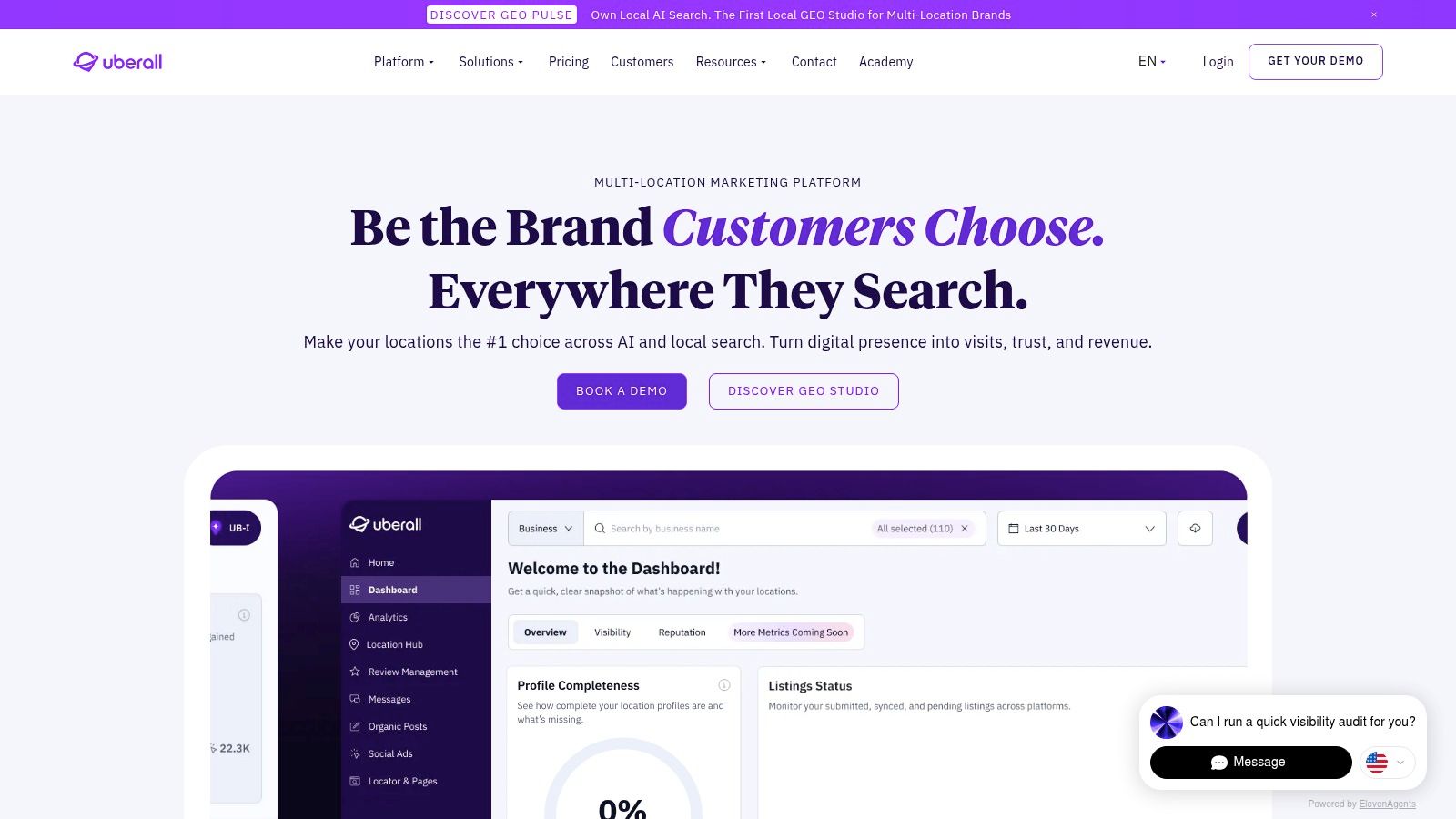
Uberall sits in the enterprise bracket, and that shows in both its workflows and its market positioning. It's built for brands that need location governance, publisher protection, review handling, and store-page management across a large footprint. For UK businesses with multiple branches, it's one of the clearest options when local presence needs to be managed centrally and at scale.
Comparison data describes Uberall as supporting 125+ directories with custom, demo-only pricing, and G2 reports 4.4/5 from 237 reviews for the platform. That combination tells you two things. First, it's built for teams that need breadth. Second, it's a mature product with enough market validation to be taken seriously by procurement teams. For broader context on multi-location choices, compare multi-location SEO platforms is a useful companion resource.
Best fit and limits
Uberall works well when your team needs bulk updates, profile protection, review workflows, and local social publishing in one operational flow. The platform's competitive intelligence add-on, GEO Studio, adds another layer for brands that want benchmark data rather than just raw listings control. That can be valuable in competitive retail, hospitality, or franchise environments where visibility shifts branch by branch.
The drawback is straightforward. This is not a lean SMB tool, and it probably isn't the best use of budget for a single-location operator. If you need a calmer, lower-overhead stack, Uberall may feel too large for the job. If you need enterprise processes and governance, it makes sense.
4. SOCi
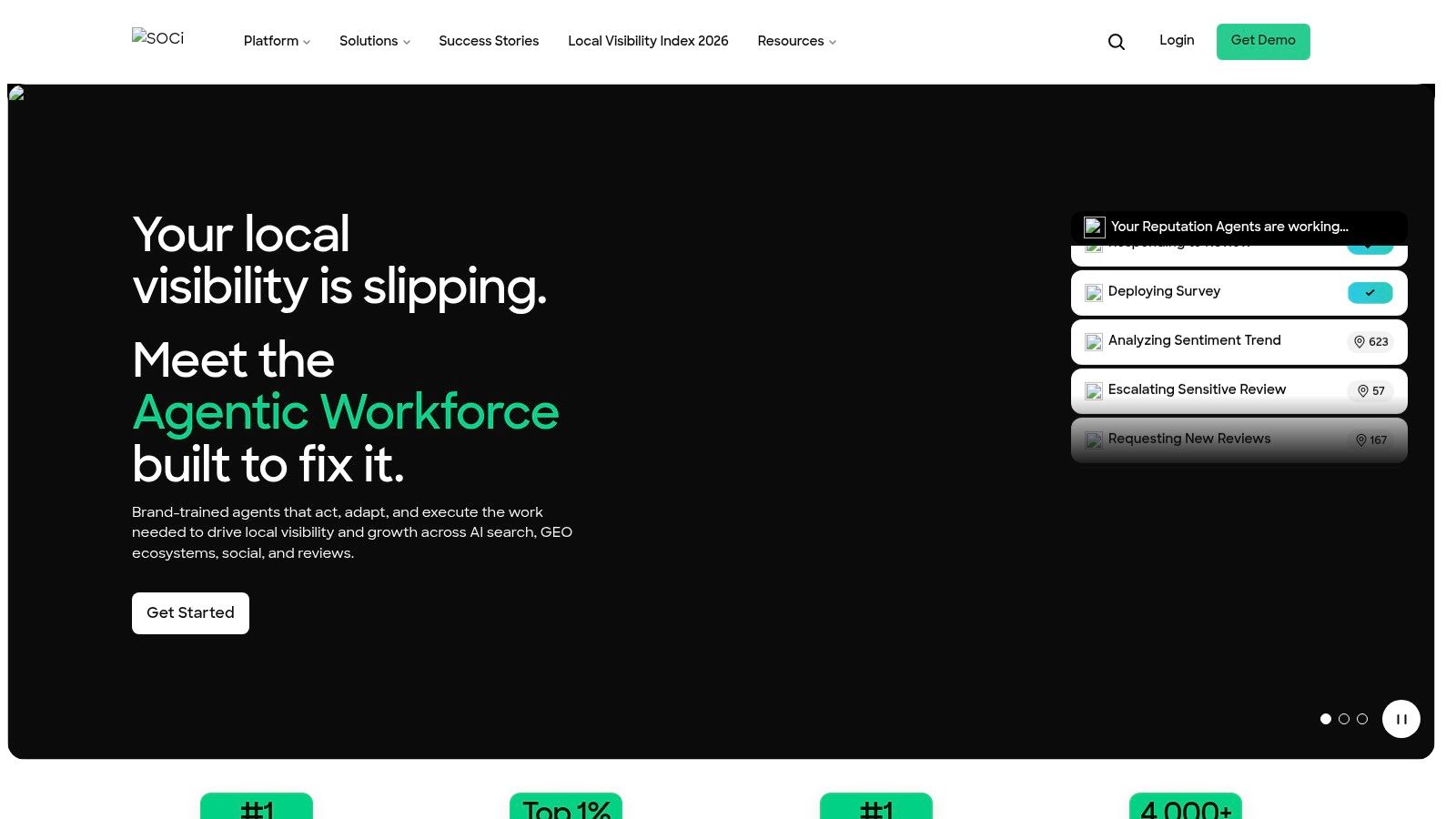
SOCi is built for companies where local marketing has to stay aligned with central brand rules. It combines listings, reviews, social publishing, paid local activation, and workflow control in one place, which is exactly why it shows up so often in franchise and multi-site conversations. In practice, it suits organisations that need corporate oversight without freezing local teams out of the process.
G2's adoption signal is strong here, with 4.5/5 from 4,047 reviews for SOCi. That's a useful indicator of how widely the platform is used, especially when you're comparing it with lighter-weight alternatives that may be easier to buy but less proven at scale. For teams that want a reputation-focused implementation playbook, LocalHQ reputation management guide is a relevant internal resource.
Why large teams pick it
SOCi's main strength is governance. It gives brands the ability to push local work through structured workflows, which helps when approval chains are long or when regulated sectors need more control. That's why it's often a better fit for national brands than for owner-managed businesses with one marketing generalist.
The platform's AI features also matter, especially for teams that want local content support and response automation without losing brand consistency. The weakness is price and complexity. It's custom-priced and usually sits in the enterprise zone, so small operators can end up paying for depth they don't need. If your business lives in one channel and one market, SOCi may be more machinery than you require.
A useful external perspective on franchise-local SEO strategy is the SWAT Marketing Solutions guide, particularly if you're trying to align location marketing with brand governance.
5. Birdeye
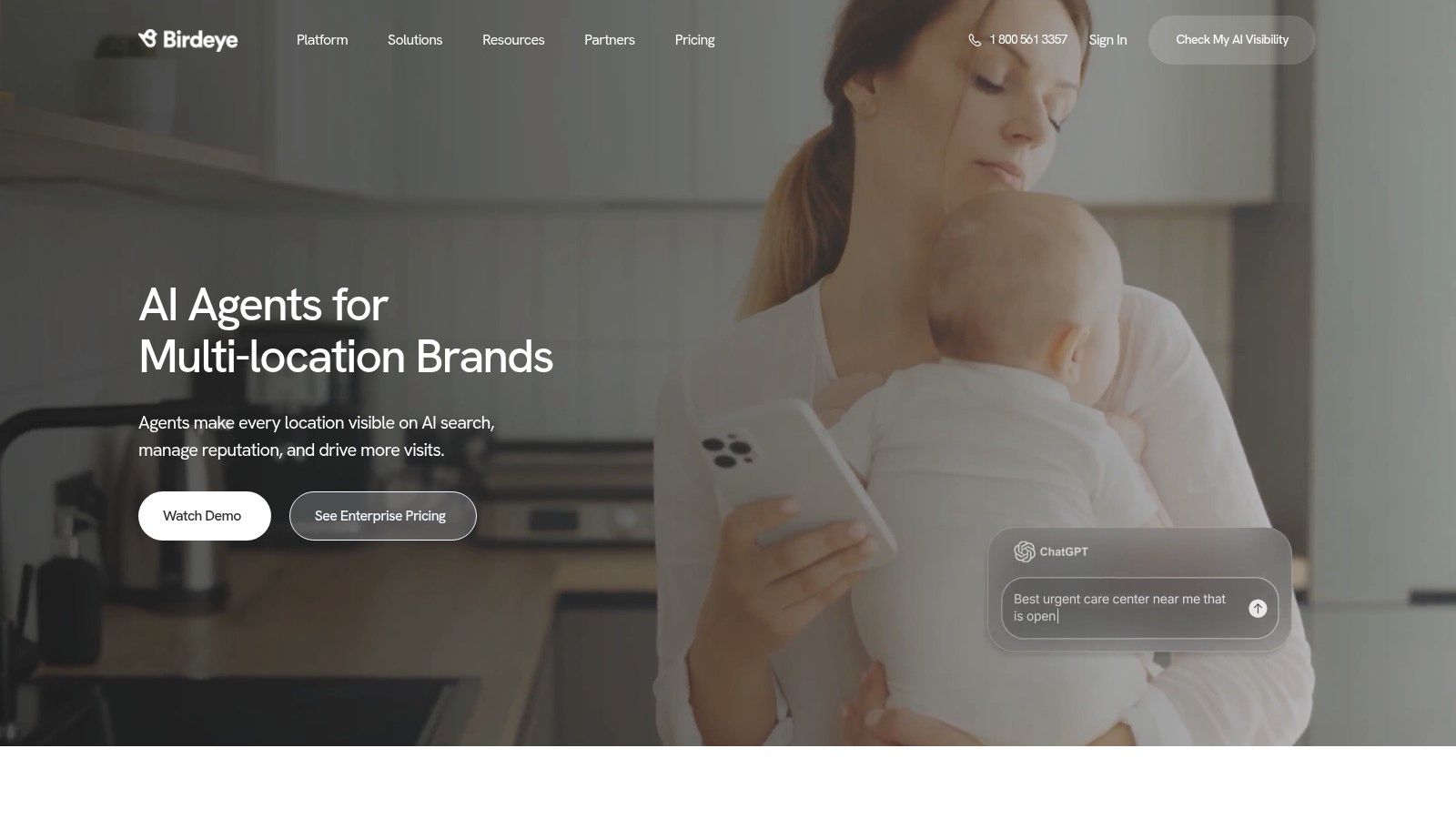
Birdeye is broader than expected from a Yext alternative. It isn't just about listings and reviews, it's a customer experience workspace with messaging, referrals, analytics, and a large integration footprint. For UK operators in healthcare, services, or multi-site consumer brands, that breadth can be a real advantage if they want more than location data management.
The standout verified data point is its scale of integrations. Birdeye's 2026 alternative overview states that it offers 3,000+ integrations, alongside enterprise roles and approvals, and reporting tied to revenue. That tells you the platform is designed for cross-functional teams, not just marketing managers. For GDPR-conscious review automation workflows, GDPR-compliant review tools is a useful internal read.
What it does well
Birdeye is strong when reviews are only one part of a larger customer journey. Its messaging inbox, referral tooling, and integrations make sense if your team wants to connect front-line service, reputation, and retention. The BirdAI suite also shows that the company is leaning into agent-style workflows across reviews, social, messaging, search, and insights.
The flip side is scope. If you only want clean listings control and review replies, Birdeye can feel oversized. Pricing is not public and will vary with location count and modules, so smaller businesses can struggle to compare it cleanly with simpler tools. That doesn't make it a bad product. It just means the buying case has to be tied to operational value, not just software features.
6. Reputation
Reputation, formerly Reputation.com, belongs in the enterprise reputation and customer experience category. It is best known for combining listings, review management, surveys, messaging, and AI-driven text analytics in a single stack. For UK multi-site businesses in automotive, healthcare, retail, and services, that breadth can help when feedback, customer experience, and local visibility need to sit in one reporting layer.
The main strength is governance plus insight. Reputation gives larger teams a structured way to monitor location performance, gather feedback, and analyse customer themes without stitching together several tools. That makes it useful in sectors where compliance, service quality, and branch-level reporting all matter at the same time.
Why it fits bigger organisations
Verticalised packages are one of its more practical advantages. A brand with a heavy automotive or healthcare footprint can often get closer to its own operating model than it would with a generic reputation tool. The trade-off is implementation weight. You usually need a proper rollout plan, internal ownership, and enough data discipline to make the platform useful.
The limitation for smaller teams is obvious. Pricing isn't public, and the product is enterprise-first, so it can be overkill if your main requirement is fast local SEO execution. If your focus is more on calls, reviews, and Google visibility than on broader customer-experience analytics, a lighter stack may deliver better ROI.
7. Partoo
Partoo is a strong European option for UK brands that need local presence management with a cross-border mindset. It's especially relevant for retailers and hospitality groups that want listings sync, review handling, and messaging in one environment. The platform's appeal is practical, not flashy. It helps locations stay accurate across Google, Apple, and partner directories while giving teams a way to respond faster.
The useful bit here is workflow. Partoo includes review management with auto-reply options, a messaging inbox, and an SMS review booster, so it suits businesses that want to increase review velocity without adding a lot of manual overhead. It's active in the UK market, which matters if you want a vendor that understands European directory structures and operational expectations.
Trade-offs to weigh
Partoo's biggest strength is its European coverage and compliance posture. That's helpful for UK brands operating across several countries or for teams that care about where their data lives and how it's handled. It's also a sensible choice for multi-location retailers that need consistent local activation.
The downside is commercial transparency. Pricing is limited and usually requires sales contact, which slows down evaluation. It also has a smaller third-party ecosystem than some US rivals, so if your company depends on a wide range of add-ons, integrations may be a point to check early.
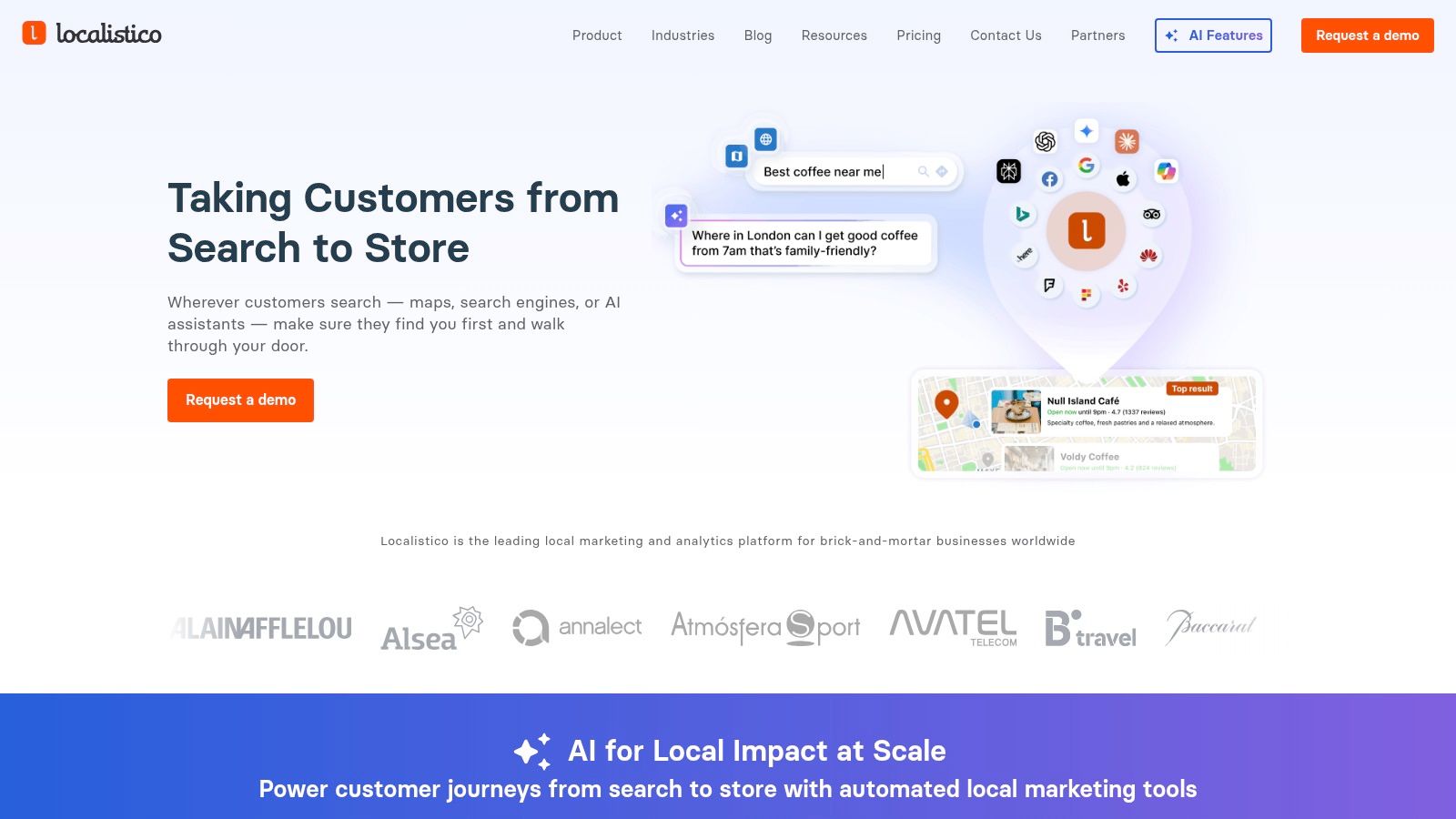
8. Localistico
Localistico is one of the more relevant UK and EU-focused options for brands that want multi-platform local marketing in one place. It centralises location data, reviews, posts, and analytics across Google, Apple Maps, Meta platforms, and a broad site network. For UK retail and restaurant teams, that combination matters because visibility isn't confined to Google anymore.
Its support for Apple Maps is a genuine differentiator, especially for brands that have historically underinvested in that channel. The platform is built for multi-location use, so it makes bulk posting and local offer management more realistic than handling each branch separately. That is often where the operational value shows up first.
Who gets the most from it
Localistico works best for in-house teams that need an end-to-end stack without shifting into a massive enterprise suite. It blends listings, reviews, ads, and analytics, which can be enough for a marketing manager to run local campaigns without importing five separate tools.
The limitation is scale and pricing transparency. It isn't usually positioned for tiny single-site businesses, and public pricing isn't available. That makes it more of a strategic platform purchase than a quick self-serve buy. If your team needs strong UK footprint coverage and is already thinking in terms of multiple locations, it deserves a serious look.
9. PinMeTo
PinMeTo is a good fit for UK brands that need broad European directory coverage and a strong privacy posture. It's Nordic-built, and that shows in its emphasis on compliance, conflict detection, and structured listings management. For multi-location organisations operating across the UK and mainland Europe, that combination can reduce the risk of stale or conflicting information spreading across channels.
The platform syncs listings across Google, Apple, Bing, Meta, Waze, HERE, TomTom, Foursquare, TikTok, and more, which gives it unusually broad reach for brands with many local touchpoints. It also includes conflict detection between platform data and the source of truth, so teams can catch mismatches before they become customer-facing problems. For businesses with lots of branches, that sort of control is often more valuable than another dashboard full of vanity metrics.
Best use case
PinMeTo makes sense when your priority is accuracy across a wide European footprint. Its GDPR and ISO 27001 posture will also matter to teams that care about security and compliance language during procurement. That said, the interface depth may demand more onboarding than smaller teams want, so it's not the most lightweight choice on this list.
The strongest case for it is scale. If your business needs dependable listings distribution, local posting, and reporting across several countries, PinMeTo is built for that environment. If you only need one or two locations in the UK, it may be more platform than you need.
10. Rio SEO
Rio SEO belongs firmly in the enterprise local marketing category. It covers listings, local pages, store locator solutions, reviews, and analytics, and it is designed for brands with a global or very large multi-site footprint. For teams that need structured reporting and reliable deployment across multiple markets, it has the kind of maturity that smaller tools often can't match.
Rio SEO is best thought of as infrastructure for location marketing. It distributes listings data through aggregators and directories, supports local pages and locator builds, and gives teams integrated dashboards for rankings, clicks, and conversions. That makes it a sensible fit for organisations that need local search to connect with measurable business outcomes rather than just surface-level visibility.
What to expect
The upside is clear. You get mature reporting, bulk optimisation, and proven enterprise support. The downside is equally clear. Pricing is custom, and the product is less SMB-friendly than UK-centric tools such as BrightLocal or leaner AI-first options like LocalHQ.
For UK businesses, the decision usually comes down to operating model. If you need a global enterprise stack with formal SLAs and deep reporting, Rio SEO is credible. If you need something simpler, quicker to deploy, and cheaper to run, it may be too much platform.
Top 10 Yext Alternatives, Feature & Pricing Comparison
| Product | Core features ✨ | Quality ★ | Value & Price 💰 | Target 👥 |
|---|---|---|---|---|
| LocalHQ 🏆 | AI Optimisation Wizard, GBP sync, geo-grid rank tracker, Review Autoresponder | ★★★★☆ (intuitive, AI-driven) | 💰 £29/mo single · £49 (2–9) · £119 (10–29) · 7‑day trial · white‑label | 👥 SMBs, multi‑location brands, agencies |
| BrightLocal | Local Search Grid, GBP audits, review management, Citation Builder | ★★★★☆ (strong reporting) | 💰 Pay‑as‑you‑go citations · core plans (contact sales) | 👥 Agencies & SMBs (UK focus) |
| Uberall | Centralised listings sync, reviews inbox, store/locator, GEO Studio | ★★★★☆ (enterprise, SOC2) | 💰 Custom pricing · enterprise SLAs | 👥 Large brands & franchises |
| SOCi | Listings, reviews, social publishing, CRM integrations | ★★★★ (governance & workflows) | 💰 Custom/enterprise · multi‑channel consolidation | 👥 Franchises & enterprise marketers |
| Birdeye | Reviews, messaging inbox, referrals, listings & analytics | ★★★★☆ (CX-focused) | 💰 Module-based pricing (contact sales) | 👥 Healthcare, finance, service brands |
| Reputation | Listings at scale, reviews & surveys, AI text analytics | ★★★★ (deep analytics) | 💰 Enterprise pricing (contact sales) | 👥 Multi-site enterprises (verticalised) |
| Partoo | Google/Apple distribution, AI auto-replies, messaging | ★★★★ (EU focus) | 💰 Contact sales · enterprise modules | 👥 Retailers & hospitality (EU/UK) |
| Localistico | Multi-platform sync, bulk posts, local ads & analytics | ★★★★ (Apple Maps strength) | 💰 Contact sales · multi‑location plans | 👥 Retail & restaurant groups |
| PinMeTo | 100+ directory sync, conflict detection, social posting | ★★★★ (GDPR/ISO 27001) | 💰 Contact sales · privacy-first | 👥 EU/UK multi‑location brands |
| Rio SEO | Bulk listings & distribution, local pages/locator, reporting | ★★★★ (enterprise reporting) | 💰 Enterprise pricing · high‑volume support | 👥 Global enterprise brands |
Making Your Choice and Planning the Switch
The best Yext alternative is the one that matches your budget, team size, and growth goals, not the one with the longest feature checklist. UK businesses should treat this as an operating decision, not just a software purchase. If your team manages reviews, Google Business Profiles, and location data every week, the hidden cost is usually time, not licence fees.
Start with your current state. Audit your listings, note where your Google Business Profile data is inconsistent, and identify which branches generate the most review volume or location-specific questions. Then choose one platform for a pilot, because a short test will reveal more than a sales demo ever will. If Yext is still in place, export your data early so the switch doesn't turn into a rushed migration project.
The UK market also makes contract risk more important than it is in some other regions. Cash-flow pressure means some businesses need flexible pricing, transparent onboarding, and a clear path out if the tool no longer fits. That's why SMBs and agencies often do better with tools that reduce admin from day one, rather than with broad enterprise platforms that shift the work back onto the team.
For many UK businesses, LocalHQ is the standout choice because it blends AI optimisation, geo-grid tracking, review automation, and multi-location control without the usual enterprise overhead. It's especially strong if your priority is better Google visibility, quicker review responses, and cleaner reporting across one or many branches. If you're comparing options for 2026, that combination is hard to ignore.
If you want a practical way to improve local visibility without adding more manual admin, LocalHQ is built for that job. It helps you manage Google Business Profiles, automate review responses, and track local rankings from one dashboard. Visit LocalHQ to see how it can simplify your local SEO workflow and support faster growth across your locations.