Local SEO Keywords: Boost Your UK Business in 2026
84% of consumers in the UK search online for local businesses daily, and 28% of those local searches lead to a purchase within 24 hours according to SalesGenie's local SEO statistics. That changes how you should think about keywords.
For a plumber in Camden, a restaurant in York, or an independent shop in Bristol, local SEO keywords aren't a nice extra. They're the phrases that connect a search to a booking, a phone call, a visit, or a sale. If the wording on your site and Google Business Profile doesn't match what people type, you miss the enquiry before the customer even sees your name.
The mistake I see most often is chasing broad vanity terms. “Plumber”, “restaurant”, “florist”. Those words are too wide, too vague, and often too competitive to move the needle for a local business. The businesses that win usually get much more precise. They combine service, location, and intent in a way that matches how people search in the UK.
Why Local Keywords Matter More Than Ever in the UK
Most small businesses still underestimate how local search works. They assume visibility comes from having a website, collecting a few reviews, and mentioning their town now and then. It doesn't. Visibility comes from relevance. Google needs strong signals about what you do, where you do it, and which searches you should appear for.
That's why local keywords matter so much. They bridge the gap between a vague online presence and a specific buying moment. Someone searching “boiler repair in Leeds”, “Sunday roast York city centre”, or “key cutting near Clapham Junction” isn't browsing casually. They usually need something now, or soon.
Search intent is local intent
For local businesses, keyword strategy isn't just about rankings. It affects whether you show up in Maps, whether your Google Business Profile appears for the right searches, and whether your landing pages attract people ready to act.
A lot of owners focus on generic marketing language. Customers don't search that way. They search by problem, service, and place. A solicitor may describe a service as “family law support”. The customer types “divorce solicitor in Harrogate”. A café may talk about “artisan brunch”. The customer types “best brunch in Brighton”.
Practical rule: If your wording sounds like internal branding rather than a real customer search, it probably won't pull in local demand.
Localisation matters beyond SEO as well. If you're trying to align your messaging across regions, this guide on achieving global growth with localization is useful because it shows how language and local context shape discoverability, not just conversion.
The businesses that match language win more often
In practical terms, local keyword work is about reducing mismatch. A heating engineer in Manchester shouldn't build their whole strategy around broad national phrases. A shop in Glasgow shouldn't optimise every page for “near me”. A restaurant in Bath shouldn't only target cuisine terms without neighbourhood context.
The better route is to align your content and profile fields with how people in your area search. If you want to boost local visibility for UK businesses, keyword selection has to sit at the centre of the work, not at the end of it.
Here's the commercial reality:
- Daily behaviour matters: People in the UK search for local businesses every day.
- Speed matters: A meaningful share of those searches turns into purchases quickly.
- Specificity matters: The business that answers the exact search usually gets the click.
That's why local SEO keywords deserve proper attention. Not a giant spreadsheet with hundreds of random phrases. A focused plan tied to how customers in your patch look for help.
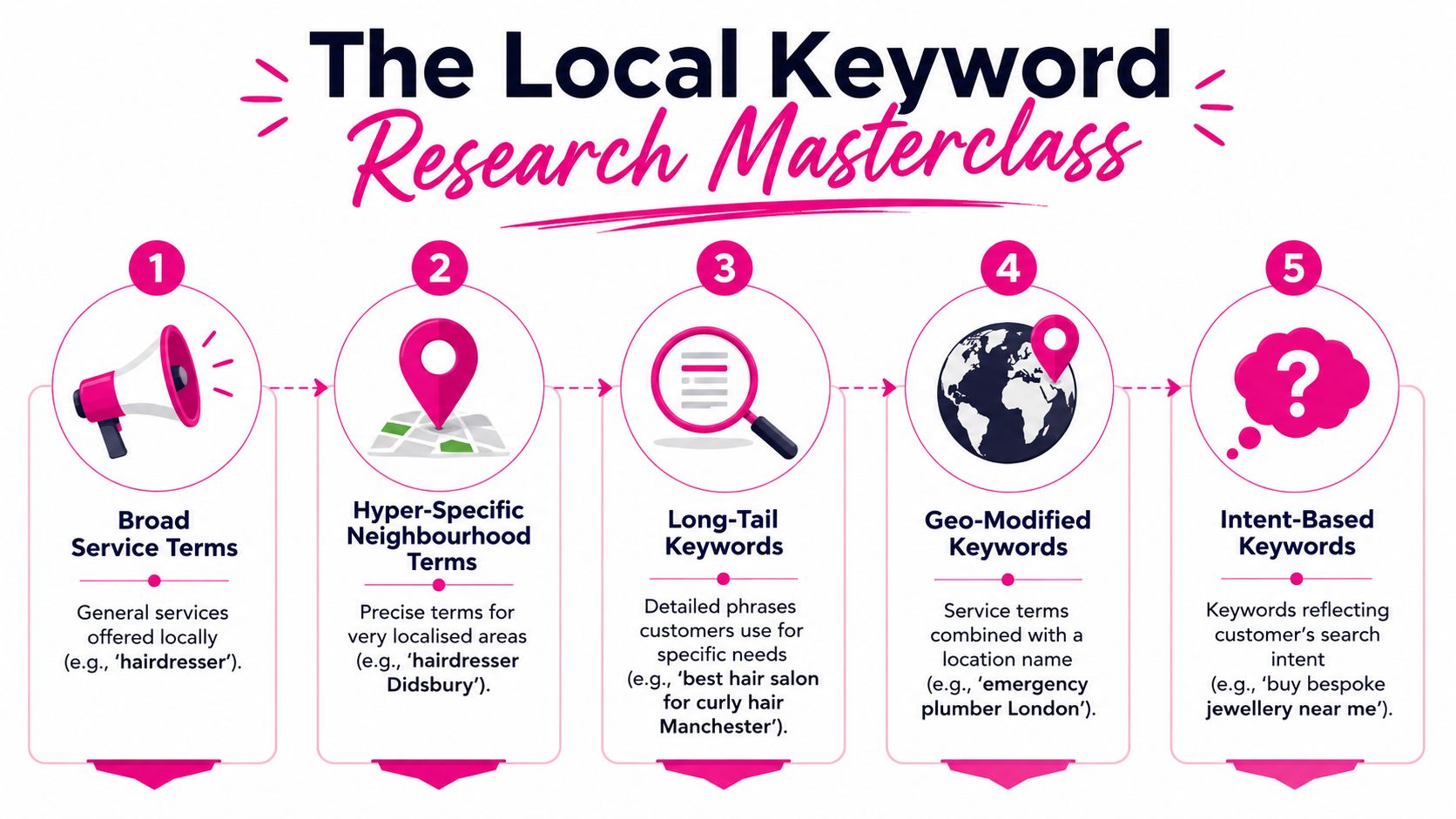
The Local Keyword Research Masterclass
A local keyword plan usually succeeds or fails before any tool is opened. The businesses that get results tend to work from a tight list of terms tied to real services, real places, and real buying intent. For most UK firms, that means 20 to 40 keywords you can effectively use across your Google Business Profile, service pages, FAQs, title tags, and listings without making the site unreadable.
A useful local keyword usually combines three elements. Service, qualifier, location. Examples are “emergency plumber Camden”, “Sunday roast York”, and “same day key cutting Bristol city centre”. The pattern is simple. The judgement call is picking combinations that match how customers search and what you can realistically rank for.
Start with a seed list, not a tool
I start with the business itself. No software yet. Just a sheet split into three columns.
Service terms
“Emergency plumber”, “wedding florist”, “private dentist”, “Sunday lunch”, “watch repair”.Modifiers
“24 hour”, “same day”, “family friendly”, “vegan”, “licensed”, “open late”.Geography
City, borough, district, estate, neighbourhood, or postcode area. Examples include “Leeds”, “Camden”, “Didsbury”, “Bristol city centre”, and “Jewellery Quarter”.
Good local research starts to feel practical. A Birmingham locksmith does not need 300 exported phrases. They need the combinations that map to money. “Locksmith Birmingham” is broad. “Emergency locksmith Jewellery Quarter” is closer to a call-out job and easier to support with a relevant page or service area section.
Build a shortlist you can implement
Small business owners often assume more keywords means more visibility. In practice, bloated lists create thin pages, duplicated copy, and messy optimisation. A focused set works better because every term has a clear home.
I normally group the shortlist like this:
| Business type | Core term | Supporting terms |
|---|---|---|
| Plumber | emergency plumber Camden | 24 hour plumber Camden, boiler repair Camden, burst pipe plumber Camden |
| Restaurant | Sunday roast York | best roast dinner York, family Sunday lunch York, roast near York city centre |
| Jeweller | bespoke jewellery Bristol | custom engagement ring Bristol, handmade jewellery Bristol, jeweller Clifton |
That approach keeps the work usable. One core keyword per main page. A handful of close variants. Then a few neighbourhood or intent modifiers where they make sense.
For a trade business, the shortlist often centres on urgent and high-margin jobs first. For a restaurant, it is usually menu intent, occasion intent, and location. For a local shop, it tends to be product plus place, then specialist services such as repairs, engraving, fitting, or same-day collection.
Add conversational and AI-style search terms carefully
People do not always search in neat keyword fragments now. They ask fuller questions and use more descriptive phrasing, especially on mobile and AI-driven search features. That does not mean you should start cramming awkward sentences into headings. It means your shortlist should include a few longer, natural phrases that reflect how customers describe the problem or outcome.
Examples:
- “best family dentist in Bristol for nervous patients”
- “best vegan brunch in Manchester city centre”
- “best emergency plumber in Leeds for landlords”
These are useful prompts for FAQ sections, review requests, service descriptions, and supporting copy. They also help you spot bottom-of-funnel language. If you need more commercial-intent ideas, tools built to improve lead generation with BOFU keywords can help refine the shortlist without turning it into another bloated spreadsheet.
Validate each keyword before it goes on the plan
A phrase only earns its place if it holds up in the live search results.
Check it four ways:
Google Keyword Planner with UK location targeting
National averages can make a weak local term look stronger than it is.Google Trends
This is useful for seasonal demand. Restaurants, florists, and gift shops see this constantly. Heating engineers and roofers often see weather-driven swings too.The actual results page
If Google shows a map pack, local signals and Google Business Profile relevance matter straight away. If the page is full of service pages, you will need a solid landing page rather than a generic homepage mention.Intent fit
“Near me” terms can matter, but they rarely need repeating in on-page copy. Google usually understands proximity from profile, location, and page context.
The final check is operational. Ask whether you can support the term with a page, a service area, a category, a review theme, or a product listing. If the answer is no, leave it off the shortlist.
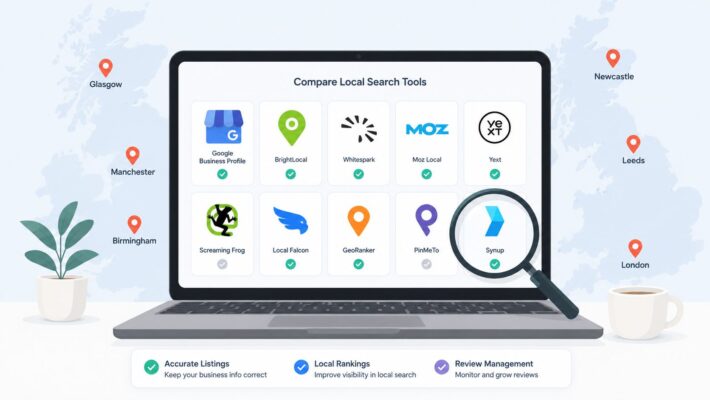
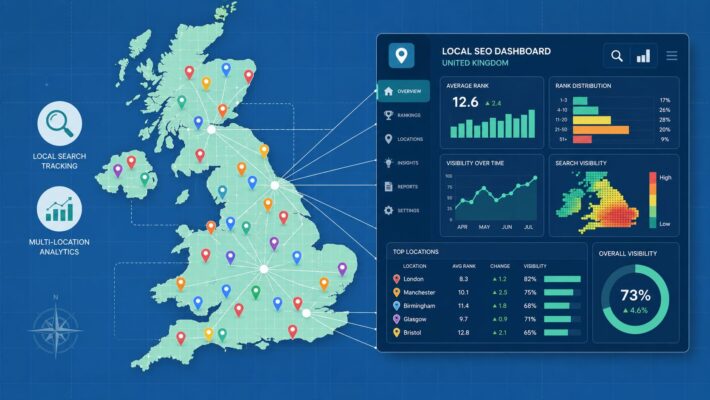
For ongoing monitoring, LocalHQ local SEO insights can be used to track how chosen terms perform in specific UK areas, which is far more useful than watching broad national positions.
Analysing Competitors and Prioritising for Impact
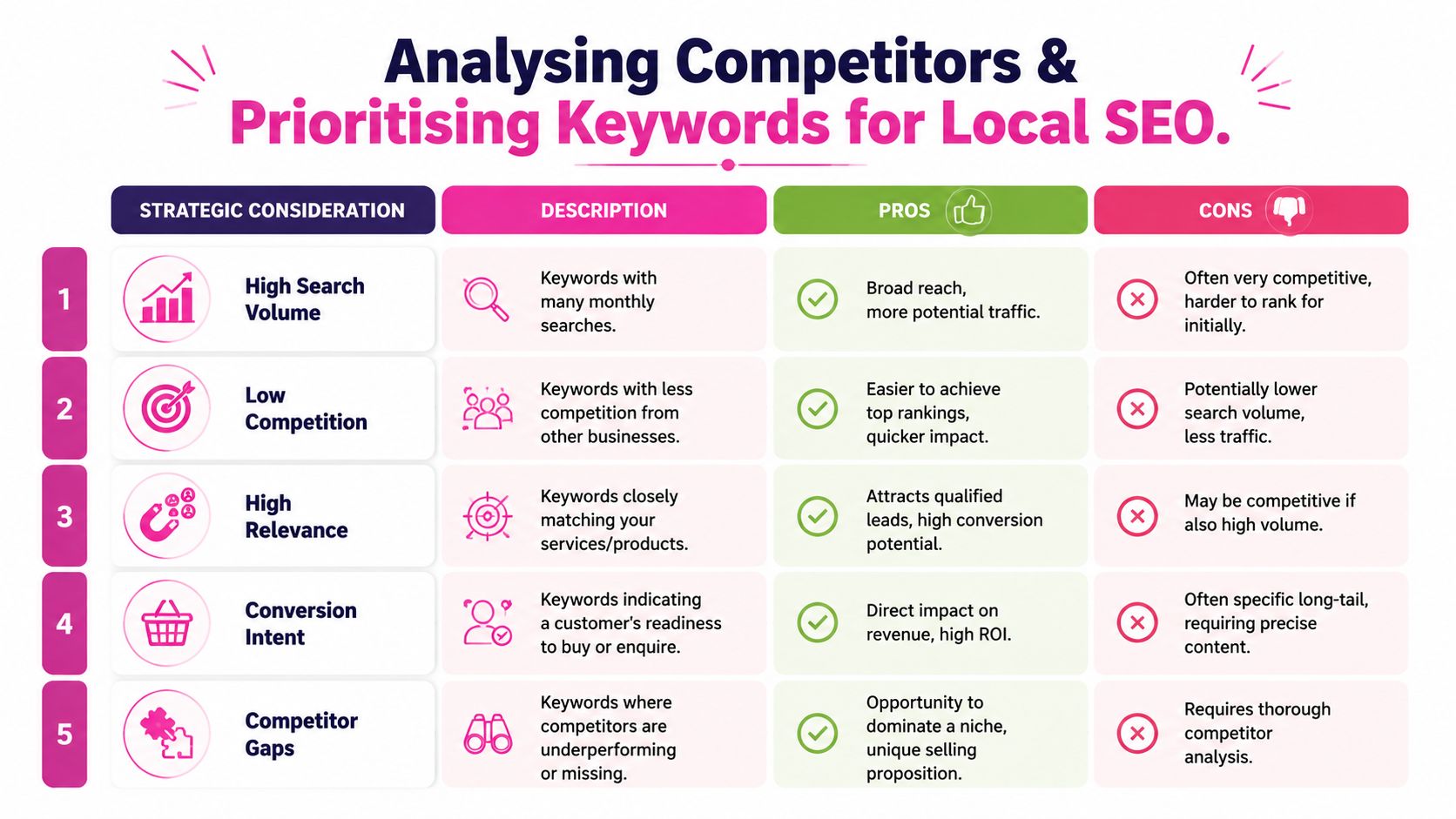
Once you've built a keyword list, the important work begins. Not every term deserves equal effort. Some look promising on a spreadsheet but won't bring in enquiries. Others are hidden opportunities because competitors rank for them subtly and consistently.
That's why competitor analysis is a mandatory step. By inspecting a top-ranking local competitor's domain, you can uncover the service-and-neighbourhood combinations already proven to drive traffic in your market, as noted in Reboot's local SEO statistics.
What to look for in competitor data
Take a local rival that appears regularly in Maps and organic results. If you're a solicitor in Nottingham, check another firm that ranks for your target services. If you run a café in Edinburgh, inspect the sites that dominate local brunch or lunch terms.
I'd focus on four things first:
Pages that rank repeatedly
If a competitor has separate pages for “boiler repair Leeds” and “emergency plumber Headingley”, that tells you Google is rewarding specificity.Service and place pairings
The useful clues are often small combinations. “Wedding flowers Chorlton” may beat broader phrases because it reflects a real local niche.Content depth
Thin location pages rarely hold up. Strong competitors usually have service details, local references, FAQs, and clear calls to action.Backlink reality
If the top pages have stronger link authority than your site, don't attack their hardest terms first. Start where the gap is smaller.
How I prioritise without getting distracted by volume
Many business owners pick keywords in the wrong order. They chase the biggest-looking phrase first, then wonder why nothing shifts. Search volume matters, but it isn't the only filter.
Here's a simple prioritisation table I use:
| Priority filter | What it means in practice | Example |
|---|---|---|
| Relevance | Closely matches what you actually sell | “Emergency electrician Sheffield” |
| Intent | Suggests the person is ready to call, book, or visit | “Same-day tyre repair Liverpool” |
| SERP fit | Matches the page type Google is already rewarding | Service page, location page, or GBP signal |
| Competition gap | Competitors rank, but not with unbeatable authority | “Dog grooming Didsbury” |
A restaurant might find “best tapas Manchester” appealing, but if the results are dominated by major city guides and review sites, that term may not be the first battle to pick. “Spanish restaurant Northern Quarter” may be a better route because the search is more local, the intent is stronger, and the result set often gives businesses more room.
The right keyword isn't the one with the biggest headline number. It's the one you can rank for and turn into revenue.
Find the sleeping giants
Some of the best local SEO wins come from phrases that look modest but convert well. A roofer may get more from “flat roof repair Walthamstow” than from “roofer London”. A butcher may get more from “dry aged steak York” than from “butcher near me”. A clinic may get more from “children's dentist Solihull” than from “dentist Birmingham”.
Those terms work because they combine precision and intent. They're easier to support with useful content, and they align with what a real customer wants right now.
When you review your sheet, cut aggressively. Keep the terms that meet three tests:
- They match a service you offer.
- They fit a location you serve.
- They deserve a dedicated page, profile mention, or supporting content asset.
Everything else can wait.
Weaving Keywords into Your Google Business Profile
Your Google Business Profile is where a lot of local keyword work either pays off or falls flat. Businesses often overcomplicate this. They obsess over hacks, then ignore the fields that tell Google what they do and where they do it.
What works is simple. Use the right categories, write a clear description, build out services properly, publish updates with local relevance, and keep the language natural.
Start with the fields Google already gives you
Primary category carries a lot of weight. If you're a plumber, pick plumber, not a vague business label. If you're a Thai restaurant, choose the closest accurate category, then use secondary categories where they fit.
Business description is one of the easiest places to reinforce your main services and service area. Keep it readable. Mention the core service, location, and a couple of differentiators. If you need help shaping that wording, this Google Business Profile description guide is a useful reference.
Services and products should reflect the keyword targets you chose earlier. A dentist shouldn't just list “dental services”. Break it out into implants, emergency appointments, hygienist visits, children's dentistry, and so on, using natural local context where appropriate.
What good implementation looks like
For a trade business in Leeds, a poor profile says:
- “We offer quality plumbing solutions for all customers.”
A better profile says:
- “Emergency plumber serving Leeds, including boiler repairs, leak detection, blocked drains, and same-day callouts.”
For a restaurant in York, weak service wording sounds like brochure copy. Better wording reflects search language:
- Sunday roast
- Private dining
- Vegan brunch
- Restaurant near York city centre
For a local shop, category and product detail matter more than fluff. A bike shop that mentions repairs, servicing, electric bikes, and city-centre location signals relevance far more clearly than one that only talks about “excellent customer service”.
Reviews and regional relevance strengthen the signal
Targeting specific UK regions is critical. Businesses in Leeds receive an average of 912 reviews, the highest in the UK, and 80% of local searches driven by specific keywords result in conversions, according to the earlier-cited Reboot research. That tells you two things. Local intent is powerful, and review activity helps reinforce visibility.
Use that insight practically:
- Ask for reviews tied to the service delivered: “Boiler repair”, “Sunday lunch”, “bridal bouquet”, “watch battery replacement”.
- Reply with natural context: Mention the service and location when it makes sense.
- Keep posting: Share offers, updates, menu changes, seasonal services, and local event tie-ins.
Your Google Business Profile should read like a real local business that serves a real area, not like a keyword list pasted into a form.
If you manage multiple locations or want one place to handle profile updates, posts, and keyword-led recommendations, LocalHQ is one option. It lets teams manage Google Business Profiles, monitor visibility, and keep location data consistent from a single dashboard.
What not to do
A few tactics still waste time:
- Stuffing “near me” into every field: It reads badly and doesn't help the way owners think it will.
- Repeating the town name unnaturally: “Plumber Leeds” in every sentence won't improve trust or relevance.
- Using broad categories because they seem bigger: Precision beats breadth in local search.
- Leaving services half-completed: Empty profile sections are missed opportunities.
A fully built profile with clear service language and local context usually outperforms a vague profile with more adjectives.
Integrating Keywords Across Your Website and Listings
Most UK local businesses do not need a huge site to rank well locally. They need a tight structure built around the 20 to 40 keywords that drive calls, bookings, and shop visits. In practice, that usually means a small set of service pages, a few location pages where there is real demand, and consistent business details everywhere your company is mentioned.
Your website and listings should reinforce each other. If your Google Business Profile targets "emergency plumber in Sheffield" but your site only has a vague homepage and a generic services page, Google gets mixed signals. The same problem shows up with restaurants that mention private dining on their profile but have no page about it, or with shops listing key product lines in directories but hiding them on the site.
Start with page intent.
A plumber might need separate pages for boiler repair, emergency plumbing, leak detection, and bathroom installation. A restaurant might need pages for the main menu, Sunday lunch, private hire, and Christmas bookings. A local shop might need pages for school uniforms, key cutting, watch repairs, or vape supplies, depending on what people search in that town.
If you serve multiple areas, only build location pages where you can make them useful. That means unique details such as the services most requested in that area, delivery or callout coverage, parking or access information, local testimonials, and relevant FAQs. For businesses with several branches or service areas, this template for ranking multi-location businesses gives a clear structure without turning every page into a copy-and-paste job.
AI search has made this more important, not less. People search in longer, messier ways now. "Who fixes leaking combi boilers in Harrogate today" still maps back to a solid boiler repair page with strong local signals. You do not need a separate page for every AI-style variation. You need a page that clearly covers the service, the area, the urgency, and the next step.
Use keywords where they help the visitor make a decision:
- Title tag: Put the main service and town near the front.
- H1: Write it for humans. "Emergency Plumber in Sheffield" is fine. "Cheap Best Emergency Plumbing Sheffield Near Me" is not.
- Opening copy: Confirm what you do, where you work, and who the page is for.
- Subheadings: Add related services, common problems, and local specifics.
- Internal links: Link between relevant service and location pages with plain-English anchor text.
- Directory listings: Keep your name, address, phone number, opening hours, and main service wording consistent.
I usually see small businesses go wrong in one of two ways. They either build one thin page for every postcode they can think of, or they keep everything on a single homepage and expect it to rank for ten different services. Both approaches waste effort.
A better workflow is simple. Choose the top keyword themes first. Assign one primary theme to each page. Add supporting terms naturally. Then check whether each page gives a customer enough information to call, book, visit, or ask for a quote. If it does not, improve the page before creating another one.
This is also the point where listings outside Google matter. Yell, Apple Business Connect, Bing Places, Facebook, Checkatrade, Treatwell, OpenTable, and industry directories all add context. They will not rescue a weak site, but they can strengthen trust and help search engines confirm your location and service mix. If you want a clean way to measure whether those updates are helping, set up a simple process for tracking SEO performance at page and keyword level.
Useful local SEO pages do three jobs at once. They match the search term, answer the practical question behind it, and make contacting you easy. That is the standard to aim for across both your website and your listings.
Tracking Performance and Proving ROI
Local keyword work only becomes valuable when you can tie it to outcomes. Rankings alone don't tell the whole story. A business can rank well in one postcode and barely appear in the next. It can also rank for phrases that never turn into calls.
That's why I track three layers. Visibility, actions, and business impact.
What to measure each month
- Local rankings by area: Use geo-grid tracking or postcode-based rank checks, not just one generic ranking report.
- Google Business Profile actions: Calls, website clicks, and direction requests show whether visibility is producing intent.
- Website conversions: Form submissions, phone clicks, bookings, and enquiries from your service and location pages.
- Keyword movement by page: This tells you which pages deserve more content, stronger internal links, or better on-page targeting.
For teams that need a simple framework for tracking SEO performance, it helps to separate visibility metrics from lead metrics. Otherwise, you can end up celebrating rankings that haven't changed the business.
Turn reporting into decisions
The useful question isn't “Did we move up?” It's “Which keyword groups led to more enquiries in the places we care about?”
For agencies and in-house teams reporting to owners, clear reporting matters. LocalHQ's guide to client SEO reports is a good starting point if you want reports that connect rankings, profile actions, and lead signals without drowning people in raw exports.
Good local SEO keyword work is cyclical. Research the right phrases. Prioritise them. Deploy them in your profile and pages. Measure what moved. Then tighten the next round.
If you want a simpler way to manage local SEO keywords, monitor Google Business Profile performance, and prove what's driving calls and visits, take a look at LocalHQ. It brings keyword tracking, profile management, and reporting into one place, which makes the workflow easier to run consistently across one location or many.