Review Response Templates: Positive, Negative & Neutral
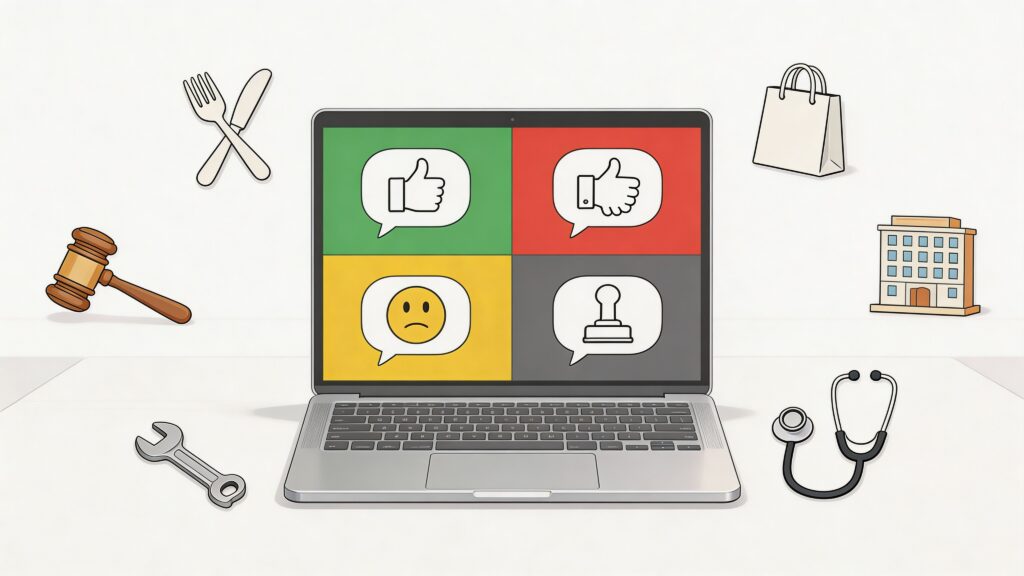
That notification lands in your inbox. A new review has come in. Sometimes it’s the easy kind, a happy customer praising the team. Sometimes it’s the one that makes your stomach drop, because you already know it could shape how the next customer sees your business.
Either way, your reply matters as much as the review itself.
In the UK, 89% of consumers expect businesses to respond to all review types, and 74% check at least two review sites before making local decisions, according to BrightLocal’s review response templates research. That means your response isn’t just for one reviewer. It’s public proof of how you handle praise, complaints and uncertainty.
The problem is that teams don’t struggle with intention. They struggle with speed and consistency. Writing from scratch every time slows people down. Copy-pasting the same reply into every review makes the business sound lazy. Good review response templates solve that tension. They give you structure without removing the human touch.
This guide gives you practical, ready-to-use review response templates for the situations most businesses face. You’ll get copy-and-paste examples for positive, negative and neutral feedback, plus ways to tailor them for restaurants, retailers, service businesses and multi-location brands. You’ll also see where templates help, where they fall short, and how to automate them without sounding robotic.
If you’re already trying to manage Google reviews, this is the next step. Faster replies. Better wording. Fewer blank-page moments. More control over how your brand shows up when people are deciding whether to call, visit or book.
1. The Grateful Acknowledgment Template
A customer leaves a 5-star review after a great visit. If your reply is just “Thanks for your feedback,” you miss a public chance to reinforce what the business does well and show future customers that reviews are read by a real team.
Copy and paste template
Use this for straightforward 4-star and 5-star reviews where the customer is happy and the goal is to acknowledge, personalise, and invite them back:
“Thank you, [Name], for your kind review. We’re pleased to hear you enjoyed [specific product, service or experience]. It means a lot to our team at [Business Name / Location]. Thanks for taking the time to share your feedback, and we look forward to welcoming you back soon.”
It works because each sentence has a job. It thanks the reviewer, references something specific, gives credit to the team or location, and ends with a clear, friendly close. That balance matters. A short reply feels efficient, but if it is too generic, it reads like an automated placeholder rather than a considered response.
Here are a few industry-specific versions you can adapt:
- Restaurant version: “Thank you, [Name]. We’re glad you enjoyed the [dish] and the service from our team at [Location]. We appreciate you sharing your experience and hope to see you again soon.”
- Retail version: “Thank you for visiting us at [Location], [Name]. We’re pleased you found what you needed and had a positive experience with the team. We appreciate your review.”
- Service business version: “Thank you for choosing [Business Name] for your [service], [Name]. We’re pleased we could help and glad the experience met your expectations.”
Why this template works
The strength of this template is control. It gives staff a reliable structure without forcing every reply to sound identical. This is the trade-off with review templates. Too loose, and quality drops between team members or locations. Too rigid, and the business sounds scripted.
A good acknowledgment response should include at least one detail pulled from the review itself. That might be the product they bought, the staff member they mentioned, the treatment they booked, or the branch they visited.
Practical rule: If you can paste the same reply under ten different reviews without changing a word, the template is too broad.
For multi-location businesses, add the location name naturally. For hospitality, mention the dish, atmosphere, or service. For healthcare, legal, or other regulated sectors, keep the wording warm but measured and avoid language that reveals or confirms sensitive details.
Common mistakes to avoid
- Flat wording: “Thanks for your feedback” ends the interaction instead of building on it.
- Over-personalising: Adding too much detail can sound unnatural, especially if the original review was brief.
- Repeating the same phrasing: Customers notice patterns quickly, especially on profiles with high review volume.
The fix is simple. Build a base template, then set clear custom fields for names, locations, services, and review keywords. If you automate replies through a tool such as LocalHQ’s Review Autoresponder, these placeholders help the response stay fast without sounding copied.
If you want examples of phrasing, tone, and review-by-review structure, this guide on responding to Google reviews is a useful reference.
2. The Service Recovery & Apology Template
A bad review often gets read by far more people than the original customer. Your reply needs to do two jobs at once. It needs to show the reviewer they were heard, and show future customers that problems are handled properly.
That makes apology templates harder to automate than thank-you replies. The wording has to stay calm, specific, and controlled.
Copy and paste template
Use this as a base:
“Thank you for your feedback, [Name]. We’re sorry your experience with [Business Name] fell short, especially regarding [specific issue]. We take that seriously and are reviewing what happened with our team. Please contact us at [phone/email] so we can look into it properly and work toward a resolution.”
If the complaint is clear and legitimate, a more direct version usually reads better:
“[Name], we’re sorry about your experience, particularly with [specific issue]. We understand why that was frustrating. We’ve passed your feedback to the relevant team and would like the chance to put it right. Please contact [manager name or contact details] directly so we can follow up.”
For healthcare, legal, financial, or other regulated services, keep the response professional and avoid confirming personal details in public:
“Thank you for your feedback. We’re sorry to hear that your experience did not meet expectations. We take concerns like this seriously and are reviewing the matter internally. Please contact us directly so we can discuss it in private.”
What makes an apology response work
A good public apology does not try to settle the full dispute in the review thread. It shows accountability, names the issue in broad terms, and moves the conversation to a private channel.
Specificity matters here, but only up to a point. Mention the delayed appointment, incorrect order, missed callback, or billing confusion if the reviewer already raised it publicly. Do not add new details, guess at facts, or post a timeline before your team has checked what happened.
Public replies are for accountability. Resolution usually happens offline.
The biggest mistake is sounding defensive. Phrases like “we’re sorry you feel that way” or “that’s not what happened” usually make the business look more concerned with being right than fixing the problem. On the other hand, a long apology packed with explanations can read like self-protection.
The better approach is simple:
- acknowledge the problem clearly
- apologise in plain language
- state the next step
- take the case offline
Industry context matters. A restaurant can reference slow service, a wrong dish, or a poor table experience. A home services business may need to mention lateness, communication, or workmanship. A clinic or law firm should stay general and careful, even if the reviewer shares sensitive details first.
If you automate this category, set tighter rules than you use for positive reviews. Negative feedback should usually be drafted by software, then checked by a person before publishing. Tools such as Google review autoresponder software can handle the first pass, but service recovery still needs approval logic, escalation rules, and industry-specific wording.
3. The Information & Clarification Template
A customer leaves a two-star review saying your store was closed at 6pm, even though your hours changed months ago and are updated on Google. Another says a service “didn’t include” something that was never part of the package. In cases like these, the goal is to correct the public record without sounding argumentative.
This template works best when the issue is factual, specific, and easy to verify. Hours, booking rules, return windows, service inclusions, delivery areas, and pricing structures all fit. Personal disagreements and service failures usually do not.
Copy and paste template
Use a calm, factual reply like this:
“Thank you for your review, [Name]. We’d like to clarify that [accurate information]. Our current [hours/policy/service details] are [details], and these are listed on our [website / Google Business Profile]. If anything was unclear, we’re happy to help directly on [phone/email].”
Here are practical adaptations:
- Restaurant: “Thank you for your feedback. To clarify, our current opening hours are [hours], and [menu item / booking option] is available [days/times or by request]. If you’d like help with a future booking, please contact us directly.”
- Retail: “Thank you for your review. To clarify, our return policy allows [policy detail], subject to [receipt / timeframe / product condition]. We’re happy to review your purchase directly with you.”
- Service business: “Thank you for your comments. We’d like to clarify that [service scope, pricing structure or appointment policy]. If that was not explained clearly, please contact us and we’ll talk it through.”
Precision matters here.
A clarification reply should read like a correction issued by a competent operator, not a rebuttal written in frustration. “To clarify” works. “That is incorrect” usually does not. The difference is small in wording and big in effect.
The public audience matters as much as the reviewer. Prospective customers scan reviews to answer practical questions before they call, book, or visit. A clear reply can prevent repeat confusion, reduce support load, and protect conversion from avoidable misinformation.
The trade-off is straightforward. If the review contains a factual error and a legitimate complaint, do both jobs. Correct the record and acknowledge the customer’s concern. If you only correct the fact, the reply can sound cold. If you only apologise, the misinformation stays visible.
Industry context changes the level of detail. A gym can clarify membership terms or staffed hours. A dental clinic should keep wording broad and avoid confirming treatment details. A trades business can explain call-out zones or quote terms, but should avoid turning the reply into a contract dispute.
Automation helps if the source material is controlled. The safest setup pulls approved wording from current policies, service descriptions, and business profile data, then applies it only to reviews that match clear rules. A Google review autoresponder for policy-based replies is useful here because this category depends on accuracy, not improvisation.
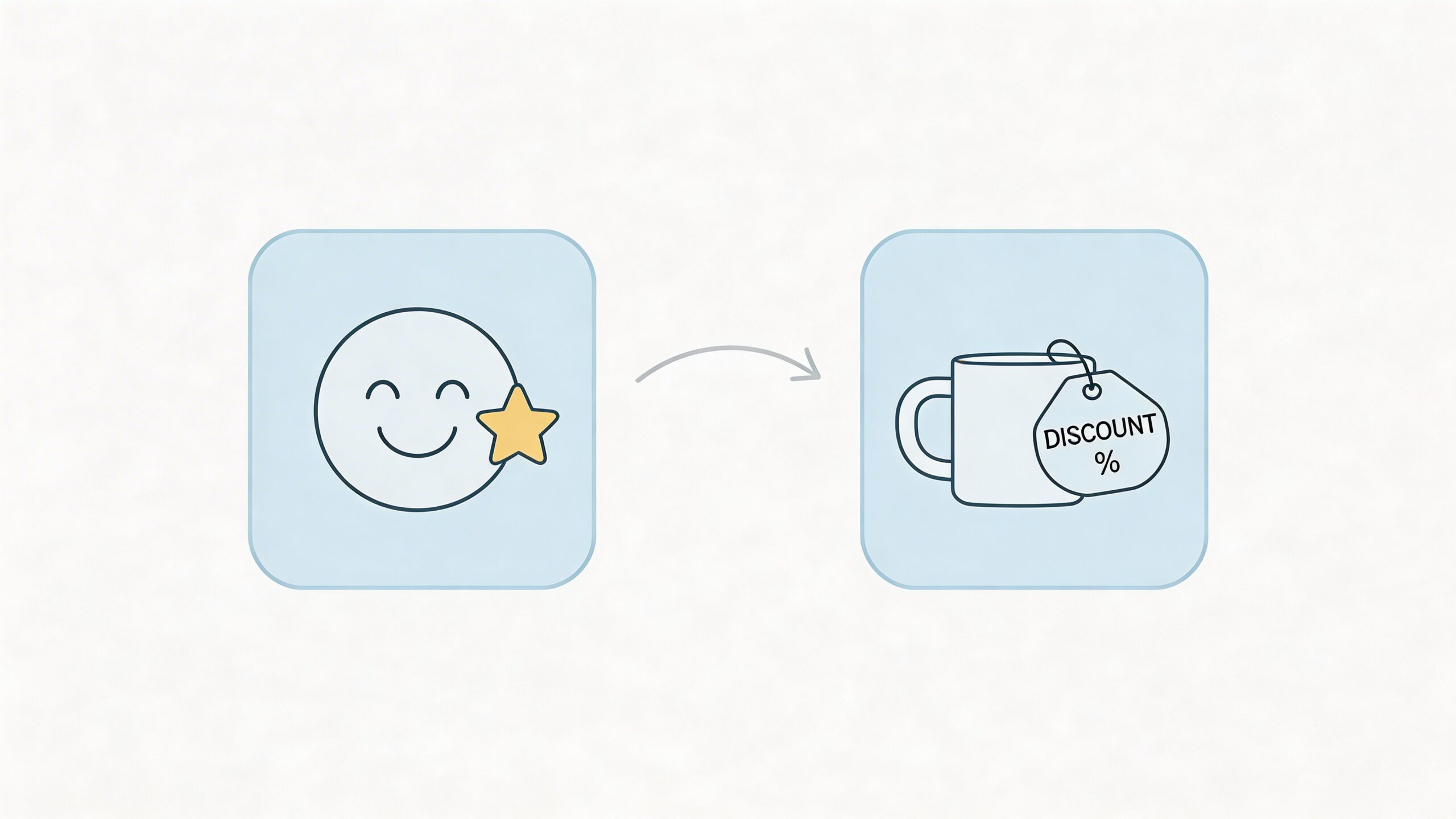
4. The Upsell & Relationship-Building Template
A customer leaves a five-star review after a great visit. Your reply can say thanks, or it can guide the next step in a way that feels helpful and natural.
That only works if the recommendation fits the review.
Copy and paste template
Use this format when there is a clear next service, product, or booking worth mentioning:
“Thank you, [Name], for your kind review. We’re glad you enjoyed [specific product or service]. If you come back, you may also like [complementary product, service or feature] based on what you mentioned. We’d love to see you again.”
Industry examples:
- Restaurant: “Thank you, [Name]. We’re pleased you enjoyed the pasta dishes. If you visit again, you may also enjoy our seasonal specials or a wine pairing that goes well with that menu.”
- Retail: “Thanks for your feedback, [Name]. We’re glad the team helped you find the right [product]. If you’re back in store, we’d be happy to show you [related product or service], which customers often buy with it.”
- Professional service: “Thank you for your review. We’re glad we could help with [service]. If useful, we also help clients with [related service], which is often the next step after this kind of work.”
The trade-off is simple. A good reply extends the customer relationship. A bad one reads like a scripted sales message pasted under every review.
Keep the suggestion narrow. One relevant recommendation is enough. If someone praises a haircut, mention a treatment or rebooking window. If someone praises a boiler installation, mention annual servicing. If someone says your staff were kind during a stressful appointment, skip the cross-sell and keep the focus on care.
Review replies are public. People scanning your Google Maps reviews for local business reputation are judging more than tone. They are looking for signs that your business understands customer context, keeps communication human, and knows when to sell and when to stop.
How to make this work at scale
Automation helps here, but only with clear rules. Set triggers around review themes, product categories, or locations, then map each one to an approved follow-up suggestion. A salon can route reviews mentioning colour to aftercare products. A dental clinic can suggest routine check-ups, but should avoid language that implies treatment details. A home services company can mention maintenance plans after installation reviews, as long as the wording stays general.
The safest approach is to build specific reply variants, not one catch-all upsell template for every positive review.
Use the review to extend the relationship, not to force the next sale.
What works:
- Match the add-on to the review: Suggest dessert after praise for a main course. Suggest servicing after praise for a repair or installation.
- Keep it brief: One recommendation is enough.
- Write like a person: “You may also like” is stronger than stiff, promotional wording.
What fails:
- Leading with an offer or discount: It can make the reply feel transactional.
- Promoting something unrelated: Customers notice when the response ignores what they said.
- Using the same add-on every time: Patterns become obvious fast, especially in high-volume categories.
5. The Social Proof & Community Building Template
A strong public reply can do two jobs at once. It thanks the reviewer and shows future customers what kind of business they can expect to deal with.
This template works best where trust is visible and local reputation carries weight. Restaurants, salons, gyms, clinics, trades, and independent retailers all benefit when replies reflect real people, a recognisable place, and the standards behind the service.
Copy and paste template
Use a reply that acknowledges the customer and reinforces the wider experience:
“Thank you, [Name], for taking the time to leave a review. We’re glad to hear you enjoyed [specific detail]. Feedback like this means a lot to our team, and it helps other local customers know what to expect when they visit us.”
If community participation suits the brand, add a light invitation:
“Thank you, [Name]. We’re pleased you had a great experience with us. It is always good to see customers enjoying [business, venue, or location], and we hope to welcome you back again soon.”
Other examples:
- Restaurant: “Thank you, [Name]. We’re glad we could help make the occasion special. Reviews like yours mean a lot to the team and give other diners a clear sense of what to expect from a visit.”
- Retail: “Thank you for your kind feedback. We’re proud to serve customers in [Location], and your review means a great deal to everyone in store.”
- Service business: “Thank you for your review. Recommendations from local customers help others choose with more confidence, and we appreciate you sharing your experience.”
Why this template works
Social proof gets stronger when the reply feels specific and grounded. Mention the team, the branch, the neighbourhood, or the occasion if the review gives you that opening. Generic gratitude is easy to ignore. Specific replies give future readers something concrete to trust.
This is also one of the easiest templates to automate well, provided the rules are tight. Build variants by location, service line, or review theme. A fitness studio can reference the class type. A restaurant can mention the team or occasion. A home services business can reinforce reliability and local coverage without turning the reply into an advert. Tools such as LocalHQ’s Review Autoresponder are useful here because they let teams map approved wording to common review patterns instead of publishing the same reply everywhere.
For businesses focused on building trust through Google Maps reviews, this matters because prospects often scan several responses in a row. They are checking whether praise sounds believable, whether customers seem real, and whether the business shows up consistently in public.
Use restraint. Asking for user-generated content can work for hospitality, retail, and lifestyle brands, but it often feels out of place in healthcare, legal, or sensitive service categories. Do not pressure customers to post elsewhere, and do not reuse their photos or stories without permission. Community-building works when the invitation feels natural and the reply still reads as a thank you first.
6. The Educational & Value-Add Template
A good review response can answer the next customer’s question before they ask it.
That is the job of the educational template. It works well when the reviewer mentions a problem solved, a treatment completed, a process explained, or a result achieved. A short, relevant tip shows expertise in public and makes the response more useful than a standard thank you.
Copy and paste template
Use this structure:
“Thank you, [Name], for your review. We’re glad we could help with [specific issue or service]. If anyone reading this is dealing with something similar, a helpful next step is [brief tip, precaution, or explanation]. If you have questions about your specific situation, our team is happy to help.”
Industry examples:
- Home services: “Thank you, [Name]. We’re pleased we could help with your boiler issue. After a repair, it’s a good idea to monitor the pressure over the next few days and let us know if anything changes.”
- Healthcare: “Thank you for your kind feedback. We’re glad you felt supported during your visit. Following the aftercare guidance discussed with your clinician is usually the best next step, and we’re here if you need clarification.”
- Professional services: “Thank you for your review. We’re pleased we could assist. For anyone dealing with a similar matter, keeping key documents and dates organised early usually makes the next stage easier to handle.”
The constraint matters here. Keep the advice short, specific, and low risk.
Public review responses are not the place for detailed diagnosis, legal direction, or anything that could be read as personalised advice. In regulated sectors, the safer approach is to reinforce general next steps and invite the customer to continue the conversation privately where context can be checked properly. That is one reason teams building a process for managing online reviews across locations and service lines often set category rules for what staff can and cannot include.
What works:
- One practical takeaway: Give the reader one clear action or reminder.
- Language a customer would use: Keep the wording plain and easy to scan.
- A direct link to the review: Base the tip on the issue the customer mentioned.
What weakens it:
- Too much detail: Long explanations make the reply feel scripted.
- Promotional copy: A review response should not read like a sales message.
- Advice with no context: Generic guidance does little for the reviewer or the next prospect reading.
The best version teaches something small and useful. It leaves the reader with more confidence in how your business works, not just a sense that you replied.
7. The Feedback Loop & Continuous Improvement Template
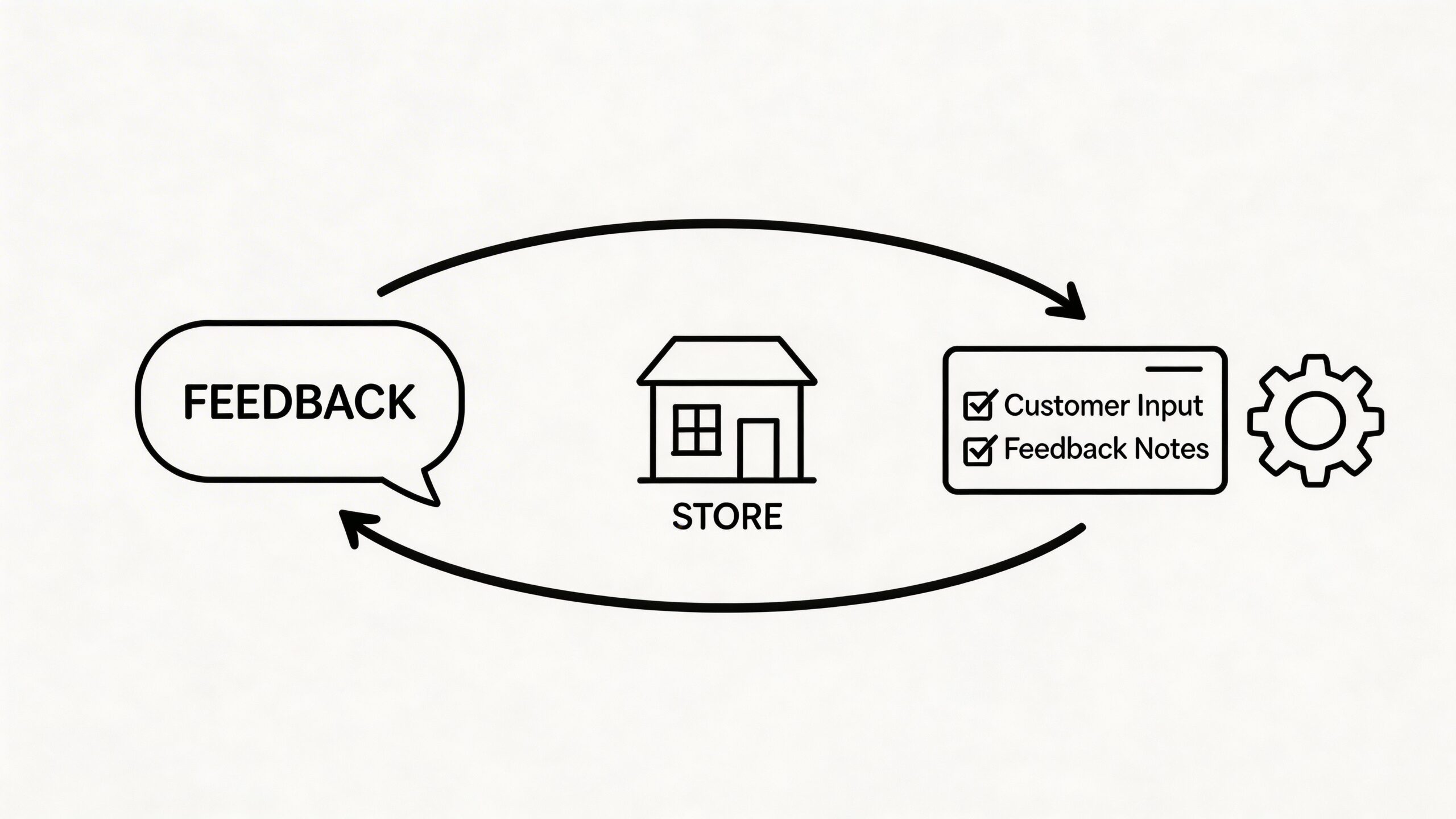
A customer points out a problem in a public review. The useful response is the one that shows what changed after the complaint.
This template works best when the review highlights an operational issue you can act on. Slow service, unclear signage, missed follow-up, booking friction, stock problems, handover errors. If the business has reviewed the issue and made an adjustment, say so plainly.
Copy and paste template
Use this version when a review has led to a real change:
“Thank you for your feedback, [Name]. We appreciate you highlighting [issue or suggestion]. We’ve reviewed this with the team and have already [specific improvement or action]. Your comments helped us improve the experience, and we hope you notice the difference next time.”
Examples by sector:
- Restaurant: “Thank you for raising the waiting time issue. We reviewed our weekend floor plan and booking handoff, and we’ve adjusted how guests are seated during peak periods.”
- Retail: “Thank you for mentioning the checkout delays. We’ve reviewed cover at busy times and updated staffing on the tills.”
- Service business: “Thank you for flagging the communication gap. We’ve changed our follow-up process so customers receive clearer updates after booking.”
Specificity does the heavy lifting here. “We’ve taken your feedback on board” reads like a stock phrase. “We changed our booking confirmation process” gives the reviewer, and every future reader, something concrete to judge.
There is a trade-off. The more specific you are, the more careful you need to be about accuracy. Do not claim a change is complete if it is still being discussed. Do not describe internal disciplinary action. Keep the focus on the process improvement the customer can understand.
A few practices make this template stronger:
- Name the action clearly: training, staffing adjustment, revised process, updated policy, clearer communication
- Match the scale of the issue: a minor inconvenience does not need a dramatic statement
- Use the review internally: repeated comments usually point to a system issue, not a one-off reply problem
This is also one of the easiest response types to automate well. Set rules by topic, location, or review sentiment, then give each branch a template with one field for the actual improvement made. Teams handling online review management across multiple locations usually get better results when local managers can choose from approved change-based replies instead of writing from scratch every time.
The mistake to avoid is vagueness. If the feedback changed nothing, use a different template. If it changed something, say what it was.
8. The Personal Connection & Relationship Deepening Template
A customer leaves their third positive review in a year. If the reply reads like the same generic thank-you you post for everyone else, the relationship stalls in public. If the response reflects a real memory, a repeat visit, a preferred service, a staff member they mentioned, it signals that the business notices loyalty and values it.
This template works best for businesses with repeat custom and some continuity in the customer experience. Restaurants, salons, clinics, fitness studios, estate agents, accountants, and other relationship-led service businesses usually have more to gain here than high-volume, low-contact operators.
Copy and paste template
Use this version as a starting point:
“Thank you, [Name], for your thoughtful review. It was a pleasure to welcome you back to [Business Name / Location]. We’re pleased to hear you enjoyed [specific product, service or staff interaction], and we really appreciate your continued trust in us. We look forward to seeing you again soon.”
Examples:
- Restaurant: “Thank you, [Name]. It was great to have you back at [Location]. We’re glad you enjoyed your usual order, and the team will appreciate your kind comments.”
- Salon or personal care: “Thank you for your review, [Name]. We always appreciate seeing returning clients, and we’re so pleased you were happy with your latest appointment.”
- Professional service: “Thank you, [Name]. We value the trust you place in our team, and we’re pleased we could support you with [matter or service] again.”
The trade-off is simple. The more personal the response, the more discipline it requires.
A good reply includes one or two accurate details. A bad one piles on names, assumptions, and half-correct history pulled from memory or an untidy CRM. That is where businesses get into trouble, especially in regulated sectors or multi-location teams where record-keeping varies.
Personal does not mean intrusive
Use this template only when the detail is already public in the review or clearly appropriate to mention. A reviewer says they visited for their anniversary. Fine. A reviewer praises Sophie by name. Fine. A reviewer hints at a legal matter, treatment plan, or family situation. Keep the reply broad.
That restraint matters as much as warmth. In healthcare, legal, financial, and other trust-sensitive sectors, a measured tone usually performs better than enthusiastic familiarity.
The best personalised replies use one human detail and one clear sign of recognition.
What usually works:
- A returning-customer reference: “It was a pleasure to welcome you back.”
- A staff mention: Use it when the reviewer named the employee first.
- A context cue: repeat appointment, regular order, anniversary visit, ongoing support
What usually hurts the response:
- Overfamiliar phrasing: It can read as forced or unsettling
- Guessing personal details: Never fill in gaps
- Using the same “personal” line for everyone: readers notice patterns quickly
This template is also one of the easiest to automate well if you set guardrails first. Build a few variants by industry, location, and customer type, then limit the personal fields your team or platform can insert. For example, LocalHQ’s Review Autoresponder can handle the framework at scale, but the template should only pull details you are comfortable publishing every time. That is the key implementation point. Automation should preserve judgment, not replace it.
Speed still matters here because recognition loses value when it arrives a week late. Teams that want a clearer operational case can read the strategic case for speed, then apply that thinking to high-loyalty customers first.
Use this template when the review reflects an ongoing relationship and you can personalise the reply safely. If the customer is new, or the details are thin, a cleaner appreciation-based response usually does the job better.
Review Response Templates: 8-Point Comparison
| Template | 🔄 Implementation Complexity | ⚡ Resource Requirements | 📊 Expected Outcomes | 💡 Ideal Use Cases | ⭐ Key Advantages |
|---|---|---|---|---|---|
| The Grateful Acknowledgment Template | Easy, templated, 2–4 sentences | Low, minimal time, basic personalization | Boosts loyalty and GBP visibility; quick engagement | 5-star reviews, testimonials, first-time visitors, multi-location replies | Builds loyalty quickly; scalable; shows appreciation |
| The Service Recovery & Apology Template | Moderate, needs careful wording and coordination | Medium–High, time, ops alignment, possible legal review | Restores trust; can convert detractors; reduces negative impact | 1–2 star reviews, service failures, operational complaints | Shows accountability; drives operational fixes; high conversion potential |
| The Information & Clarification Template | Easy, concise, fact-based response | Low, access to accurate policies/links | Corrects misinformation; protects reputation; clarifies for others | Factual inaccuracies, hours/policy confusion, outdated info | Non-confrontational fact correction; improves public information |
| The Upsell & Relationship-Building Template | Moderate–High, requires tailored messaging | Medium, offers, tracking (UTM/codes), product knowledge | Increases CLV and cross-sell conversions when tracked | 4–5 star reviews, multi-service businesses, repeat visitors | Leverages positive sentiment for revenue; measurable ROI |
| The Social Proof & Community Building Template | Moderate, needs social strategy and monitoring | Medium, social media management, permission handling | Generates UGC, amplifies reach, grows community engagement | Visually compelling experiences, community-focused businesses | Produces authentic marketing assets; boosts organic reach |
| The Educational & Value-Add Template | Moderate–High, needs subject-matter accuracy | Medium–High, content creation and maintenance | Positions brand as authority; reduces support queries; drives traffic | Professional services, healthcare, complex purchases | Builds credibility and trust; differentiates via helpful content |
| The Feedback Loop & Continuous Improvement Template | Moderate–High, requires systems and follow-through | High, tracking, ops changes, cross-team coordination | Drives measurable improvements, loyalty, and reduced escalations | Both positive and negative reviews, multi-location, quality-focused | Shows action on feedback; builds long-term trust and better ops |
| The Personal Connection & Relationship Deepening Template | Moderate (CRM integration recommended) | High, CRM, staff training, careful privacy management | Exceptional retention and advocacy; strong emotional loyalty | Repeat/loyal customers, VIPs, hospitality and personal services | Deep personalised bonds; high lifetime value and advocacy |
Automate Your Responses & Never Miss a Review
Strong review response templates solve the hardest part of review management. They remove the blank page. They help teams stay consistent. They make it easier to respond quickly without sacrificing quality.
But templates alone aren’t enough if your process is weak.
Reviews arrive at awkward times. Different locations answer in different tones. One manager writes careful replies, another sends curt one-liners, and a third never gets round to it. That inconsistency is visible to customers. It also becomes expensive in staff time when every response is written from scratch or chased manually.
Automation helps when it is used properly.
The main benefit isn’t that software writes faster than a person. It’s that the software can enforce structure. Positive reviews can receive one family of replies. Negative reviews can be routed for approval. Neutral or mixed reviews can trigger a different framework. Location names, service types, approved wording and brand voice can all be built into the process.
That matters because response habits directly shape how customers evaluate a business. Verified UK data states that 52% of customers expect replies within 7 days in the BrightLocal context cited earlier, and other verified research notes that many customers read responses before deciding who to trust. Delayed, generic or inconsistent replies create the impression that nobody owns the customer experience. Fast, thoughtful replies create the opposite impression.
There is a trade-off, though. Automation without variation can sound robotic. The verified data also notes that customers detect generic wording easily, and future-focused commentary in the supplied material warns that standardised templates can feel impersonal when they aren’t adapted by location or context. The fix isn’t to avoid automation. It’s to automate the framework and personalise the final wording.
That usually means setting up a response library with clear categories:
- Positive reviews: thank, reference a detail, invite return
- Negative reviews: apologise, acknowledge issue, move offline
- Neutral reviews: recognise both sides, clarify where needed
- Factual issues: correct gently with approved information
- Loyal customers: add a warmer, relationship-based variation
A platform such as LocalHQ can fit naturally. LocalHQ includes a Review Autoresponder designed to craft on-brand replies in real time, and its wider dashboard supports brand consistency across one or many locations. For teams already managing Google Business Profiles, review workflows, local visibility and reporting in the same place, that kind of setup is practical rather than theoretical.
If you want extra perspective on pre-written messaging systems more broadly, this overview of canned responses and quick replies is useful background.
The simplest way to get started is not to build dozens of templates at once. Start with your five most common situations. Approve the wording. Add variations. Decide which ones can be automated and which require human review. Then keep refining based on the responses your customers leave.
The businesses that do this well don’t treat review replies as admin. They treat them as public customer service, local marketing and reputation protection in one place.
If you want to turn these review response templates into a repeatable workflow, explore LocalHQ. Its Review Autoresponder and local SEO tools can help you respond faster, keep brand voice consistent across locations, and stay on top of reviews without managing everything manually.