Review Monitoring Tools: Comparison & Selection Guide
You’re probably in one of two situations right now. Either reviews are arriving across Google, Facebook, Trustpilot and a couple of industry sites, and nobody in the team is sure who’s meant to reply. Or you’ve already got a process, but it relies on inbox rules, spreadsheets and somebody remembering to check platforms manually before a bad review sits there all weekend.
That’s exactly where review monitoring tools earn their place. They don’t just collect reviews into one view. The useful ones help teams spot what needs attention first, route replies to the right person, keep response quality consistent and turn reputation work into something measurable. In the UK, that matters because review behaviour has become part of how people choose local businesses. 88% of consumers read Google reviews before selecting a local business. If you run restaurants, retail sites, clinics, trades, or agency client accounts, that’s not background noise. It’s part of the buying journey.
The shortlist below gets to the point. These are the review monitoring tools worth looking at if you need alerts, reporting, integrations and practical day-to-day workflows rather than vague promises about “customer experience”. I’ve leaned into the trade-offs that matter in use. Some tools are better for agencies, some are better for e-commerce, and some are only worth the cost if you need governance across a lot of locations.
If reviews are part of a wider social and local visibility strategy for you, it’s also worth looking at how platforms treat LinkedIn customer reviews differently from public local review signals. They solve different problems, and a lot of businesses mix them up.
1. LocalHQ
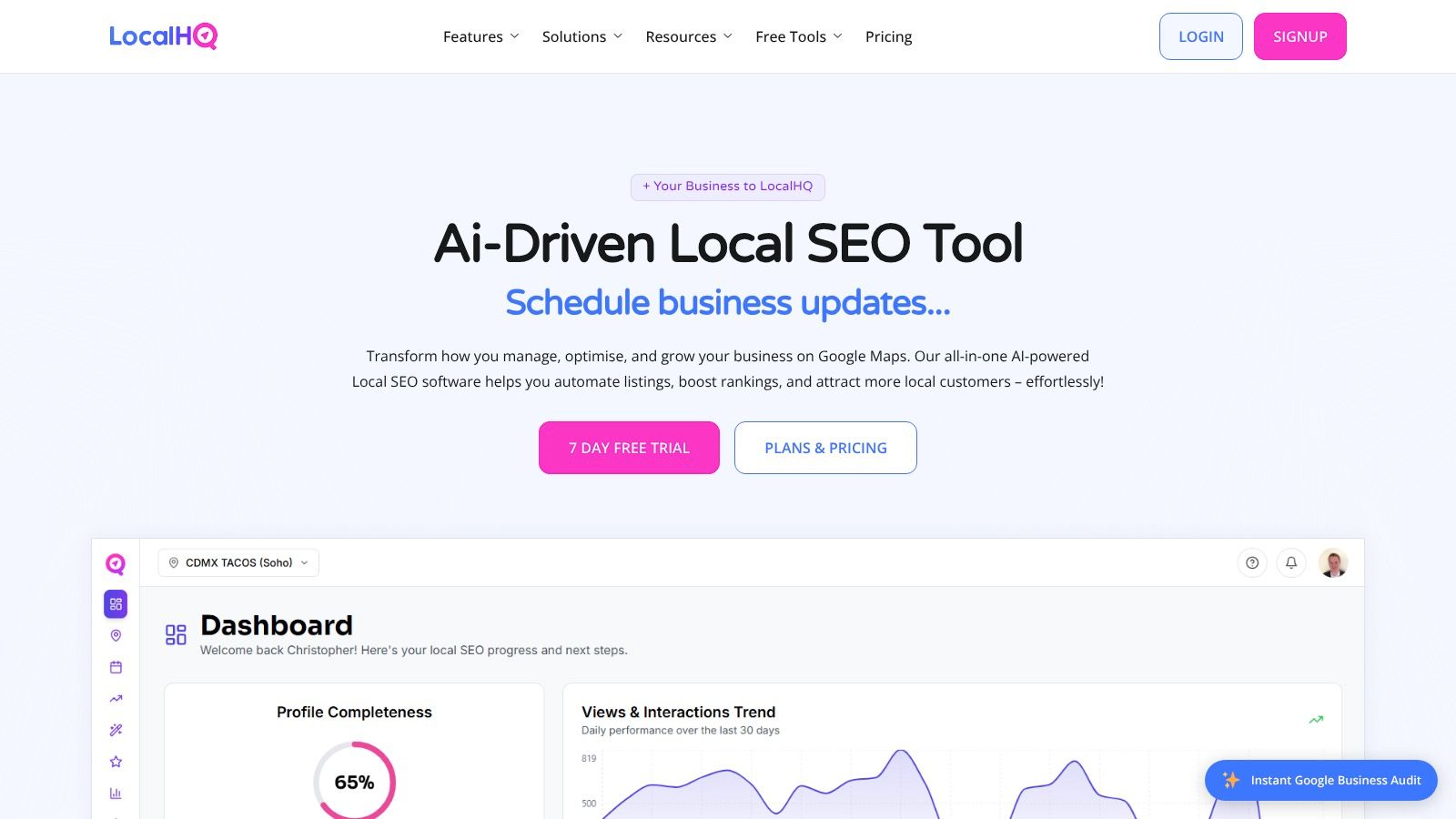
A common UK local business problem looks like this. Reviews come in through Google, someone means to reply, nobody owns it properly, and the issue only gets attention after a poor comment has been sitting there for days. LocalHQ is built for that operating reality, especially for businesses and agencies where Google Business Profile performance matters alongside reply speed.
What makes it different is the way review monitoring sits inside a wider local marketing workflow. Reviews, GBP management, publishing, rank tracking and reporting live in the same system. For a single-site business, that cuts down tool switching. For agencies and multi-location teams, it keeps review handling tied to the same dashboards used to track visibility and local performance.
Why it stands out
The clearest day-to-day feature is the Review Autoresponder. New reviews appear in one dashboard, and the platform drafts replies based on your brand tone. That saves time, but the bigger operational benefit is control. Store managers, reception teams and client account handlers often reply in very different ways. A shared workflow reduces that inconsistency and makes it easier to keep response standards in place.
LocalHQ also includes an AI Optimisation Wizard, GBP audit tools, a geo-grid rank tracker, content publishing and white-label reporting. That combination suits UK businesses that do not want one tool for reviews, another for local rankings, and a third for client reports. If you want a practical reference point for managing online reviews across local search channels, this is the type of all-in-one setup that makes sense.
One point matters more than the feature list. Review work is easier to justify when you can see whether better response handling lines up with stronger local visibility, more profile activity and cleaner reporting.
Best fit and trade-offs
LocalHQ suits restaurants, hospitality groups, clinics, trades, legal firms, retailers and agencies managing multiple Google Business Profiles. It is strongest for Google-first businesses, where Maps and local pack visibility drive enquiries and footfall.
There are trade-offs. Businesses that need deep enterprise integrations, formal procurement detail, or broad cross-channel reputation management across many non-Google sources may want to check the current connector depth before buying. Some broader platform modules are still being expanded too, so teams should confirm what is live now rather than buying on roadmap language.
Pricing is relatively straightforward. Plans start at £29 per month for one listing, then £49 per month for 2 to 9 listings and £119 per month for 10 to 29 listings, with enterprise pricing for larger estates. There is also a 7-day free trial, which is enough time to test whether the review workflow fits your team in practice rather than just looking good in a demo.
2. REVIEWS.io
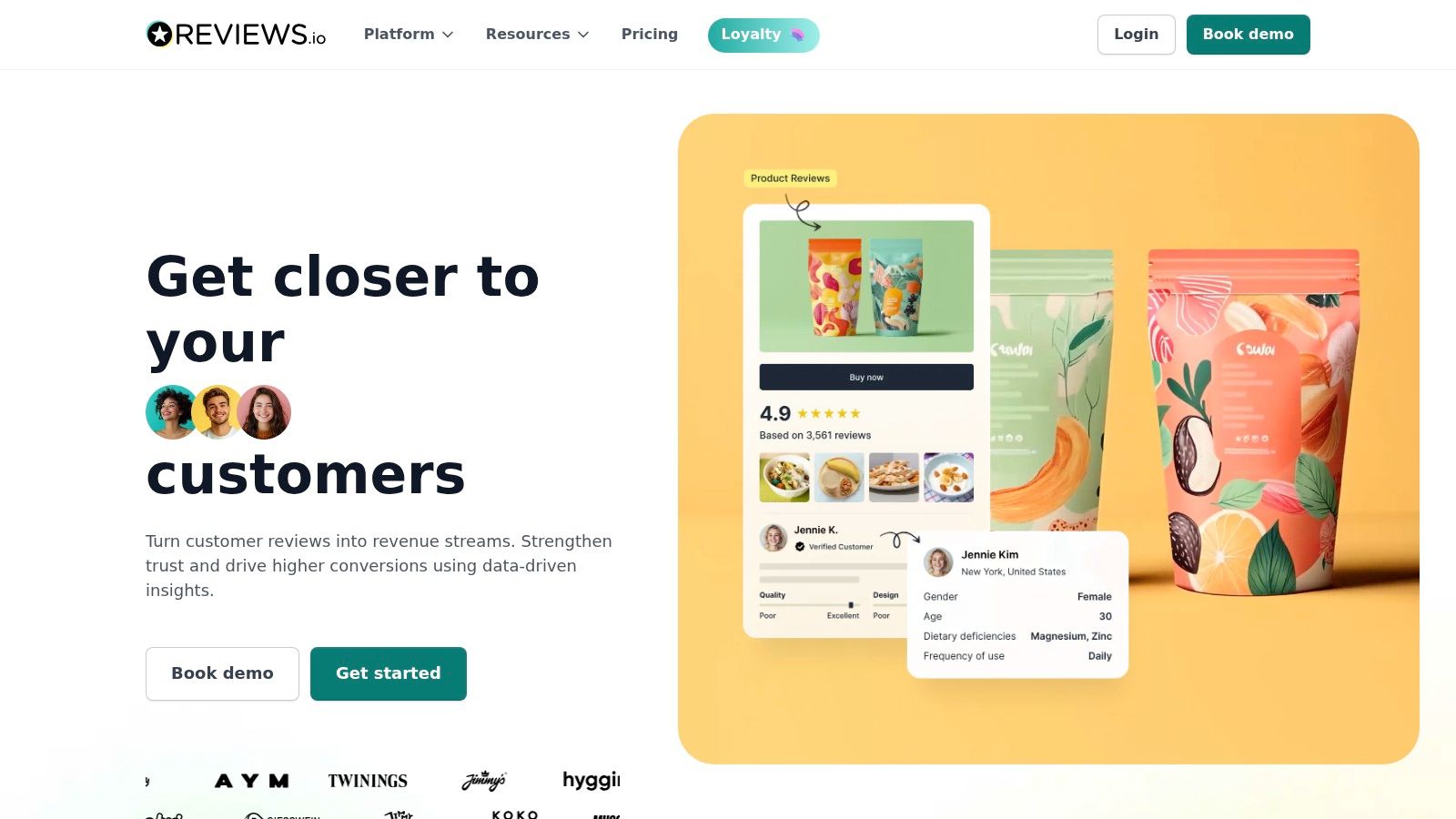
REVIEWS.io makes the most sense when reviews aren’t just something you monitor, but something you actively collect, publish on-site and reuse as content. That’s why it tends to appeal to retailers, e-commerce brands and service businesses that want social proof to do more than sit on a profile page.
Its setup is broader than simple Google review monitoring. You can centralise reviews from major publishers, use AI assistance for drafting replies and sentiment analysis, and push user-generated content onto your site with widgets and galleries.
Where it works well
This is a UK-born platform, and that matters more than people think. A lot of review monitoring tools feel local as an afterthought. REVIEWS.io feels more natural if you need a platform that already understands the overlap between company reviews, product reviews and local trust signals.
For online sellers, support for Google Seller Ratings is useful. For hybrid businesses with shops or service areas, local review coverage alongside product and company feedback can simplify the stack.
There’s also a practical pricing advantage in its invite-based approach. If your review generation volume is predictable, invite quotas are often easier to budget for than feature-heavy plans that only make sense at the top end.
Where buyers get caught out
The main trade-off is that the best parts of the platform often sit higher up the pricing ladder. If you want deeper analytics, more generous invite caps and the richer publishing side, you may outgrow entry-level plans fairly quickly.
A platform can look affordable at first glance, then become expensive once you need enough invites, better analytics and stronger support.
Some users also report inconsistent support experiences. That doesn’t make it a poor choice, but it does mean I’d test responsiveness during the trial or sales process rather than assuming the service layer will match the product promise.
If your main goal is cleaner workflows for managing online reviews across local and e-commerce touchpoints, REVIEWS.io deserves a close look. If all you need is Google alerts and a response inbox, it may be more platform than you need.
3. BrightLocal – Reputation Manager
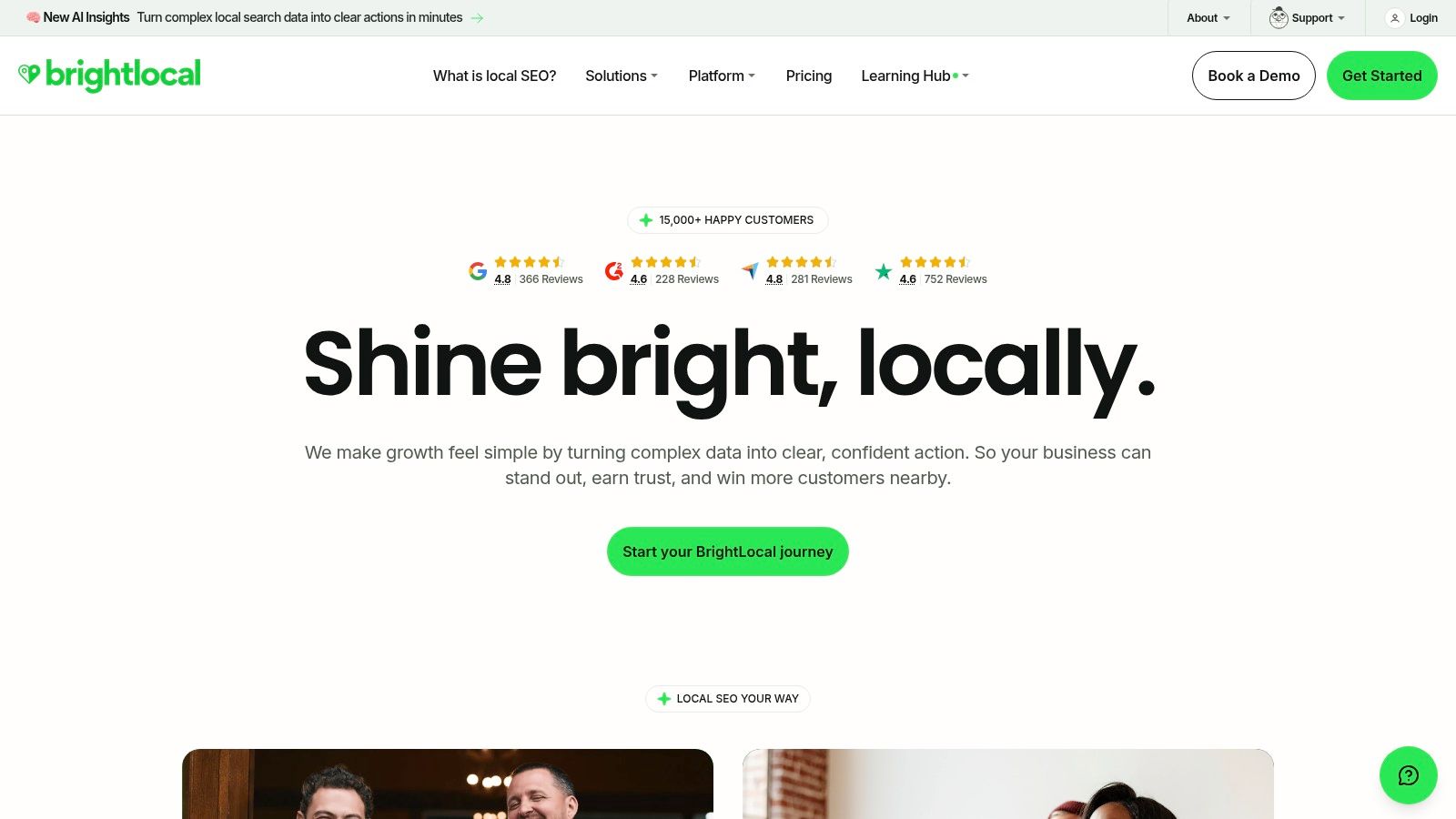
BrightLocal – Reputation Manager is a sensible choice for agencies, franchises and local SEO teams that already live inside BrightLocal’s wider toolkit. If you’re using local search grid reporting, citation tools or listing management already, adding review monitoring is a straightforward decision.
The product isn’t trying to be a full customer communications suite. That’s a strength. It stays fairly close to the local SEO workflow. Monitor reviews, request new ones, reply faster, report by location and roll results up at account level.
Why agencies like it
BrightLocal’s biggest advantage is context. Review monitoring doesn’t sit in isolation. It lives beside local rank tracking, listings and location-level reporting. That makes it easier to explain reputation work to clients because it ties into the same local performance story.
Its white-label reporting is also useful for agencies that need to package reputation updates cleanly. That matters more than flashy dashboards. Clients want to know what changed, what needs action and how each location is performing.
This is also one of the more approachable options for teams that don’t want enterprise complexity. The pricing model is easier to understand than many reputation platforms, and the location-based structure feels familiar to local marketers.
The real limitation
BrightLocal is strongest when you buy into the broader platform. If you only want a standalone review monitoring tool, some of the value proposition weakens. You can still use it that way, but the payoff is better when the team is also using BrightLocal for other local search tasks.
The other thing to watch is UK platform coverage versus the sites your business depends on. That’s a recurring issue across this category. According to a review monitoring software analysis focused on UK gaps, many tools still leave businesses with incomplete monitoring on region-critical platforms, which is one reason some firms miss reviews that affect local visibility and trust on UK-specific directories and services (reviewflowz analysis).
For agencies already doing local SEO, BrightLocal remains one of the more practical review monitoring tools. For single-site operators with no need for broader local search tooling, there may be leaner options.
4. Trustpilot (Business)
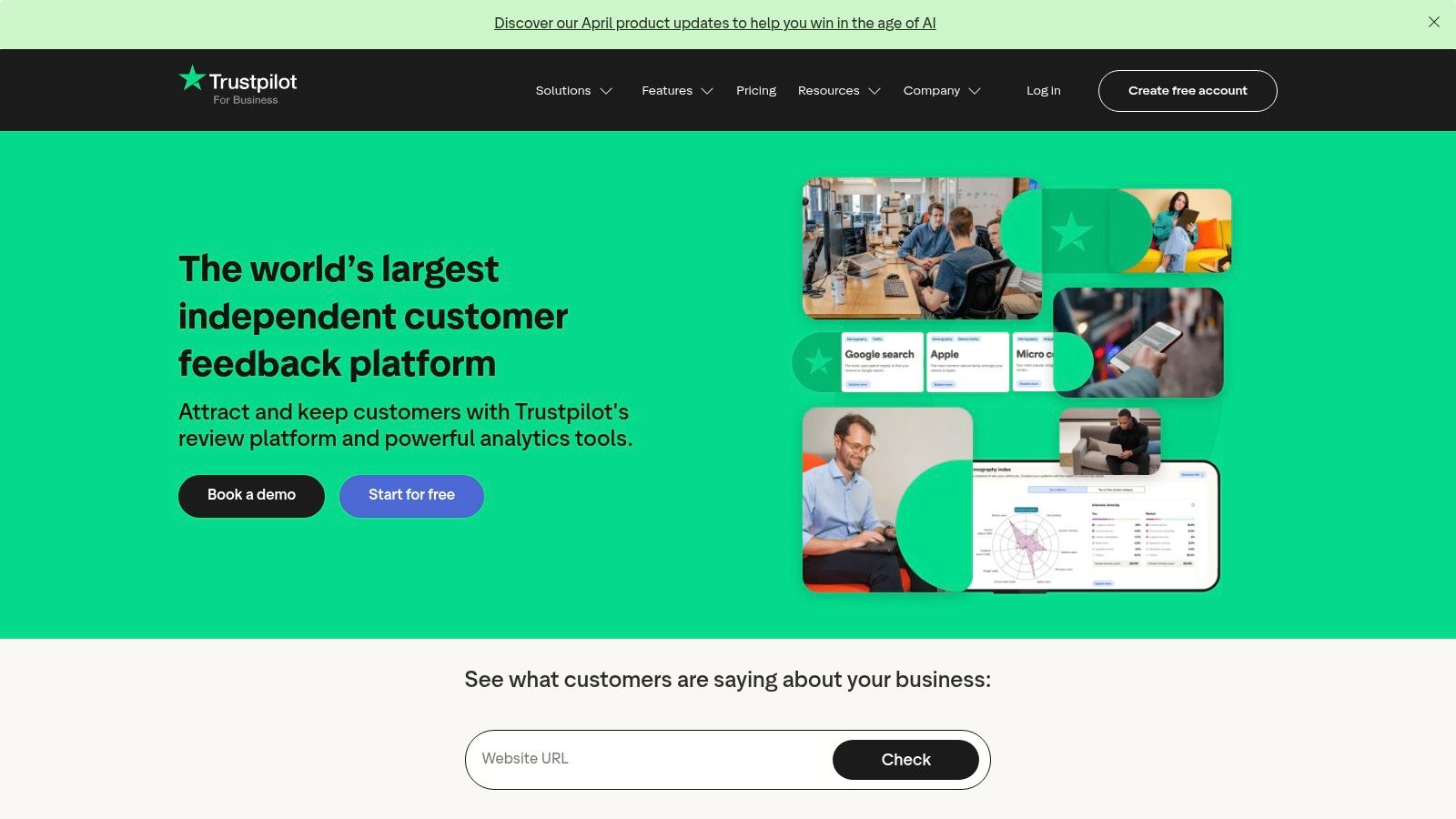
Trustpilot Business is less of a pure monitoring tool and more of a public reputation destination with monitoring built in. That distinction matters. If you want consumers to recognise the platform itself, Trustpilot has obvious value. If you just want an efficient back-office workflow for collecting and replying to reviews, it can feel heavier and more commercial.
A lot of businesses choose Trustpilot because buyers already know the brand. That familiarity can help with click confidence, ad credibility and on-site trust elements.
Strong on visibility, less flexible on buying process
Trustpilot gives businesses alerts, review invites, analytics, response tools and widgets to publish review content on their own site. For brands selling nationally, especially in competitive categories, that visibility can be useful beyond local search.
Its syndication and integrations are often part of the appeal too. If your paid and organic teams want trust signals to show up across more customer touchpoints, Trustpilot can support that.
But there’s a trade-off. Pricing isn’t publicly listed in a way most small firms would find straightforward, and that usually means a sales-led process. For some businesses, that’s fine. For small teams comparing review monitoring tools, it slows decision-making and often pushes them towards more transparent alternatives.
Best for brands that want a public trust layer
Trustpilot works best when the review profile itself is part of the marketing strategy. It’s less compelling if your only requirement is fast operational review handling.
- Good match: Businesses that want public trust pages, on-site widgets and a recognised review brand.
- Less ideal: Small local teams that mainly need Google review monitoring, alerts and quick replies.
- Worth checking early: Contract terms, support expectations and the practical limits of lower-tier plans.
If your team needs to tighten up how you respond to a Google review, Trustpilot may not be the first tool I’d recommend. But if recognised third-party trust signals are central to your acquisition strategy, it’s still a serious option.
5. Yext Reviews
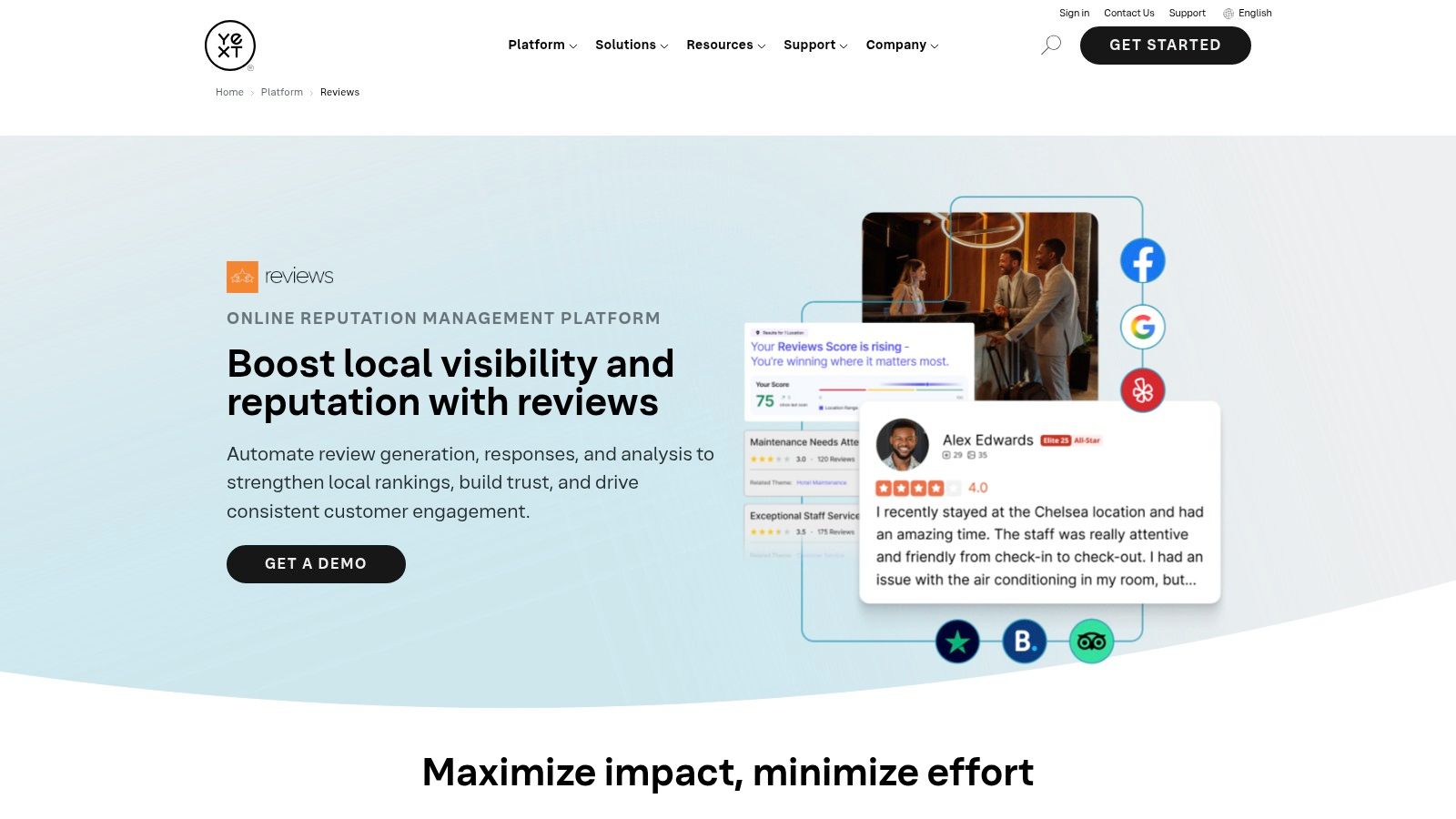
Yext Reviews is built for scale. You can see that almost immediately in the way the product is positioned. Unified inboxes, governance, publisher integrations, AI-driven themes and connection to listings, pages and content products. This isn’t aimed at the café owner with one location and ten reviews a week. It’s aimed at brands with process, approvals and internal stakeholders.
That’s not a criticism. It just means buyers need to be honest about what they’re paying for.
Where Yext earns its keep
For large estates, review management is rarely just about speed. It’s about permissions, consistency, escalation and auditability. Yext handles that environment better than lighter SMB tools.
If a retail group, healthcare brand or franchise network needs local managers to participate without creating reply chaos, enterprise controls matter. Yext’s wider product ecosystem can also be an advantage if the business already uses its listings or location pages products.
There’s another practical point. At scale, review monitoring tools need to reduce operational friction, not add another silo. Yext makes more sense when reviews are part of a wider location data stack rather than a standalone function.
Why it often isn’t the right fit for smaller teams
For smaller firms, Yext can be too much. Not because the software is bad, but because the workflow and buying model assume a bigger organisation. If you only need alerts, a clean inbox, templates and some reporting, you’ll likely pay for depth you won’t use.
This is also a demo-led, enterprise-style sale. That’s normal in this segment, but it makes quick comparison harder for owner-operators.
The wrong review platform doesn’t usually fail because it lacks features. It fails because the team never uses half of what they bought.
Businesses trying to improve how to get more Google reviews may find Yext useful only if review generation sits inside a larger enterprise local search programme. Otherwise, simpler tools usually get adopted faster.
6. Birdeye (UK)

Birdeye UK sits in the middle ground between lean review tools and full enterprise reputation suites. That’s often a good place to be. It gives service businesses, healthcare groups and multi-location operators enough automation to save time without always forcing them into a heavyweight implementation.
Its review product includes real-time monitoring, alerts, in-app responses, review generation workflows and website widgets. Translation support is also useful for teams handling multilingual reviews or brands operating across regions.
Practical strengths
Birdeye tends to work well for operational teams. If the front desk, branch managers or customer care staff need to handle reviews quickly, the interface and workflow are generally easier to understand than some enterprise platforms.
It also helps that the tool covers adjacent jobs. If you want surveys, messaging and website trust elements alongside review monitoring, Birdeye can reduce tool sprawl. That can matter for service businesses where feedback, messages and reviews overlap in the same customer journey.
Its automation options are useful too. Review requests through SMS, email and QR-based flows are often easier for lean teams to run consistently than manual asks.
The trade-off with breadth
The drawback is simple. If you only want review monitoring, Birdeye may offer more than you need. Broader suites can look efficient on paper, but they sometimes slow teams down because too many functions compete for attention.
Pricing is also less transparent than many smaller-business buyers would like. You’ll usually need to speak with sales or work through a configurator rather than seeing a clean public plan grid.
One point matters especially for UK buyers. Compliance and AI response handling are not side issues anymore. UK service providers have raised concerns about GDPR-safe review workflows, consent logging and data localisation, particularly when using AI-assisted tools, which is one reason some teams prefer UK-hosted or more clearly compliant options (advanced media monitoring discussion).
Birdeye is a good fit when you want reviews plus adjacent customer communication features. It’s less compelling when your only requirement is a simple monitoring layer with a modest budget.
7. Podium
Podium is best understood as a messaging platform that happens to be very good at generating and managing reviews. If your business already relies on text messaging for bookings, lead handling, reminders or service updates, Podium becomes much more attractive.
That messaging-first approach changes the workflow. Instead of treating reviews as a separate reputation task, Podium folds them into customer conversations.
Why some local businesses love it
For home services, clinics, retail and other businesses that already use SMS heavily, Podium can make review generation feel natural. A text request after a completed job or visit often beats a generic email invite that gets ignored.
The central inbox is useful too. When teams are juggling text, webchat and social messages, a separate review tool can become one more place nobody checks. Podium reduces that risk by putting communication and review prompts close together.
If your current process is messy, that can be a real win.
Why others should skip it
If you don’t need the messaging side, Podium can feel like buying a much bigger platform than necessary. That usually means a higher cost and more implementation work than a review-only team wants.
It also tends to be sold through contact with sales rather than simple self-serve pricing, which can make side-by-side comparison awkward.
For businesses interested in automation, the bigger question is whether the review workflow needs to be part of your communications stack or whether a lighter Google review autoresponder is enough. If you want a dedicated review operation, Podium may be too broad. If you want messaging and review generation to run together, it makes a lot more sense.
8. Reputation (formerly Reputation.com)
Reputation is built for large, distributed organisations. Automotive groups, healthcare networks, retail chains and enterprise service brands are the natural audience. The platform combines reviews, surveys, social, messaging and analytics with governance features that larger businesses need.
If you manage a lot of locations and several teams need access, that enterprise structure is valuable.
What it does well
Reputation is strong where review monitoring becomes operationally complex. Bulk response workflows, role-based controls, benchmarking and AI-led analysis are more useful when hundreds of locations are involved and consistency matters as much as speed.
This is also one of the few types of platforms where CX and reputation data start to inform each other properly. If the business wants to connect reviews with surveys and other customer signals, it has the scope to do that.
The downside is predictable. Enterprise scope usually means enterprise pricing, a more involved buying process and a setup that’s heavier than most small or mid-sized firms need.
One buying note that matters
Security review shouldn’t be a box-ticking exercise with any enterprise review platform. Buyers should ask direct questions about data handling, controls, incident response and remediation history before signing. That applies across the category, but especially when a platform sits across multiple customer-feedback channels.
This is a serious platform for large organisations. It isn’t the right answer for a small local team that just wants Google and Trustpilot alerts plus basic reporting. For that use case, simpler review monitoring tools are usually easier to deploy and easier to keep using.
9. Uberall CoreX – Reviews
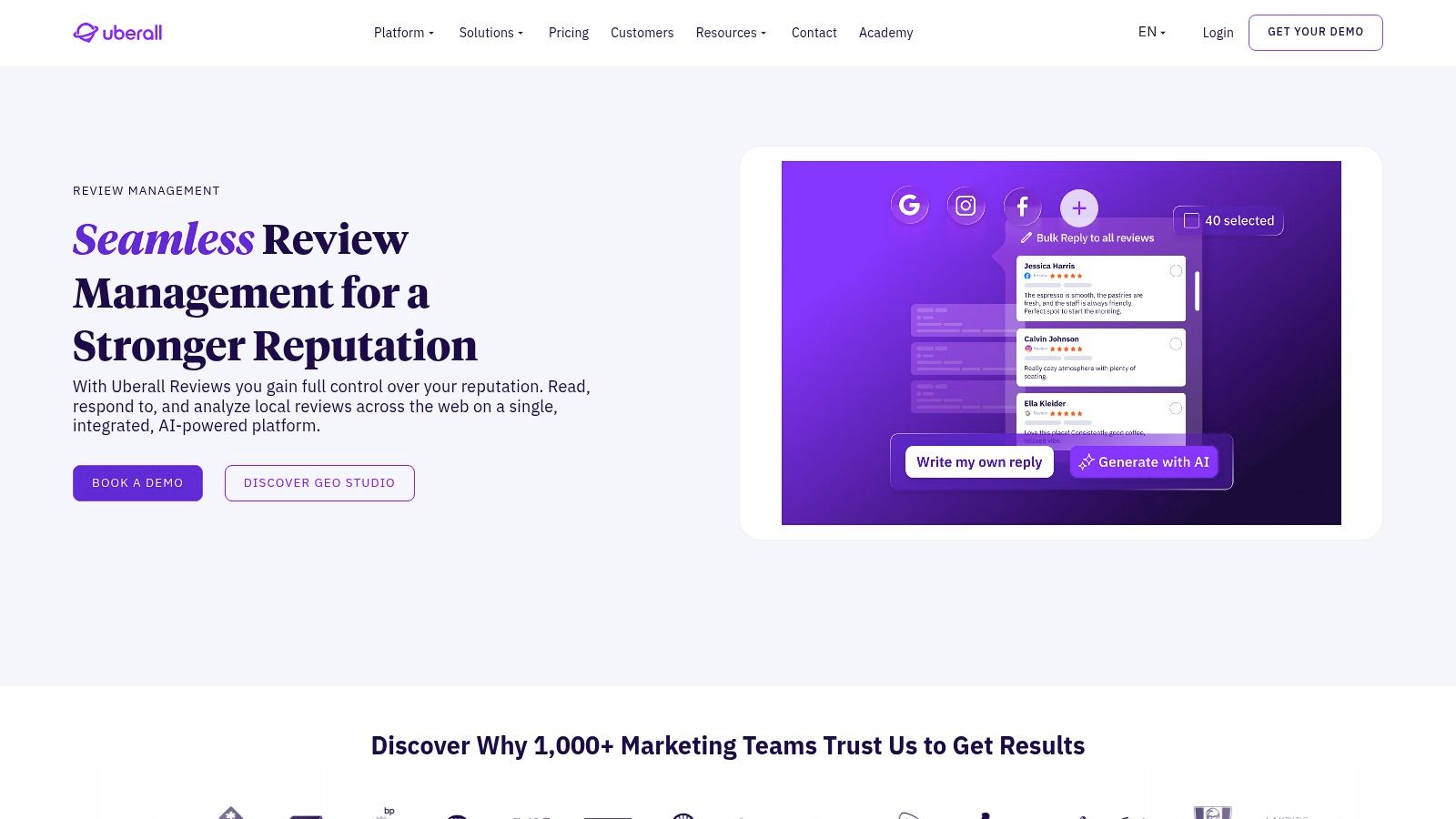
Uberall CoreX – Reviews is a good option for retailers, franchises and multi-location brands that need review management tied closely to listings and local social. It has a stronger European flavour than some competitors, which can be reassuring for UK and wider regional teams that don’t want every workflow built around a US market assumption.
The platform offers a central review inbox, AI-assisted responses, multilingual support and brand-level reporting.
Where it fits
Uberall works best when standardisation is the priority. If head office wants local branches to stay active but within guardrails, this kind of setup can work well. It also helps if the organisation wants reviews, listings and local social to share data rather than sit in separate systems.
Multilingual capability is another practical plus for larger organisations with varied customer bases or teams spread across markets.
The catch
As with many larger platforms, pricing isn’t public in a simple self-serve format. You’ll usually need to speak to sales, and the full value often comes from adopting multiple modules rather than just reviews.
That can be sensible for bigger organisations. It’s less appealing for smaller teams who only need a fast, clean review workflow.
One broader point is worth keeping in mind when comparing tools in this segment. UK businesses still face gaps in platform coverage, especially on region-critical review sites and local directory ecosystems. If your review footprint extends beyond the obvious global platforms, make sure the vendor confirms monitoring depth rather than assuming “multi-platform” means “everything that matters to your market”.
10. ReviewTrackers (by InMoment)
ReviewTrackers stays closer to the core job than many broader suites. That’s one reason it remains appealing. It’s focused on centralised monitoring, analytics, alerts, workflows and response drafting, without trying to become your entire customer communications stack.
For businesses that want a reviews-first platform backed by a wider CX company, that’s a reasonable balance.
Why focused tools still matter
A lot of review monitoring tools have drifted into being “everything platforms”. Sometimes that helps. Sometimes it just creates clutter. ReviewTrackers is a better option when the team wants clarity. Reviews come in, the platform flags issues, the right people respond, and the business can report on trends.
The workflow and permissions side is useful for agencies, mid-market brands and multi-location operators that need structure but don’t want the complexity of a full enterprise suite.
It also benefits from InMoment’s broader customer experience background, which gives the product a more mature analytics direction than some smaller specialist tools.
What to check before buying
This isn’t usually the cheapest route. Pricing is typically handled through demos and location-based plans, so smaller teams should confirm the total cost early.
It also has fewer adjacent modules than all-in-one local marketing suites. That’s either a weakness or a strength depending on what you need.
If you want one system for reviews, listings, content publishing and local rank tracking, another platform may fit better. If you want a dedicated review hub with good workflow controls, ReviewTrackers remains a solid contender.
Top 10 Review Monitoring Tools: Feature Comparison
| Product | Key features ✨ | Best for 👥 | Quality ★ | Price / Value 💰 |
|---|---|---|---|---|
| LocalHQ 🏆 | AI Optimisation Wizard; Review Autoresponder; Geo‑grid rank tracker; Content Publisher | 👥 SMBs · Agencies · Multi‑location brands | ★★★★★ · Intuitive dashboard, white‑label reports | 💰 From £29/mo (1 listing) · 7‑day trial · affordable |
| REVIEWS.io | Centralised reviews; AI reply drafting; UGC widgets; e‑commerce integrations | 👥 Retail · e‑commerce · SMBs | ★★★★☆ · Strong UGC & integrations | 💰 Tiered invite quotas · SMB‑friendly |
| BrightLocal – Reputation Manager | Review monitoring & requests; AI replies; White‑label reports; Local SEO tools | 👥 Agencies · Franchises · Local businesses | ★★★★☆ · Location roll‑ups & reporting | 💰 Location‑based plans · good agency value |
| Trustpilot (Business) | Public reviews & invites; Alerts & analytics; Widgets/badges; API | 👥 Consumer‑facing brands · Retailers | ★★★★☆ · High consumer recognition | 💰 Custom/higher pricing · strong SERP benefit |
| Yext Reviews | Unified inbox; AI insights/themes; Publisher integrations; Governance | 👥 Enterprise · Multi‑location brands | ★★★★★ · Enterprise‑grade controls | 💰 Demo‑led enterprise pricing |
| Birdeye (UK) | Real‑time monitoring; Auto‑translate; SMS/QR review generation; Widgets | 👥 Services · Healthcare · Home services | ★★★★☆ · Broad automation & translations | 💰 Configurator/sales pricing |
| Podium | SMS/webchat first; Automated SMS invites; Team inbox; Payments add‑ons | 👥 Local services · Healthcare · Retail | ★★★★☆ · Excellent SMS workflows | 💰 Sales‑led; mid‑market pricing |
| Reputation (formerly Reputation.com) | Cross‑site monitoring; Review Booster campaigns; AI analytics; Governance | 👥 Large multi‑location enterprises | ★★★★★ · Deep analytics & CX signals | 💰 Premium enterprise pricing |
| Uberall CoreX – Reviews | Central review inbox; Multilingual AI replies; Listings & social tie‑ins | 👥 Franchises · Retailers (Europe) | ★★★★☆ · EU focus & language support | 💰 Enterprise/mid‑market pricing |
| ReviewTrackers (by InMoment) | Central monitoring; AI response drafting; Alerts & role workflows; Reporting | 👥 SMBs · Mid‑market · Multi‑location teams | ★★★★☆ · Focused reviews hub backed by CX | 💰 Location‑based / contact sales |
Final Thoughts
The best review monitoring tools don’t win because they have the longest feature list. They win because the team uses them every day.
That sounds obvious, but it’s where most buying mistakes happen. A small business buys an enterprise platform and uses five per cent of it. An agency buys a low-cost tool that can’t handle approvals or client reporting. A multi-location brand chooses a simple review inbox, then discovers too late that it can’t support governance, location roll-ups or compliance needs.
The practical way to choose is to start with operating reality.
If you run a single location or a small group of sites, speed and simplicity matter most. You need alerts that somebody will notice, response tools that keep replies consistent, and reporting that shows whether the work is making a difference. A bloated platform won’t help if nobody logs in.
If you’re an agency, your requirements shift quickly. White-label reporting, multi-location views, easy onboarding and predictable pricing become central. The software also has to make client communication easier, not harder. That usually means tying review work to local SEO performance, because clients don’t just want to see reviews answered. They want to know whether reputation management is helping visibility and leads.
For larger brands, the decision changes again. Governance, user permissions, approval flows, security review and data handling become part of the buying process. In those cases, a more structured platform like Yext, Reputation or Uberall may make sense. But only if the organisation will use the controls it’s paying for.
UK buyers should be stricter than many comparison articles suggest. Platform coverage matters. GDPR handling matters. Data localisation and AI response controls matter. The gap between a decent generic tool and a tool that fits UK local operations is still wider than it should be. That’s why I’d always ask three direct questions before signing anything:
- Which review platforms are monitored in practice: Not the logo list. The actual sources that matter to your business.
- How are alerts handled: Email alone often isn’t enough if reviews need a same-day response.
- What does reporting help me decide: If reports don’t change action, they’re decoration.
One other point gets overlooked. Review monitoring doesn’t live in isolation. It works best when it’s connected to how you request reviews, how you reply, how you publish trust signals and how you improve local visibility. If the tool can’t support that wider workflow, you may save money upfront and lose time every week afterwards.
If you want to broaden the shortlist beyond local and customer review platforms, it’s worth scanning a wider set of software review websites to understand how different review ecosystems shape trust and buyer behaviour.
For most UK local businesses and agencies, the strongest option is usually the one that keeps review handling close to Google Business Profile management, local search reporting and day-to-day operations. That’s why LocalHQ stands out on this list. It’s practical, it’s priced for real businesses rather than procurement teams, and it doesn’t treat reviews as a side feature.
If you want a simpler way to track reviews, reply faster and connect reputation work to local search performance, take a look at LocalHQ. Its Review Autoresponder and unified local dashboard are built for businesses that need to protect their reputation without adding more admin.