AI Customer Engagement: A 2026 Guide for Local Businesses
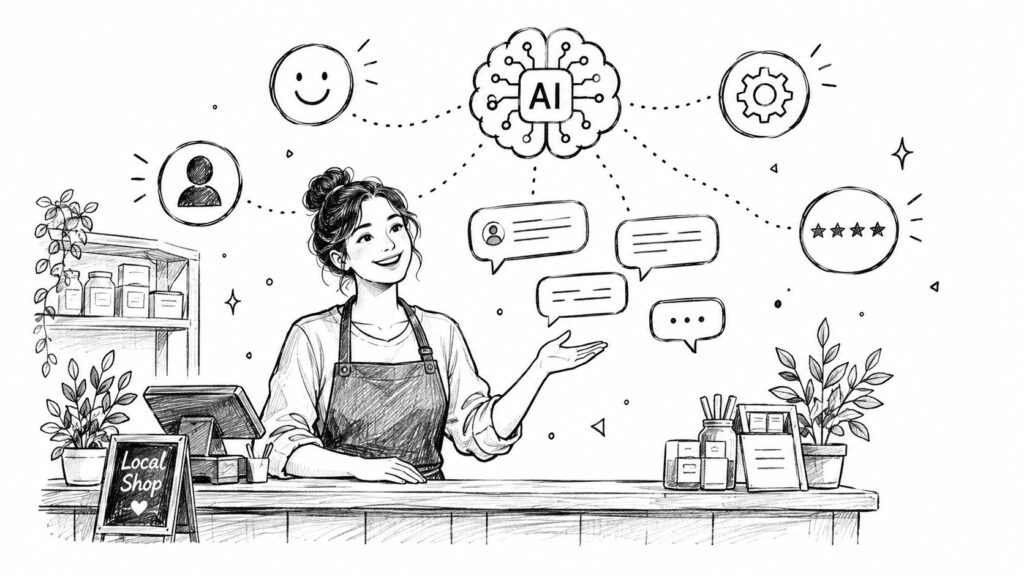
A busy UK operator already knows the pattern. The phones ring, the inbox fills, Google Business Profile messages need answers, reviews start landing before lunch, and the team on the floor still has to serve the people standing in front of them. AI customer engagement only earns its keep when it takes pressure off that morning rush without turning the brand into a faceless bot factory.
The right setup doesn't replace service, it protects it. It handles the repetitive parts, keeps replies consistent across channels, and leaves humans free for the moments that shape loyalty, especially where local search, reviews and front-of-house behaviour all feed the same trust signal. That's the lens here, what works for UK local businesses, where AI helps, where it damages confidence, and how to tie it back to Google Business Profile, reputation and visibility rather than letting it sit in a separate tool nobody trusts.
Table of Contents
- Why AI Customer Engagement Matters for UK Local Businesses
- What AI Customer Engagement Actually Means
- The Core Technologies Behind Modern AI Engagement
- Where AI Helps and Where It Quietly Damages Trust
- How Exerta Can Help
- Practical AI Engagement Workflows for Restaurants, Retail and Services
- A 90-Day Implementation Roadmap for SMBs and Agencies
- Measuring the Right KPIs and Proving ROI
- Bringing It All Together and Where to Start
Why AI Customer Engagement Matters for UK Local Businesses
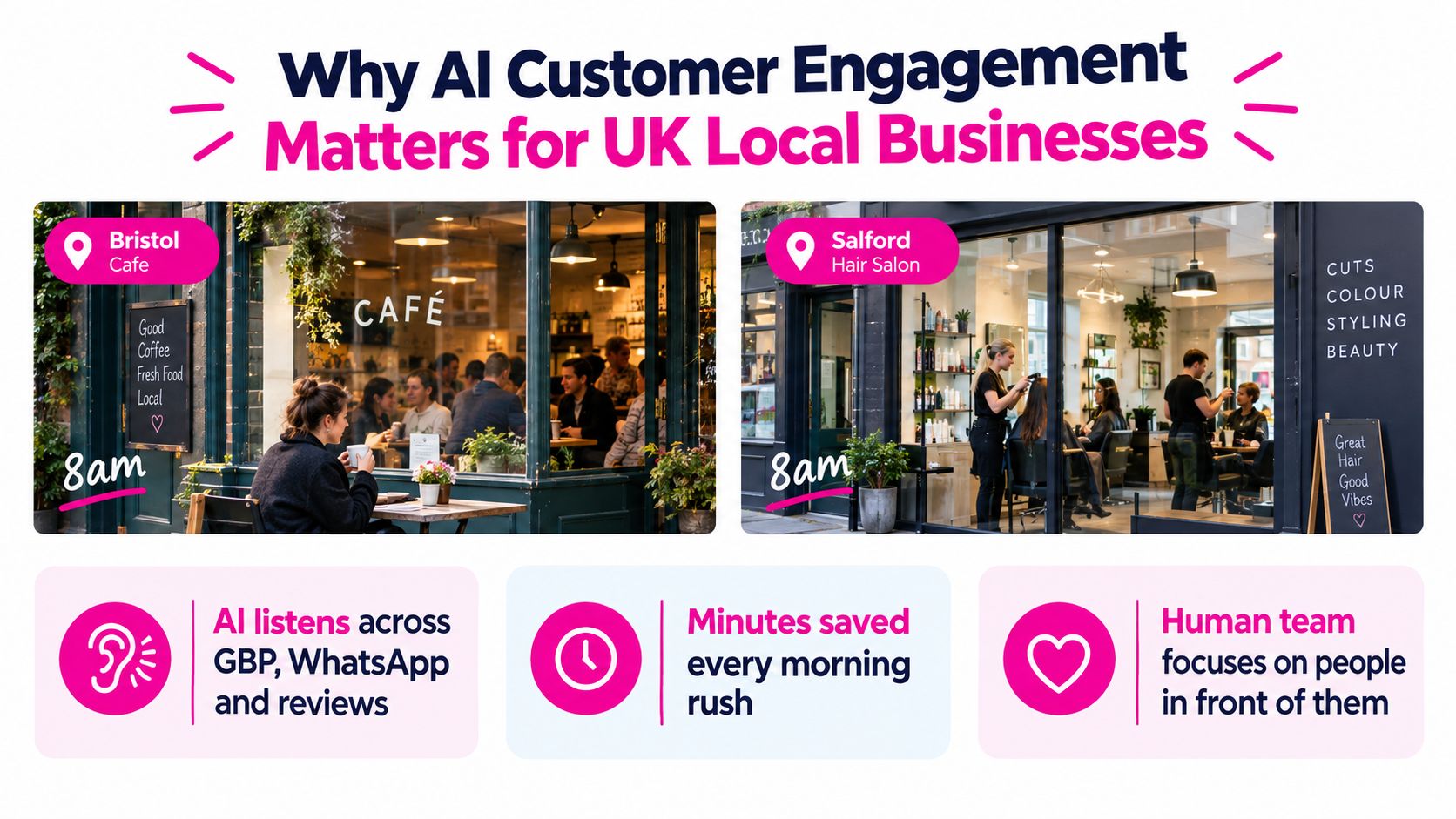
At 8am in a Bristol café, the queue starts building before the first flat whites go out. A booking question arrives on WhatsApp, a GBP message asks about allergens, and yesterday's review needs a reply before it starts shaping the next customer's decision. In a Salford salon, the same thing happens with patchy staff cover, late arrivals and a steady stream of “Are you open?” messages.
That is where AI customer engagement pays for itself. It handles the first layer of response, so the team can focus on the actual customer in the room. It also protects visibility, because local buyers still start with trust signals on Google and reviews, not with a brand's internal workflow.
What changes first
The first change is not glamour, it's friction removal. A good system answers the obvious questions, routes the messy ones, and keeps the morning from turning into a backlog. The best local operators use that breathing room to do what software can't, greet customers properly, fix problems on the spot, and close the loop after the visit.
That matters because local discovery is still built on reputation and responsiveness. Research shows 42% of consumers regularly check online reviews when researching a local business, and Google is the main review site for 81% of them rebootonline.com/local-seo-statistics. A separate UK-local summary says 88% of consumers would use a business that replies to all reviews, versus 47% who would use one that never responds, while 89% believe reviews affect a branch's decision and 91% say they shape brand perception localbrandhub.com/statistics.
Practical rule: if AI saves time but leaves reviews, DMs and GBP messages unattended, it's not improving engagement. It's just moving the bottleneck.
What AI Customer Engagement Actually Means
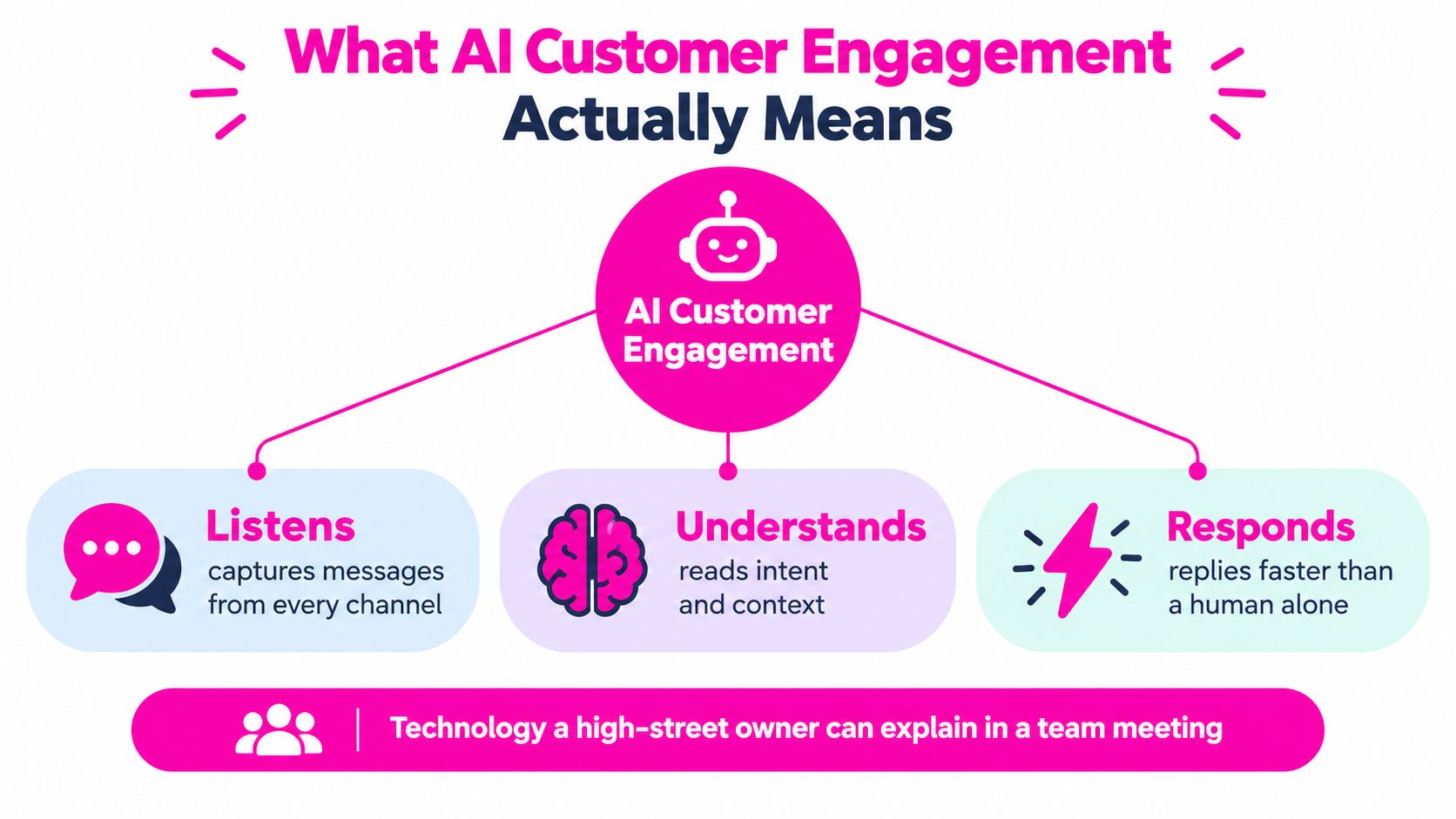
Strip away the jargon and it's simple. AI customer engagement is software that listens across channels, understands what the customer wants, decides what should happen next, and responds fast enough to be useful. In a local business, that means the system is doing the first pass a sharp floor manager would do on a busy Saturday.
The four layers that matter
The first layer is perception. The system sees the message, whether it came from GBP, web chat, WhatsApp, email or social comments. The second is understanding, where it reads intent, urgency, context and, where the tooling is decent, sentiment.
The third layer is decision. That is where it chooses whether to answer directly, pull in a policy, tag the lead, or hand off to a human. The fourth is response, which is the actual message, workflow or follow-up task that gets triggered.
A good operator will recognise the analogy immediately. A floor manager hears the question, works out whether it's simple or sensitive, sends the right person over, and checks back later. Software can copy that pattern, but only if the data, routing rules and escalation paths are built properly.
Why this matters for local SEO
The link to local SEO is direct. Fast replies, accurate updates and review responses all reinforce the same trust layer customers see on Google. A business that answers clearly and consistently looks active, reliable and worth clicking.
Useful test: if a customer can't tell whether a response came from a bot or a trained team member, the system has probably crossed from helpful into risky.
That's why the phrase shouldn't mean “replace the team with chatbots”. It should mean using technology to make every interaction cleaner, faster and easier to trust. The winners are the operators who treat it like service design, not automation theatre.
The Core Technologies Behind Modern AI Engagement
A useful stack is built from four parts, and each one solves a different operational problem. The mistake many teams make is buying a chatbot, then expecting it to fix data quality, review handling and lead follow-up at the same time. It won't.
Chatbots and conversational assistants
These are the front line for high-volume, low-risk questions. In a 5 to 50 location business, they're most useful for opening hours, menu or service questions, booking links and basic triage. They're not there to debate policy, handle refunds or improvise.
Personalisation engines
These stitch together CRM, loyalty and profile data so returning customers don't get treated like strangers. A repeat buyer should see relevant offers, local availability or the right branch contact, not a generic message that ignores history.
Sentiment analysis
This scans reviews, emails and transcripts for positive and negative patterns. It's valuable when the business wants to spot friction early, route unhappy customers faster and notice recurring themes across branches.
Automation and workflow tools
These move work on without human chasing. Review requests after a visit, Q&A prompts on GBP, escalations from social comments, and reminders for staff follow-up all sit here. For local businesses, this is where engagement starts to connect with reputation management instead of remaining an isolated inbox feature.
| Technology | What it does in a local business | UK example | Limits to design around |
|---|---|---|---|
| Chatbots and conversational assistants | Handles high-volume questions and routes complex cases | A restaurant assistant confirms bookings and answers allergen queries | Fails if policies are stale or handoff rules are weak |
| Personalisation engines | Uses first-party data to tailor replies and offers | A retailer shows branch-specific stock or a relevant re-order reminder | Becomes intrusive if consent and data quality are poor |
| Sentiment analysis | Flags mood, churn risk and recurring complaint themes | A service brand spots repeated complaints about response times | Needs human review, because sarcasm and nuance get missed |
| Automation and workflow tools | Triggers requests, tasks and escalations | A GBP workflow sends a review request after a completed appointment | Breaks down when channels don't sync or approvals are missing |
For businesses looking at an automated Google Business Profile, the point is not to automate everything at once. It's to make the profile, the inbox and the review process behave like one operating system instead of three disconnected chores automated Google Business Profile.
Where AI Helps and Where It Quietly Damages Trust
The wrong assumption is that always-on AI automatically means better service. It doesn't. UK customers are happy with speed when the task is narrow, but they still want a human where the consequences are serious, the wording is sensitive or the outcome affects money, access or dignity.
The trust line is clear
UK consumer research shows the split plainly. 70% still want a real person when explaining specific situations, 67% want a person during emergencies, and 65% choose humans for complex account questions maxcontact.com/articles/what-uk-customers-really-want-from-contact-centres-in-2025. That is the line operators should respect. AI can handle speed, but it should step aside when the issue becomes personal, emotional or operationally messy.
What goes wrong in practice
The failure modes are predictable. A bot invents a policy, gives a slick apology without solving anything, or keeps pushing a scripted answer after the customer has clearly asked for help. That kind of behaviour doesn't just annoy people, it leaks straight into reviews and visible trust signals on Google.
UK data also show a broader credibility problem. 93% of brands say they are transparent about how AI uses customer data, but only 40% of customers agree, and 69% of UK brands say inaccurate or missing first-party data is a major barrier to understanding customers decisionmarketing.co.uk/news/brands-ai-adoption-hampered-by-lack-of-trust-and-data. If the data layer is weak, the AI layer will sound confident while being wrong.
A sensible guardrail set is simple:
- Keep automated: FAQs, opening times, order status, booking confirmation, routine review requests.
- Hand off immediately: complaints, refunds, accessibility issues, vulnerable customers, emergencies.
- Review before sending: anything legal, medical, financial or emotionally charged.
- Stop and escalate: when the same question is asked twice and the answer still isn't resolving the issue.
If the system can't explain its own answer in plain English, it shouldn't be speaking for the brand.
For a local operator, the test is not “Did AI respond?” It's “Did the customer get faster resolution without losing control?” That's where trust is kept, and that's where the reviews stay sane.
multi-platform reputation management for UK businesses
How Exerta Can Help
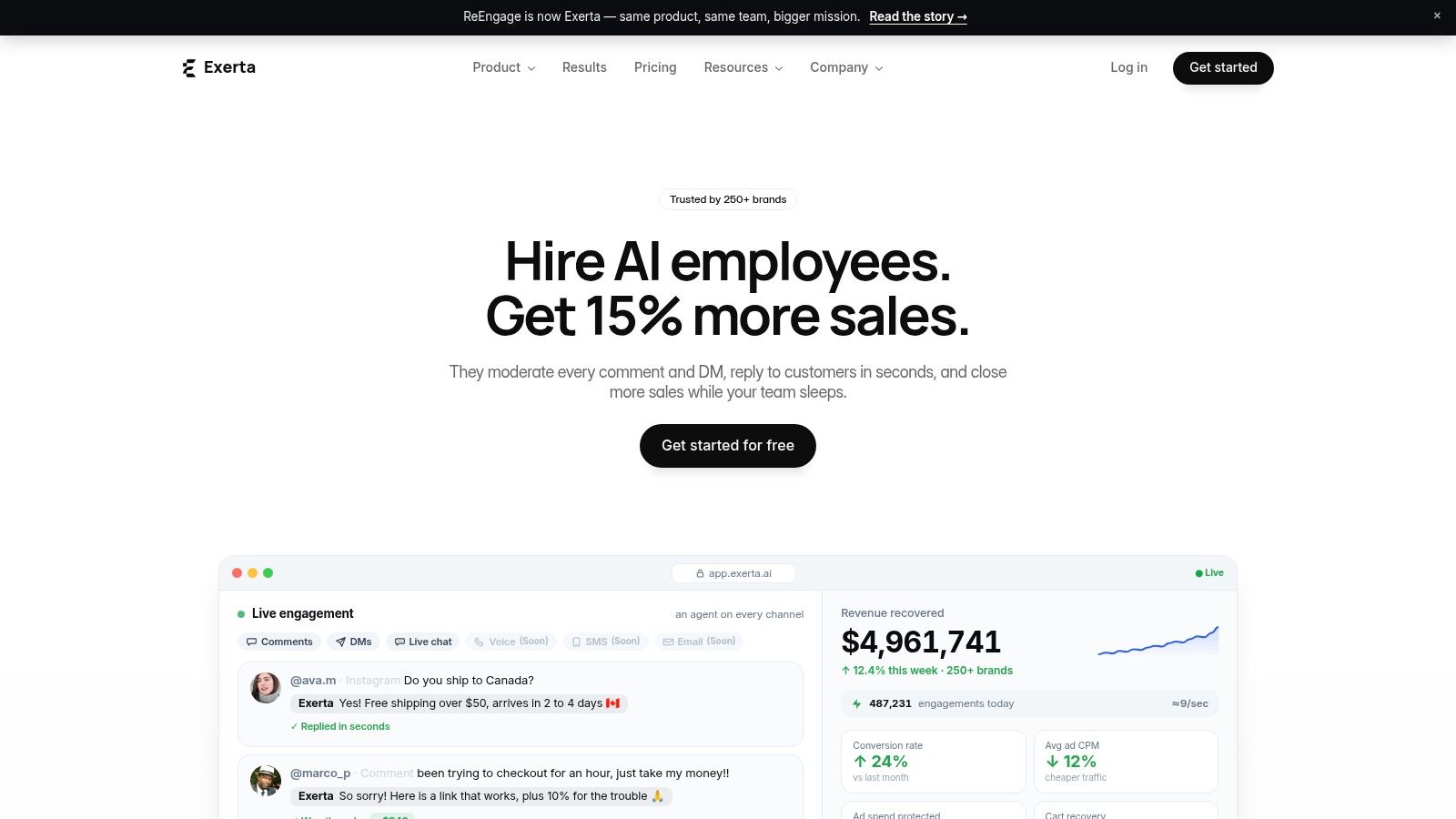
Exerta is a useful fit for brands that live on social comments, DMs and website chat, especially where engagement is tied directly to revenue. It deploys AI agents that reply in brand voice, moderate harmful content, and recover sales across Facebook, Instagram, TikTok and web chat, with every action logged and attributed. For a DTC team, ecommerce brand, telehealth operator, lead-gen business or agency, that changes the economics of frontline engagement.
Where it fits best
A restaurant group can use it to answer comments on promos, send checkout or booking links and keep negative noise away from campaigns. A multi-branch retailer can use it to answer product questions quickly while preserving a consistent tone. A home-services brand can use it to qualify leads, send follow-ups and recover enquiries that would otherwise stall.
The platform is strongest where speed, moderation and attribution matter together. Its workflow builder, escalation controls and dashboard make it more than a reply tool, because the team can see what was answered, what was hidden and what drove revenue. That matters for agencies and owners who need to prove that engagement is doing something beyond looking busy.
For a broader product overview, the practical breakdown in AI customer engagement software is a useful place to compare the use case against other stacks. The key decision is simple: if the business needs scalable replies in social-heavy channels, Exerta is a serious option. If the core problem is GBP visibility, review handling and local SEO operations, it belongs alongside a local search platform rather than replacing one.
Three workflow snapshots
A restaurant uses it to answer availability questions, hide spam under paid posts and push interested users towards bookings. A retailer uses it to keep comments, DMs and site chat aligned with offers and inventory. A service brand uses it to capture leads, send reminders and prevent missed opportunities from dropping out of the funnel.
The point is not to add AI for its own sake. The point is to remove manual drag where engagement directly affects bookings, purchases or ad performance.
Practical AI Engagement Workflows for Restaurants, Retail and Services
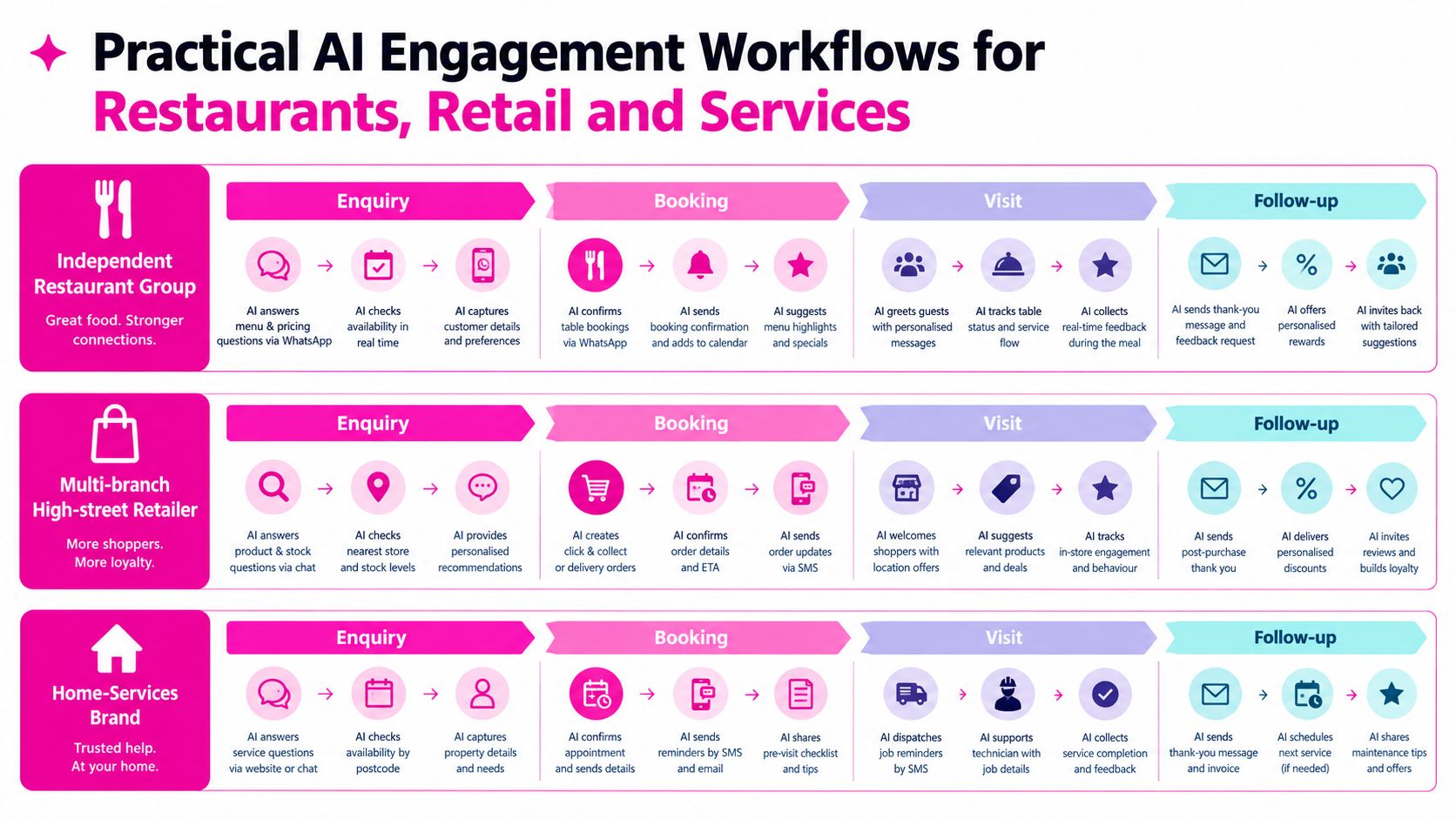
A strong rollout starts with one branch, one journey and one clear handoff rule. Teams often waste time because they try to automate every channel at once, then discover the data is messy and staff don't know when to step in. A phased approach works better.
Restaurant group workflow
Start with GBP Q&A, booking confirmations and review replies. The restaurant local SEO guide is the right place to align this with map visibility, because the same operational discipline affects both engagement and discovery restaurant local SEO guide. Once that's clean, add WhatsApp rebooking flows for regulars and review sentiment triage so unhappy guests are escalated before they escalate publicly.
The human handoff should cover allergies, complaints, refunds and anything involving a special request that could go wrong in service. The data captured should feed back into booking patterns, common questions and review themes, not sit in a separate chatbot log nobody reads.
Multi-branch retailer workflow
For retail, the priority is post-purchase follow-up, branch-level inventory messaging and feedback requests tied to location performance. A customer who bought in one branch shouldn't get a generic message that ignores the store they visited. The system should recognise repeat behaviour and keep the branch relationship intact.
Home-services workflow
For services, use lead-qualifying chat on the website, route enquiries by urgency and draft follow-ups for estimators. The true value is in speed. If the enquiry waits until the next working day, the lead is already shopping elsewhere.
Operational rule: if the journey can't be mapped to a named owner, it isn't ready for automation yet.
A practical 90-day sequence helps keep this grounded. First, clean the data and define consent wording. Next, switch on the narrowest high-volume tasks. Finally, layer in personalisation and reporting once the team has proven the handoff rules work. That order protects trust and keeps the rollout tied to measurable outcomes instead of novelty.
A 90-Day Implementation Roadmap for SMBs and Agencies
The first month should feel boring. That's a good sign. The operator or agency lead should audit GBP, reviews, enquiry data and current response times, then clean CRM fields, agree consent wording and choose tools that connect to booking, POS or helpdesk systems. If the data is fragmented, every downstream AI output gets noisier.
Days 1 to 30
The deliverables here are a channel map, an escalation policy and a single owner for each touchpoint. The common UK pitfall is trying to automate complaints before the team has agreed when a human must take over. That usually creates more friction, not less.
Days 31 to 60
This is the highest-ROI phase. Turn on review response automation, FAQ chat handling and routing rules for one location or one service line. Keep the scope narrow so the team can spot failures quickly and fix them without fighting a whole-company rollout.
Days 61 to 90
Layer in personalisation, sentiment dashboards and reporting. Train staff on escalation paths, and make sure every AI touchpoint has a named owner. If the team can't describe what happens when the bot gets it wrong, the system isn't ready.
The KPIs should be tied to the channels the business controls. GBP response behaviour, review handling, enquiry routing and follow-up consistency matter far more than generic AI activity. That's the difference between a pilot and an operating model.
Measuring the Right KPIs and Proving ROI
A clean ROI view is simple enough for a single spreadsheet. Pull Google Business Profile Insights, review exports and booking or POS data into one sheet, then compare before and after the AI workflow goes live. The goal is not to prove that the bot was busy, it's to show that service became faster, more consistent and easier to convert.
| KPI | Source Metric | Realistic Target | Tied AI Workflow |
|---|---|---|---|
| First-response time | GBP messages, web chat, social DMs | Faster than manual cover | Automated triage and instant replies |
| Q&A reply rate | Google Business Profile questions | Consistent coverage across hours | FAQ automation and escalation rules |
| Review velocity | Review platform exports | Regular replies without backlog | Review response automation |
| Sentiment drift | Review and message sentiment themes | Fewer unresolved negative patterns | Sentiment triage and routing |
| GBP action clicks | GBP Insights | More useful actions, not just more views | Better replies, posts and profile updates |
The vanity metrics are easy to spot. Message volume with no booking or purchase impact is noise. So is a chatbot that answers quickly but never hands over a serious issue to a person.
The useful check is whether response quality improves without adding headcount. If review replies are faster, Q&A is tidier and branch-level trust improves, the workflow is doing real work. That's the case for investing further.
A good operating team also watches the reputation surface. If complaint language is getting sharper or the same issue appears in multiple branches, the AI workflow should be updated before the reviews start repeating the problem publicly. That is where AI customer engagement becomes a management tool, not just a service layer.
Bringing It All Together and Where to Start
The right setup is not complicated, but it does need discipline. Consent wording has to be clear, review-response guardrails have to be written down, escalation rules have to be visible, and every AI touchpoint needs a named human owner. Without those basics, the brand is only automating confusion.
LocalHQ fits as the connective layer when the goal is to tie replies, reviews and GBP activity back to visibility. It keeps the operational side of local SEO in the same place as the engagement work, so the team isn't fixing customer friction in one tool and losing the ranking signal in another. That matters for multi-site brands, because consistency across branches is what makes the system scale.
The best next move this week is simple. Choose one location, one channel and one repetitive task, then put a human escalation rule around it before switching it on. A clean first deployment teaches more than a sprawling pilot ever will, and it gives the team a model worth repeating.
If the goal is to make local engagement faster without sacrificing trust, start with the basics that actually move visibility and reputation together. Review the current GBP, reply handling and escalation setup, then map where AI can safely take the first pass. For teams that want those pieces joined up, the next step is to open LocalHQ, audit the profile workflow and connect GBP management, review replies and local SEO actions in one place.